Factory Direct Catalog
Industrial Storage Systems & High-Load Heavy-Duty Racking
Heavy-duty racking structures engineered for standard 48" x 40" GMA pallets, automated material handling integration, and severe industrial storage requirements across North American logistics networks.
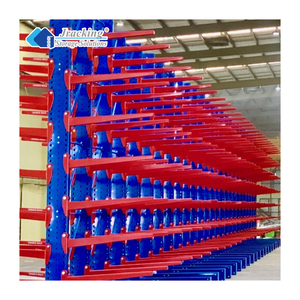
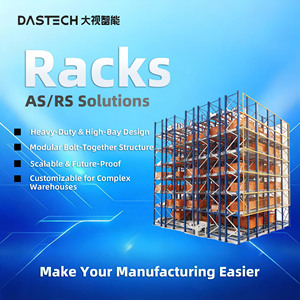
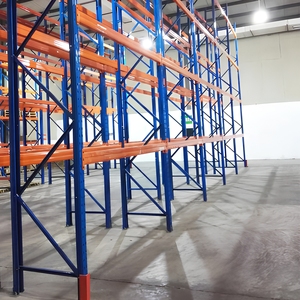
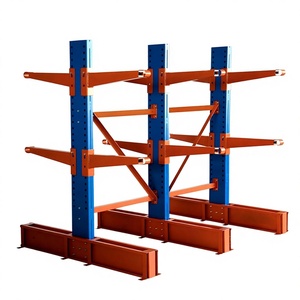
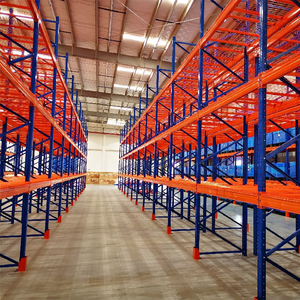
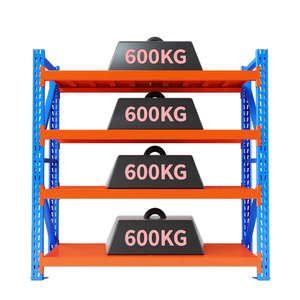
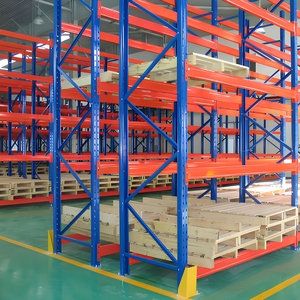
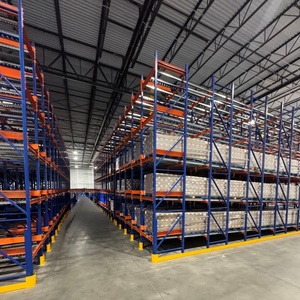
Executive Procurement Brief: Industrial warehouse shelving and heavy-duty pallet racking systems imported into or deployed within the United States must balance structural resilience, seismic code compliance (IBC/RMI ANSI MH16.1), and operational footprint efficiency. Direct-from-factory OEM manufacturers offering fully automated roll-forming, traceably certified structural steels (Q235B/Q355B or ASTM grade structural equivalents), and specialized protective surface treatments provide US distribution centers, cold-storage facilities, and 3PL hubs with up to 35% overall TCO reduction without sacrificing life-safety metrics.
100k+
Metric Tons Annual Output
42k+
Global Projects Completed
60+
Countries Exported
5-Yr
Comprehensive Structural Warranty
1. US Logistics Infrastructure & Regional Warehouse Storage Requirements
The North American logistics and supply chain market demands highly specific structural and dimensional specifications for warehouse storage racks. Warehouses situated across key distribution corridors—such as Southern California’s Inland Empire, the Dallas-Fort Worth Metroplex, the Chicago Logistics Corridor, Georgia’s I-85 Industrial Belt, and the New Jersey/Pennsylvania Port Access Zone—operate under unique operational stresses, floor loading constraints, and strict municipal building codes.
To maximize storage density while maintaining 100% SKU accessibility, industrial facilities must carefully match pallet racking geometry to standard North American load units—specifically the 48" x 40" GMA (Grocery Manufacturers Association) pallet, 48" x 48" drum pallets, and heavy plastic Euro/ISO shipping units. Failure to engineer vertical beam spacing, frame depths, and wire deck capacities around these exact unit loads often leads to hazardous deflections, beam binding, or unrated column impact failures under heavy lift-truck traffic.
Seismic Zone Engineering (IBC & RMI)
Warehouses in California (Zone 4), the Pacific Northwest, and the New Madrid Seismic Zone require oversized footplates, seismic anchor embedment designs, high-ductility column profiles, and finite element moment-frame calculations verified against local engineering stamp standards.
Cold Chain & Freezer Storage (-24°F)
High-density Mobile Racking (Movirack), Drive-In, and Pallet Shuttle systems for US food distribution networks utilization cold-resilient structural steel grades, specialized low-temperature powder coatings, and hot-dip galvanized components resistant to thermal cycling moisture.
E-Commerce & High-Velocity Pick Faces
Multi-tier pick modules, carton flow shelving, and integrated AS/RS (Automated Storage and Retrieval Systems) structures designed for 24/7 continuous operations, micro-fulfillment throughput, and direct conveyor/AMR (Autonomous Mobile Robot) interface points.
2. Engineering Benchmarks & Structural Metallurgy Specs
When evaluating international warehouse storage factories and suppliers for US delivery, structural engineering rigour forms the baseline of procurement risk management. Low-grade racking manufactured with unverified steel scrap or non-standard perforation geometry poses catastrophic collapse risks under maximum rating loads. Qualified manufacturing partners must utilize prime cold-rolled steel coils with verified tensile yield strengths.
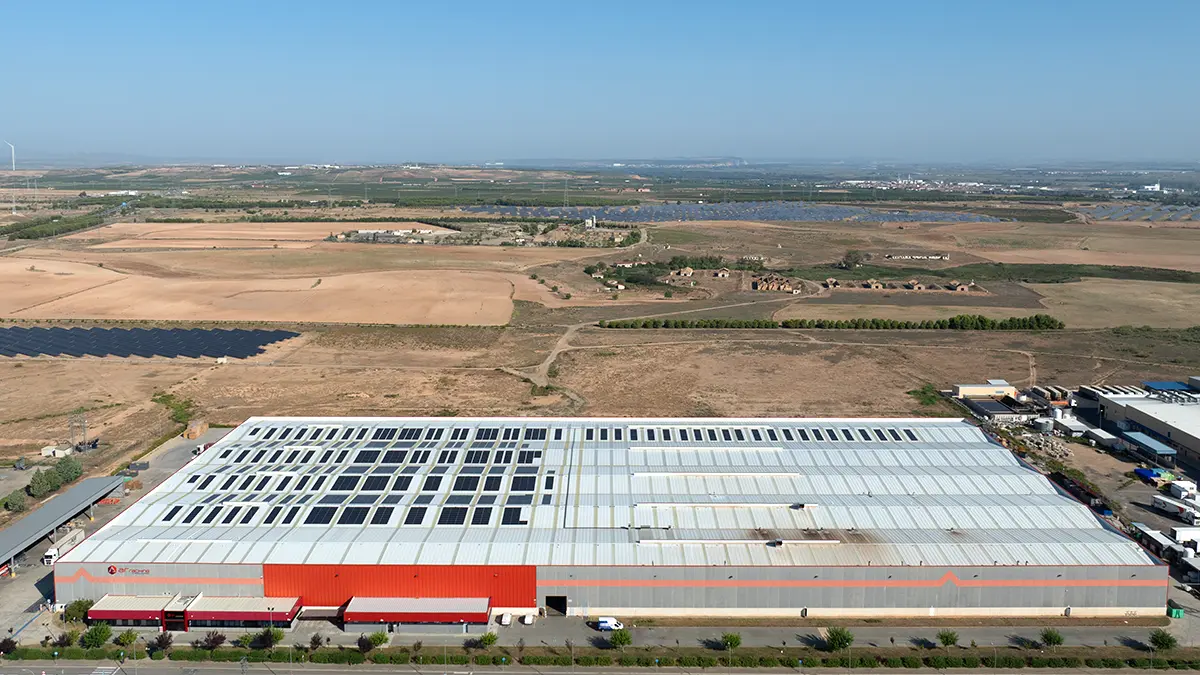
Robotic Automated Manufacturing & Traceability 4.0
Our state-of-the-art production complex spans over 35,000 square meters (376,000+ sq ft), running fully automated continuous roll-forming lines and robotic welding cells certified under ISO 3834-2 and EN 1090-1 structural steel fabrication standards.
Every single upright column, box beam, step beam, and diagonal brace undergoes automated laser monitoring for dimensional tolerance within ±0.5mm—a critical prerequisite for automated stacker crane aisles and narrow aisle turret truck operational stability.
- Traceability 4.0 barcoding on all structural raw material batches
- Full finite element structural analysis (FEA) per project
- Independent academic testing collaboration with Mondragon University
Technical Comparison: Industrial Storage Rack Systems for US Warehouses
Selecting the optimal racking system requires balancing space utilization, direct selectivity percentage, inventory rotation method (FIFO vs. LIFO), and capital expenditure per pallet position.
| Racking System Type | Pallet Selectivity | Density Index | Inventory Flow | Typical US Application Scenario | Handling Equipment Required |
|---|---|---|---|---|---|
| Selective Pallet Racking | 100% Direct Access | Standard (40-50%) | FIFO / LIFO | General distribution, 3PL facilities, high-SKU operations | Standard Counterbalance, Reach Truck |
| Very Narrow Aisle (VNA) | 100% Direct Access | High (65-75%) | FIFO / LIFO | High-bay warehouses, urban fulfillment centers with high land cost | VNA Turret Truck, Man-Up Order Picker |
| Double Deep Racking | 50% Direct Access | Medium-High (60%) | LIFO | Cold storage, dry goods with multiple pallets per SKU | Deep Reach Forklift |
| Drive-In / Drive-Thru | Lane Level Access | Very High (75-85%) | LIFO / FIFO | Seasonal goods, bulk food storage, low SKU count / high volume | Standard Forklift (Drive-in frame qualified) |
| Radio Pallet Shuttle | Lane Level Access | Maximum (85-90%) | FIFO / LIFO | Freezer warehouses (-24°F), high-throughput beverage fulfillment | Standard Forklift + Automated Shuttle Car |
| Heavy-Duty Cantilever | 100% Column Access | Variable | Any | Lumberyards, steel pipe distributors, aluminum profile racking | Side Loader, Heavy Counterbalance Forklift |
3. Emerging US Industrial Storage Trends (2025–2030 Horizon)
The North American logistics sector is undergoing rapid structural transformation driven by labor availability shifts, escalating industrial real estate lease rates, and accelerating sustainability mandates. Industrial supply chain managers and facility design specialists must account for these macro trends when procuring warehouse racking hardware:
AS/RS & AMR Integration
Traditional manual pallet rack layouts are rapidly yielding to automated stacker crane towers and AMR grid structures. Structural tolerances for verticality, beam deflection limits (L/300 to L/600), and floor anchor shear strength must strictly conform to automated equipment manufacturer tolerances.
Green Building & Scope 3 Decarbonization
US corporate buyers are prioritizing suppliers with verified carbon accounting. Our manufacturing processes maintain ISO 14064 third-party carbon footprint verification and ISO 50001 certified energy management, providing clean scope-3 embodied carbon documentation for LEED certification points.
Rack-Supported Clad Buildings
Rather than building a standard tilt-up concrete building and placing racks inside, high-bay rack-supported structures utilize the racking steel uprights as the primary load-bearing structural skeleton for roof and wall cladding. This cuts civil construction timelines by up to 25% and optimizes vertical clearance up to 130+ feet.
Rigorous Quality Control & International Certifications
Every industrial storage system produced in our factory undergoes systematic raw material verification, ultrasonic weld inspection, and electrostatic powder coating thickness testing (minimum 60–80 microns) to guarantee long-term corrosion resistance in high-humidity or chemical exposure environments.
Our commitment to industrial safety and compliance is demonstrated through our comprehensive suite of international operational and product certifications:
- ISO 9001: Comprehensive Quality Management Systems
- ISO 14001: Environmental Management & Waste Reduction
- ISO 45001: Occupational Health & Workplace Safety
- ISO 3834-2 & EN 1090-1: Structural Metal Welding & CE Factory Production Compliance

4. Strategic Factory-Direct Supply Chain & Procurement Advantages for US Clients
Sourcing industrial warehouse racking hardware directly from an established primary manufacturer provides US logistics directors and EPC contractors with distinct commercial and technical advantages over regional middlemen or brokers:
1. Custom Engineering Flexibility: Every rack installation features distinct clear heights, column spacing, floor slab thickness, and lift truck aisle dimensions. Our internal engineering department provides custom CAD drawings, finite element stress analysis, and structural stamp support coordinated with your local Engineer of Record (SEOR).
2. Material Traceability & Batch Consistency: When expanding existing warehouse facilities or replacing damaged upright frames years down the line, material consistency is paramount. With Traceability 4.0, every profile section is roll-stamped with production lot identifiers, ensuring exact connection punch matching and color shade matching on all future re-orders.
3. Ocean Freight & Export Packaging Optimization: Storage rack components are notoriously heavy and bulky. Our dedicated export logistics teams utilize high-density automated container packing systems, protective wooden skids, steel-banding protection, and anti-corrosion vapor phase inhibitor (VPI) wrapping to ensure components arrive at US ports (Los Angeles/Long Beach, Houston, Savannah, New York/New Jersey) in pristine factory condition.
US Buyer Procurement Guide
Frequently Asked Questions by US Warehouse & Logistics Managers
Answers to common structural, regulatory, and supply chain queries when importing heavy-duty pallet racking systems into North America.
How do your racking systems comply with US RMI (Rack Manufacturers Institute) and ANSI MH16.1 standards?
Our structural design team calculates all upright frames, beam connections, baseplates, and anchor embedments in accordance with ANSI MH16.1 specifications for industrial steel storage racks. We provide detailed structural engineering submittals and coordinate directly with local project Engineers of Record (EOR) for building permit approvals.
Can your pallet racking handle standard 48" x 40" GMA pallets and heavy plastic runner pallets?
Yes. Our standard beam spans (e.g., 96-inch, 108-inch, and 144-inch clear spans) and frame depths (36-inch, 42-inch, and 48-inch) are specifically optimized for standard North American 48" x 40" GMA pallets, offering uniform load distribution and proper front/back overhang clearance safety margins.
What fire protection and ESFR (Early Suppression Fast Response) sprinkler clearances are built into the design?
Our layout engineers incorporate NFPA 13 building code guidelines into every proposal, ensuring proper transverse and longitudinal flue spaces (typically 6-inch vertical clearance between pallet backs) to allow unimpeded water penetration from ceiling ESFR fire suppression systems.
What custom surface finishes are available for cold storage and corrosive chemical environments?
We provide ultra-durable electrostatic epoxy-polyester powder coating (available in customized RAL colors for brand matching) as well as Hot-Dip Galvanizing (HDG) compliant with ASTM A123. Hot-dip galvanizing provides self-healing zinc sacrificial protection ideal for sub-zero freezer vaults (-24°F) and damp outdoor lumber yard cantilevers.
What lead times can US facilities expect for high-volume custom warehouse racking orders?
Standard custom manufacturing lead time is 4 to 6 weeks depending on project scale, backed by our 100,000+ metric ton annual production capacity. Ocean transit times to US West Coast ports average 14–20 days, while East Coast / Gulf Coast delivery takes 24–30 days.
What warranty coverage is included with your industrial warehouse shelving and rack structures?
All our structural steel pallet racking systems, cantilever frames, and automated rack components come with a standard 5-Year Factory Warranty covering structural material defects, structural weld integrity, and powder coat adhesion under normal operating load conditions.
Request Engineering Assistance & Customized Technical Catalog
Planning a new warehouse facility, cold storage expansion, or automated picking center in the United States? Get direct access to structural drawings, load capacity charts, and direct factory pricing.
Get Catalog