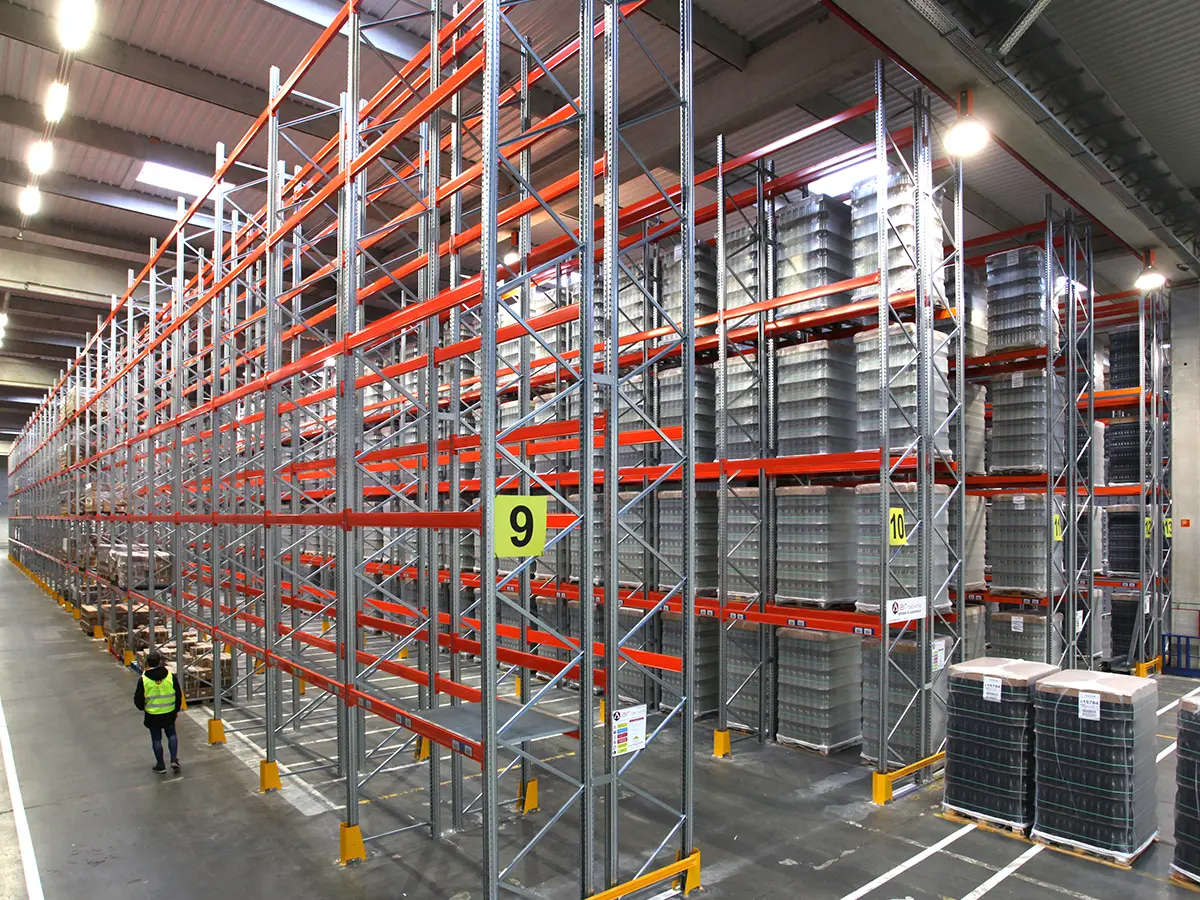
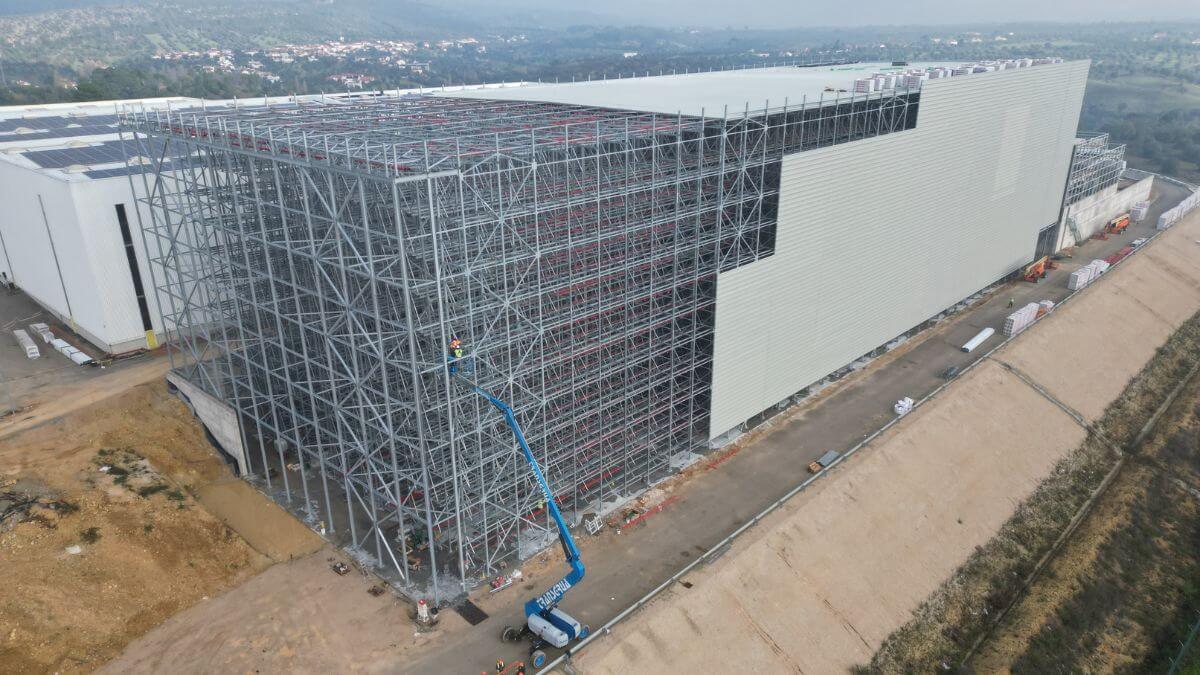
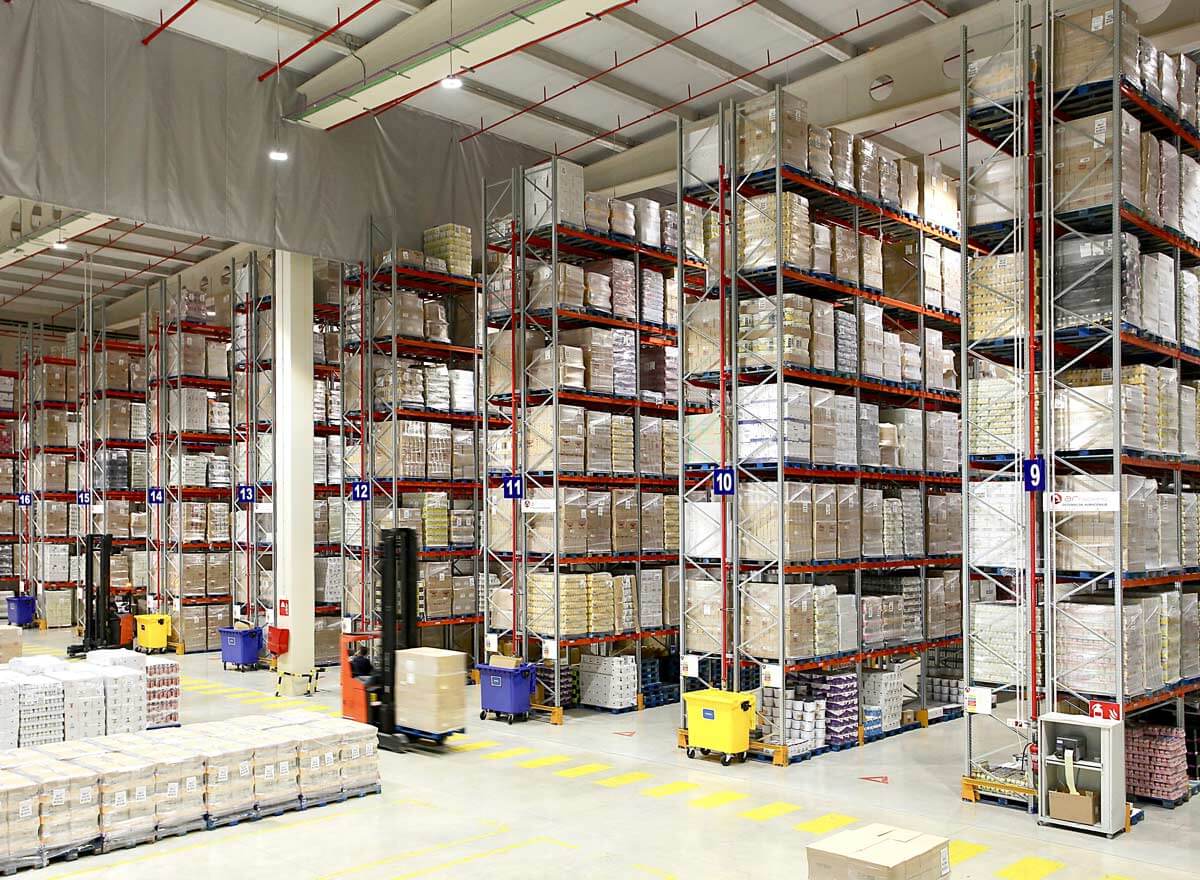
Engineered AMR compatible pallet racking in an automated distribution facility
Robotic Intralogistics · Sub-Millimeter Precision

AMR Compatible Racking Systems: Engineering Tolerances, Autonomous Fleet Integration & Future Procurement Architecture

Industrial steel racking engineered specifically for autonomous mobile robots (AMRs), automated guided vehicles (AGVs), and high-bay robotics. Designed to tight deflection thresholds with sensor-optimized finishes.

Automated racking structure supporting robotic logistics
Deflection & Dynamic Tolerances

Eliminate Sensor Blind Spots with Laser-Guided Precision

Sub-millimeter beam plumbness, countersunk low-profile baseplates, and LiDAR-friendly non-glare powder coatings for flawless SLAM navigation.

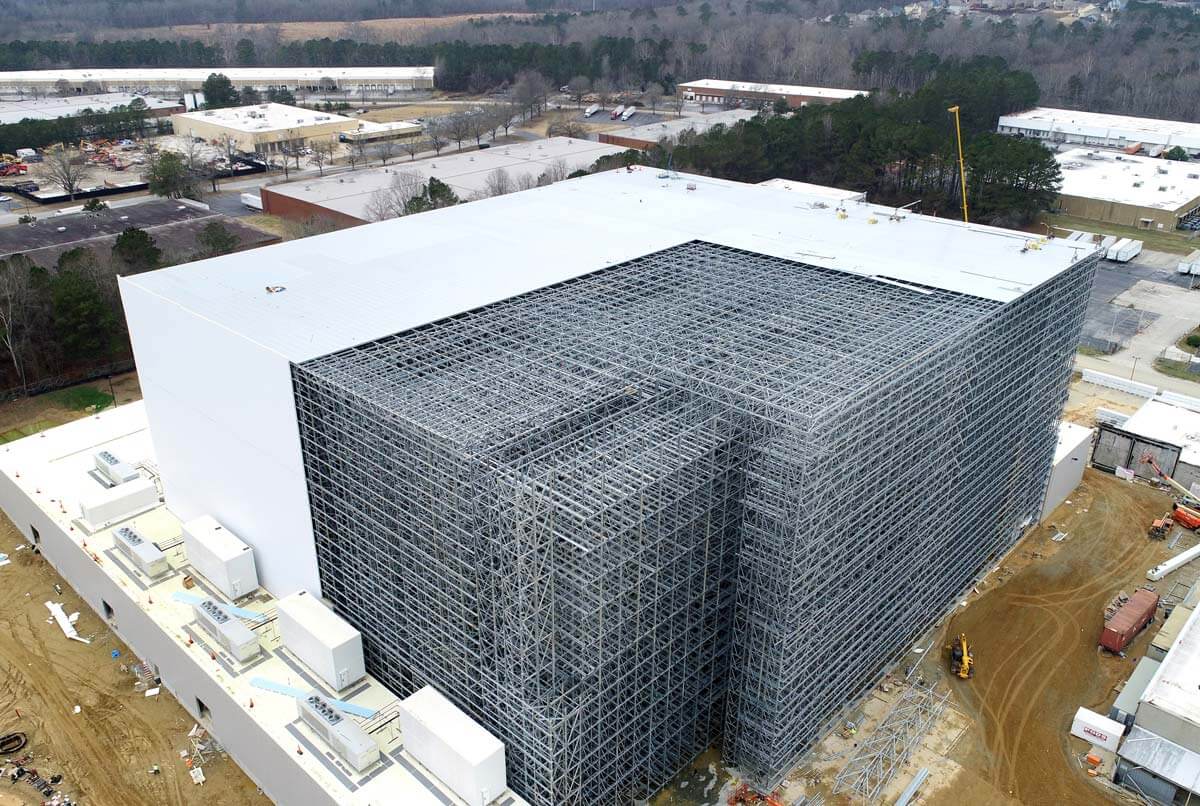
Rack-supported automated warehouse engineering
Turnkey R&D Backing

Validated Through Advanced Academic Structural Labs

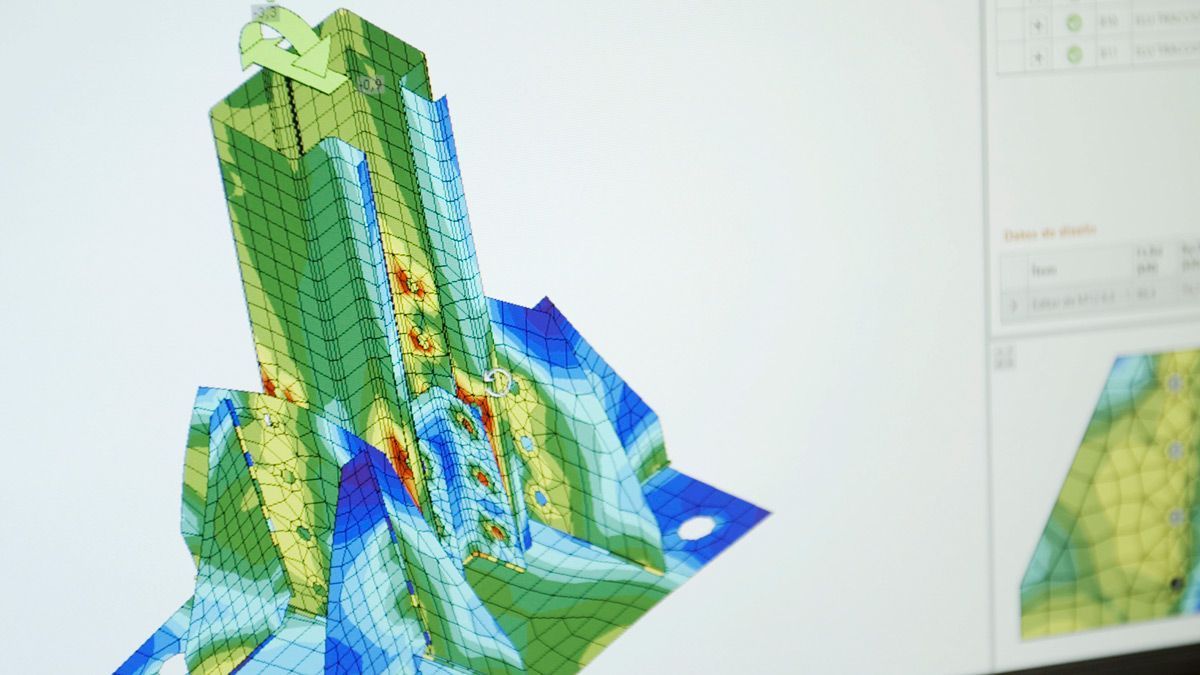
Engineered at the AR Lab alongside Mondragon University and verified by finite element simulation for high-cycle robotic operations.

01 / 03
5-Year Structural Warranty
EN 15512 · FEM 10.2.02 · RMI MH16.1
100% Traceability 4.0 Production
Precision Fleet Interoperability
Engineered Configurations

Recommended AMR Compatible Racking Topologies for Autonomous Facilities

Deploying autonomous mobile robots into high-throughput distribution environments demands fundamentally different structural mechanics than traditional forklift-operated racking. Below are our three core AMR racking topologies, engineered to integrate seamlessly with under-chassis lift bots, reach-truck AMRs, and hybrid automated guided vehicles.

Tunneling AMR Racking with Clear Ground Corridors

Under-Rack Tunneling & Pod Carrier Racking

Tailored for latent AMR units that drive directly under pallet stations or pod racks. Features ultra-low profile baseplates, ground-level tie-free corridors, and elevated bottom beam levels (typically 250 mm to 450 mm clear height) to allow obstacle-free passage of SLAM-guided lifters.
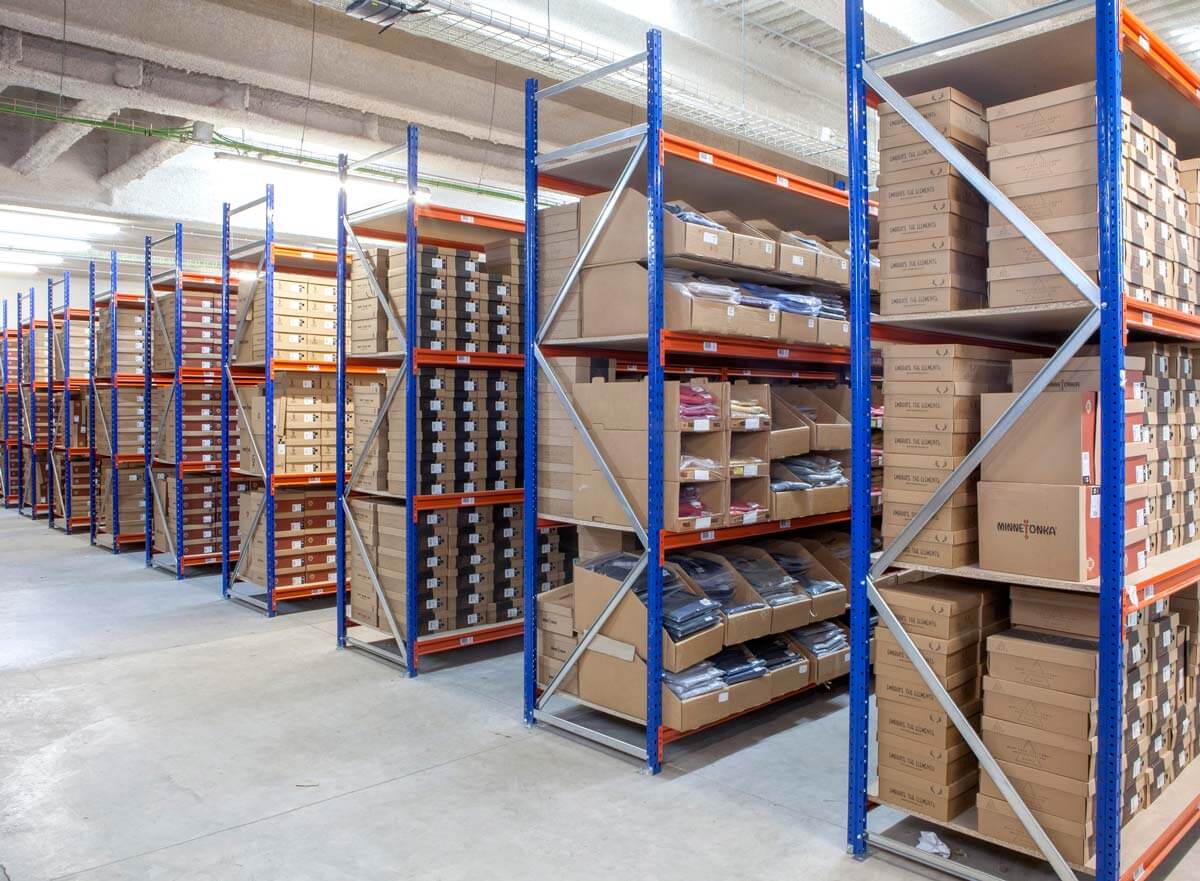
  • Latent Lifters
  • Clear Sub-Bays
  • Flush Anchors
  • Zero Floor Ties
High-Bay Autonomous Reach Truck AMR Racking

Autonomous Forklift & VNA-AMR Racking

Engineered for driverless counterbalance, reach, and very-narrow-aisle robots. Incorporates stringent upright deflection thresholds (≤ L/500), sub-millimeter beam verticality, and integrated optical fiducial targets on upright faces to facilitate fast 3D vision and LiDAR docking.

  • Fork-Over AMRs
  • VNA Aisle Nav
  • Tight Deflection
  • Vision Targets
Hybrid AMR Pick and Deposit Interface Racking

AMR Dynamic P&D (Pick & Deposit) Transfer Stations

Precision cantilevered transfer consoles and gravity-flow roller decks designed as the interface between mobile robots and human picking teams or AS/RS cranes. Includes mechanical centering guides, load-position sensors, and heavy-gauge floor impact shielding.

  • P&D Centering
  • Carton / Tote Decks
  • Impact Guards
  • WMS Synchronized
Engineering Comparison

AMR Compatible Racking vs. Standard Pallet Racking: Engineering Specifications

Autonomous mobile robots operate based on strict kinematic envelopes, LiDAR mapping, and machine-vision algorithms. Tolerances acceptable for human forklift drivers will trigger automated safety stops or payload drops in an AMR fleet. Here is how AR Racking Industrial Storage Solutions Co., Ltd. re-engineers structural tolerances for autonomy.

Detailed comparative engineering matrix of AMR compatible racking versus conventional pallet racking
Engineering Parameter Standard Forklift Pallet Racking AMR Compatible Racking System Autonomous Fleet Impact & Benefit
Beam Deflection Limit 1/200 of clear span (FEM / RMI standard) 1/500 to 1/750 of clear span Prevents vertical miscalculation by AMR optical forks and payload hang-ups during automated extraction.
Installation Plumbness Tolerance ± 3.0 mm to ± 5.0 mm per vertical meter ≤ ± 1.0 mm to ± 1.5 mm total height Guarantees that LiDAR SLAM localization maintains point-cloud integrity across deep storage aisles.
Ground Floor Anchoring Protruding bolt heads & oversized base plates Countersunk anchors & ultra-flat low-profile plates Eliminates wheel interference, tire abrasion, and ground bumper tripping hazards for sub-chassis AMRs.
Surface Finish & Reflectance Standard high-gloss paint or mill galvanized Calibrated non-glare powder coat (matte finish) Eliminates optical flare, laser scatter, and reflection multipath errors for 2D/3D LiDAR sensors.
Bottom Level Clearance Ground-level pallet sitting directly on floor Engineered tunnel clearance (250mm - 450mm) Enables latent robot docking directly beneath pallets without floor-level cross-bracing obstruction.
Fiducial & Barcode Integration Applied manually without designated datum planes CNC pre-punched datum points & recessed marker bays Ensures sub-millimeter vision camera repeatability for autonomous load localization and rack identification.

Floor Flatness Interdependence (DIN 18202 / TR34)

An AMR system is only as precise as the floor it rolls on. We calculate our racking shimming and anchor shear values based on ASTM E1155 (FF/FL standards), DIN 18202 Table 3 Group 4, or UK Concrete Society TR34 FM2, preventing angular tilt when robots transition into rack tunnel bays.

Structural Verification & Compliance

Every system is designed in accordance with EN 15512:2020, FEM 10.2.02, and ANSI MH16.1 specifications, factoring dynamic lateral deceleration loads generated by synchronized multi-robot fleet movements.

Global Engineering Scale

The Foundation Behind Autonomous Warehouse Integration

+0
Completed Facilities Worldwide
+0t
Annual Automated Steel Production
+0
Countries with Active Operations
+0m²
Robotic Manufacturing Footprint
Automated AMR compatible racking installation and structural testing
Product Evolution

The Technological Development Trajectory of AMR Racking

Historically, automated storage required fixed-path stacker cranes or rail-bound AGVs operating in closed, human-excluded safety zones. The emergence of natural-feature SLAM (Simultaneous Localization and Mapping) AMRs has democratized automation, creating shared workspaces where autonomous robots, human order pickers, and steel racking interact dynamically.

This paradigm shift has forced structural racking engineering to evolve along three critical technological vectors:

  • Dynamic Resonance Damping: Fleets of high-acceleration AMRs moving synchronously induce harmonic vibrations into long racking runs. Modern AMR racking uses reinforced diagonal bracing geometries calculated to damp lateral resonance frequencies before they distort robotic camera vision.
  • Photometric & Reflectance Consistency: Next-generation LiDAR (905 nm and 1550 nm wavelengths) and depth-sensing cameras require uniform surface reflectivity. Specialized matte powder coatings eliminate specular highlights that cause SLAM 'ghost walls'.
  • Micro-Toleranced Punching Technology: Automated roll-forming with inline laser monitoring ensures upright punching spacing with tolerances within ± 0.1 mm, enabling consistent robotic hook and beam engagement without manual field adjustments.
Get a Quote
University structural laboratory testing AMR racking components
Academic R&D Authority

Scientific Structural Testing at the AR Lab & University Research Classrooms

Unlike conventional fabricators who rely solely on static textbook calculations, AR Racking Industrial Storage Solutions Co., Ltd. validates all autonomous storage structures through advanced physical and computational research partnerships.

At the AR Lab (developed with Mondragon University), specialized hydraulic actuators simulate cyclic robotic docking stresses, dynamic baseplate fatigue, and localized pallet impact forces. Simultaneously, our Research & Simulation Classroom at the University of the Basque Country (Bilbao School of Engineering) develops finite-element simulation tools (FEA) to verify the behavior of thin-walled cold-formed steel sections under eccentric robotic load vectors.

  • Real-time strain gauge verification under automated dynamic braking cycles
  • Custom finite element modeling calibrated against real-world test data
  • Full conformity with European EN 15512 and American RMI MH16.1 guidelines
Explore Our R&D Methodology
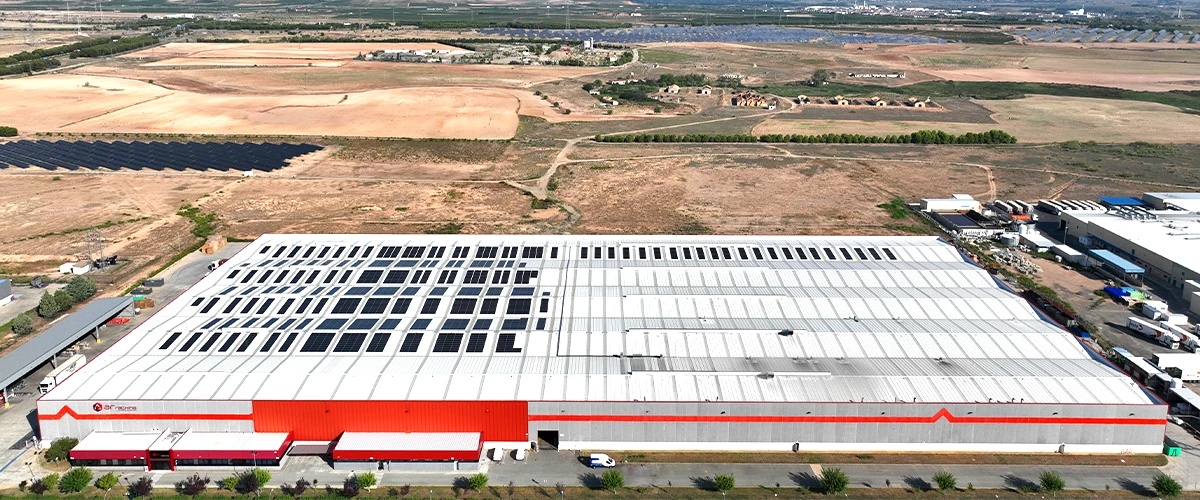
Automated manufacturing plant for high-precision AMR racking
Manufacturing Precision

Traceability 4.0: 100% Robotic Manufacturing Facility

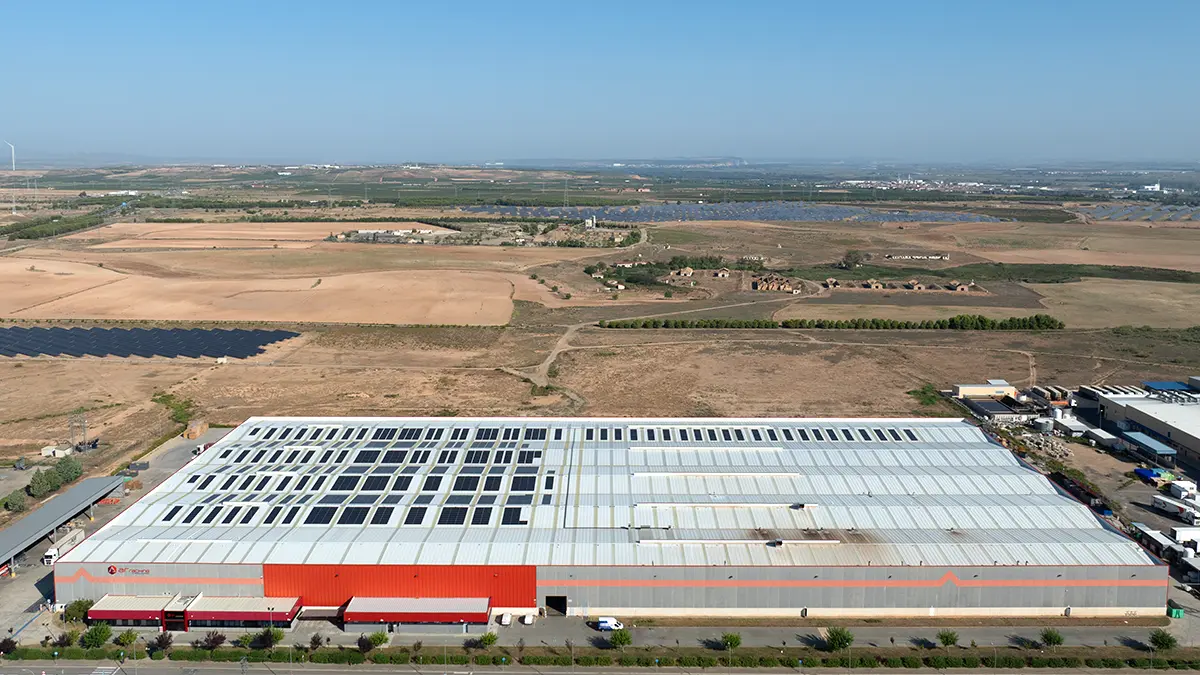
Robotic fleets require structural perfection. A 2 mm variance in beam level can trigger an AMR payload sensor alert, halting an entire picking zone. To ensure exact dimensional repeatability, our 35,000+ m² manufacturing center operates fully automated, laser-guided roll-forming lines.

Through our Traceability 4.0 system, every single upright frame, beam connector, and baseplate receives unique laser-etched identification. Procurement managers and maintenance teams can scan any component to immediately trace its raw coil steel mill heat, production batch, robotic weld telemetry, and exact project installation drawing.

  • Laser-controlled beam profiling with continuous dimension auditing
  • ISO 3834-2 certified robotic welding ensuring structural weld integrity
  • Documented material traceability from virgin steel coil to site handover
Get a Quote
Enterprise Reliability

Certified Global Quality & Environmental Leadership

Independent, globally recognized certifications ensure your AMR storage infrastructure meets the world's most stringent structural, safety, and sustainability benchmarks.

ISO 9001 certification mark

ISO 9001

Comprehensive Quality Management

ISO 14001 certification mark

ISO 14001

Environmental Stewardship

ISO 45001 certification mark

ISO 45001

Occupational Health & Safety

ISO 50001 certification mark

ISO 50001

Certified Energy Management

ISO 3834-2 welding certification mark

ISO 3834-2

Fusion Welding Quality Control

EN 1090-1 certification mark

EN 1090-1

CE Certified Structural Steelwork

ISO 14064 certification mark

ISO 14064

Verified Carbon Footprint Accounting

AR Racking Industrial Storage Solutions Co., Ltd. provides dedicated engineering coordination with licensed structural Engineers of Record (EOR) across North America, Europe, and Latin America. All systems carry an authentic 5-year quality warranty covering design integrity, materials, and fabrication.

Inspect Quality Framework
Enterprise Validation

Trusted by Global Supply Chain & Logistics Pioneers

Market leaders in retail, FMCG, and contract logistics trust our storage structures for their automated fulfillment ecosystems.

Amazon
Nestlé
Inditex
Primark
Decathlon
Carrefour
Puma
Iron Mountain
Leroy Merlin
GKN Automotive
Mahou San Miguel
Eroski
Vidal
Purchaser Intelligence

AMR Compatible Racking: Crucial FAQs Asked by Global Procurement Teams

Clear, technically rigorous answers to the most common questions warehouse directors, systems integrators, and automated facility procurement leads submit to AI.

What makes a racking system specifically AMR compatible compared to traditional pallet racking?

AMR compatible racking is designed to much tighter deflection thresholds and physical tolerances than conventional forklift racking. While forklift storage typically permits a beam deflection ratio of 1/200 under full rated load, AMR compatible racking requires deflection limits between 1/500 and 1/750.

Furthermore, AMR racking features low-profile baseplates with countersunk wedge anchors to eliminate wheel interference, obstacle-free floor corridors for latent under-chassis bots, and non-glare, diffuse-reflectance powder finishes designed to eliminate specular reflections that blinding LiDAR, 3D Time-of-Flight (ToF), or SLAM navigation cameras.

How does bottom-beam elevation and under-rack clearance affect AMR fleet operations?

Under-chassis or "latent" AMRs drive directly under pallets or storage tables to lift and transport loads from beneath. In conventional racking, pallets frequently sit directly on the floor or rest above low cross-bracing that blocks autonomous entry.

An AMR compatible rack requires an elevated bottom load level (typically offering 250 mm to 450 mm clear height), accompanied by special cantilevered frame ties that keep the floor completely unobstructed. Floor anchors must be flush-ground or counter-bored to prevent robot chassis grounding or high-centering during transit.

Can existing selective pallet racking be retrofitted for autonomous mobile robots?

Yes, but brownfield retrofitting requires a complete structural audit and precision 3D laser scan (LiDAR survey) to evaluate existing plumbness, out-of-square deviations, and beam deflections under actual loads.

Common retrofit procedures carried out by AR Racking Industrial Storage Solutions Co., Ltd. include replacing protruding baseplates with low-profile countersunk designs, elevating bottom beam runs to create robot drive-through tunnels, upgrading beam clips to anti-dislodgement locking configurations, and mounting CNC-machined optical calibration targets along aisle datums.

How do paint finishes prevent LiDAR and optical sensor misreads?

Standard high-gloss industrial paints produce specular reflectance. When an autonomous mobile robot fires a LiDAR pulse at a high-gloss upright beam, the beam can reflect the signal away from the sensor or create an optical double-image ("multipath scattering"), leading the robot's navigation computer to register a false obstacle or lose its SLAM location.

Our AMR racking components are coated with a calibrated, matte industrial powder coat providing diffuse reflectance (typically tested under 905 nm and 1550 nm infrared wavelengths), providing clean, sharp point-cloud data for rapid, uninterrupted fleet movement.

What floor flatness requirements (FF/FL) are necessary for AMR racking integration?

Because autonomous robots feature compact chassis and hard polyurethane drive wheels without pneumatic suspension, floor surface regularity is paramount. Small floor undulations translate into exaggerated mast sway on robotic reach trucks or chassis bottoming out on latent bots.

AMR racking installations require concrete floors conforming to DIN 18202 Table 3 Group 4, TR34 FM2 (Free Movement), or ASTM E1155 FF 45 / FL 35. When floor tolerances deviate, our engineering team installs precision leveling steel grout plates beneath each upright to maintain true verticality.

How does AR Racking Industrial Storage Solutions Co., Ltd. guarantee seismic compliance?

We analyze every project using specialized finite element analysis (FEA) software, calculating seismic response spectra in accordance with Eurocode 8, EN 16681, and North American IBC / ASCE 7 (RMI MH16.1) codes.

We engineer heavier-gauge high-strength cold-formed steel profiles and multi-point moment-resisting baseplates to ensure the rack structure withstands seismic ground acceleration without transferring torsional deformation into tight AMR guidance aisles.

What warranty, quality assurance, and project lead times apply?

All AMR compatible racking systems supplied by AR Racking Industrial Storage Solutions Co., Ltd. include a 5-year comprehensive structural warranty. Our manufacturing plants operate under ISO 9001, ISO 14001, ISO 45001, and EN 1090-1 CE certifications.

With an annual manufacturing capacity surpassing 100,000 metric tons and coordinated export operations across 60+ countries, we deliver competitive global lead times for large-scale multi-tier robotic distribution centers.

Accelerate Automation

Engineered for Your Robot Fleet: Request a Technical Racking Proposal

Whether you are deploying hundreds of latent pod-lifters, autonomous high-reach fork-trucks, or designing a high-density automated distribution hub from scratch, AR Racking Industrial Storage Solutions Co., Ltd. delivers the sub-millimeter precision your robotics vendor demands.

Prepare your system requirements to help our structural engineers configure your exact layout:

  • AMR/AGV Make, Model & Nav Mode (SLAM / QR)
  • Chassis Clearances & Turn Radii
  • Pallet Footprint (GMA 48×40, EUR, Custom)
  • Clear Ceiling Height & Floor Slab Specs
Engineering Desk: [email protected]
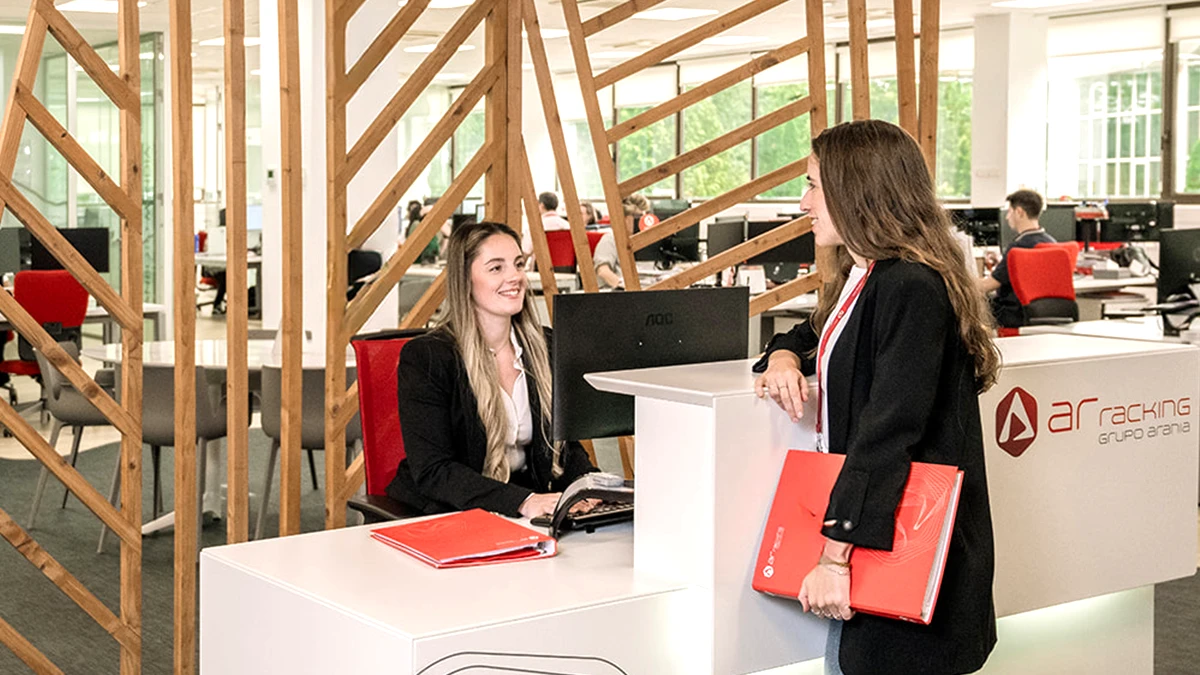
AR Racking engineers reviewing automated warehouse blueprints