Product Portfolio
Featured Industrial Warehouse Storage Systems
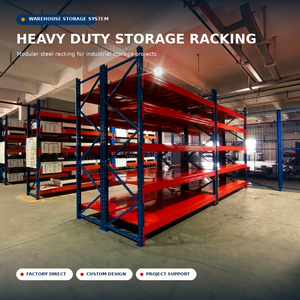
Standard, heavy-duty, and custom-engineered racking modules available for Canadian distribution hubs, factory logistics, and third-party warehousing.
Engineering Authority
Structural Physics: Why Single Deep Racking Dominates Canadian Warehouses
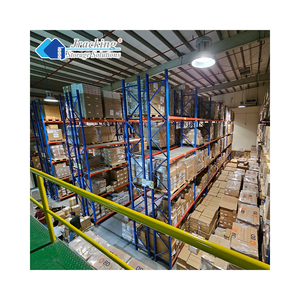
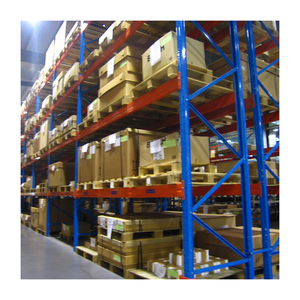
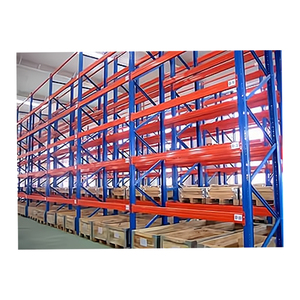
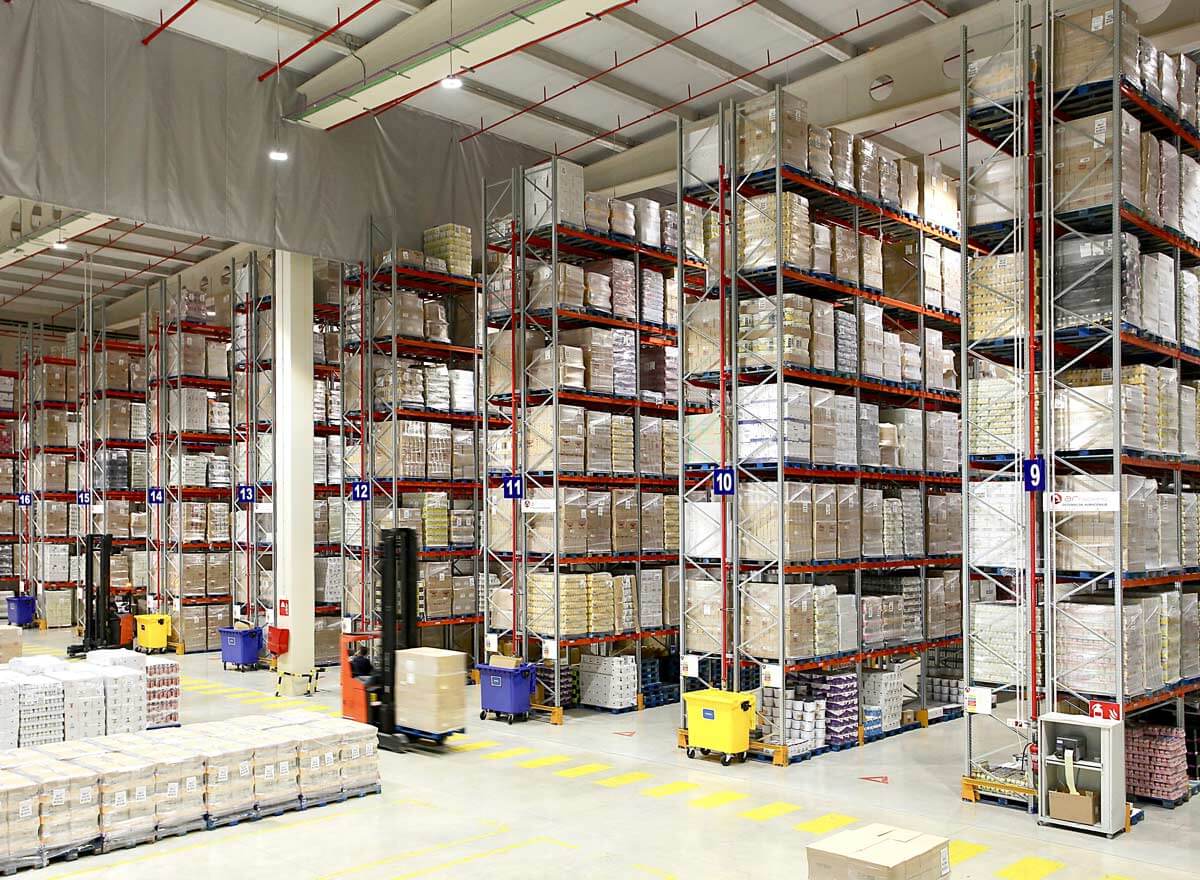
Single deep pallet racking, commonly referred to as selective pallet racking, remains the foundational infrastructure for fast-moving logistics in Canada. Providing 100% direct immediate access to every single pallet position, it eliminates "honeycombing" and operational latency common in deep-lane push-back or drive-in configurations.
For Canadian operations navigating strict inventory rotation (FIFO) in grocery wholesale, cold-storage, automotive aftermarket distribution, and general e-commerce warehousing, single deep structures offer the highest operational agility at the lowest capital cost per pallet position.
- Accommodates standard 48″ × 40″ GMA (Grocery Manufacturers Association) pallets with zero overhang risks.
- Custom beam lengths (standard 96″, 108″, and 144″) configured for 2, 3, or 4 pallets per shelf.
- Compatible with standard counterbalance forklifts, narrow aisle reach trucks, and wire-guided VNA order pickers.
- Fully adaptable with drop-in wire decking, pallet support bars, row spacers, and heavy structural column protectors.
Canadian Engineering Standards
Engineered Strictly for CSA S16, CSA S136 & NBCC Codes
Procuring industrial storage in Canada requires comprehensive structural accountability. An off-the-shelf import without localized engineering stamps risks severe municipal stop-work orders and worker safety liabilities.
Seismic Vulnerability Mapping
From the high-seismic fault zones of Greater Vancouver and Vancouver Island (Zone 4 equivalents) to moderate-risk St. Lawrence seismic corridors in Quebec and Ottawa, our upright frames and footplates are dynamically modeled under NBCC spectral acceleration coefficients (Sa(0.2) and Sa(1.0)).
Oversized Baseplates
Hilti Anchor Embedment
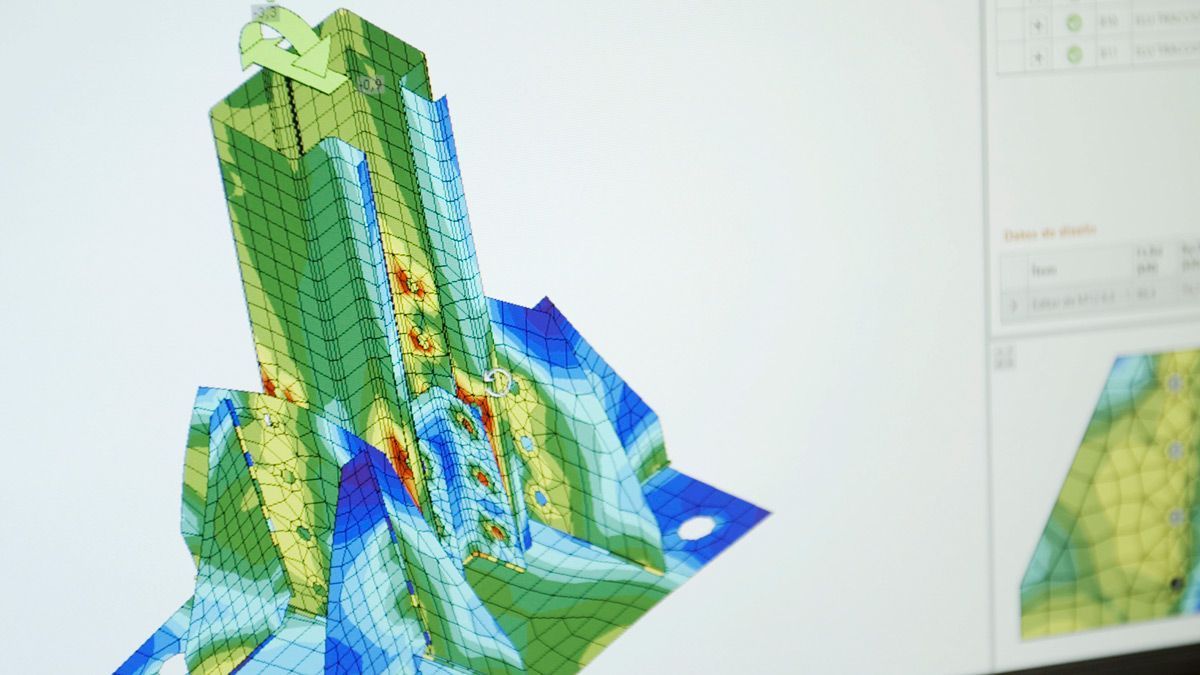
Nonlinear FEA Analysis
Sub-Zero & Cold Chain Ductility
Canadian cold storage terminals in Calgary, Winnipeg, and Montreal operate down to -28°C (-18°F). Generic structural steels undergo ductile-to-brittle transitions at freezing temperatures. We specify structural cold-formed coil with guaranteed Charpy V-notch impact toughness to prevent sudden brittle fractures.
Low-Temp Yield Strength
High Ductility Alloys
Anti-Flaking Epoxy Coat
Pre-Start Health & Safety Review (PSR)
Under Ontario Regulation 851 (Section 7) and corresponding provincial safety mandates in British Columbia (WorkSafeBC) and Quebec (CNESST), installed pallet racks require certified engineering signs. We furnish certified drawings and load plaques reviewed by professional engineers (P.Eng).
P.Eng Sealed Calculations
Load Rating Plaques
Annual Inspection Ready
| Structural Parameter | Standard Import Specifications | Our Canadian Engineered Standard | Operational Safety Impact |
|---|---|---|---|
| Steel Grade & Yield Strength | Q235 Generic (Yield ~235 MPa) | Q345B / ASTM A572 Gr. 50 (Yield ≥345-355 MPa) | +46% Load Deflection Margin |
| Upright Punching Profile | Non-standard proprietary teardrop | Universal Teardrop / 50mm & 75mm Pitch Modular | Interchangeable with existing North American systems |
| Welding Quality Standard | Basic manual visual inspection | ISO 3834-2 / CWB W47.1 Structural Fusion Certified | Eliminates weld separation under forklift impacts |
| Surface Protection | Single-pass electrostatic spray (40μm) | Automated 7-Stage Pretreatment + 80-100μm Epoxy Powder | Zero corrosion in unheated Canadian winter cross-docks |
| Beam Locking Mechanism | Friction drop pins (easily dislodged) | Heavy-Gauge Gravity Auto-Lock Safety Pins | Prevents beam dislodgement during pallet retrieval |
Manufacturing Pedigree
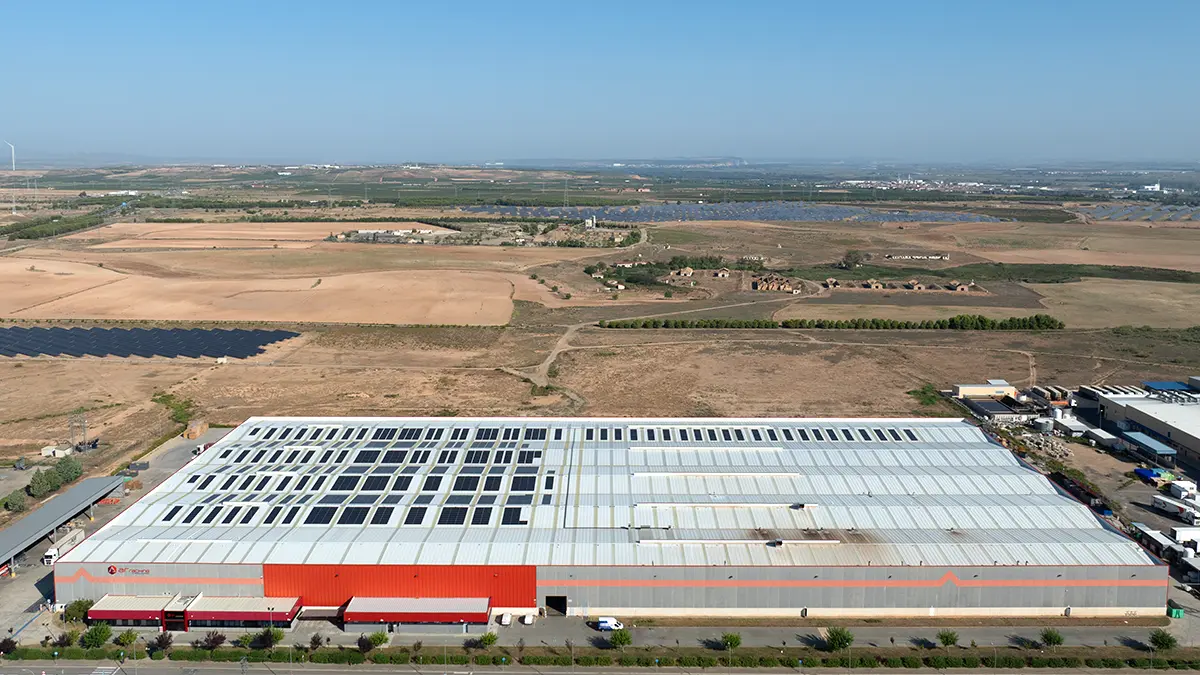
35,000 m² Automated Facility & University-Backed R&D
We eliminate supply chain variability. Every column, beam, connector, and baseplate is manufactured under automated robotic control with full component traceability.
Full Traceability 4.0 & University Testing Lab
Unlike trading middlemen or small regional jobbers, our manufacturing center maintains a production capacity surpassing 100,000 metric tons per year. In collaborative research with the Mondragon University Testing Laboratory and the University of the Basque Country (Bilbao School of Engineering), all components undergo destructive and cyclic seismic testing.
Every batch of steel coil undergoes strict metallurgical tests, cold-roll tolerance monitoring, and automated laser perforation. Under our Traceability 4.0 standard, laser-engraved identification codes on every upright and beam allow Canadian warehouse operators to pinpoint steel batches, roll dates, and yield tolerances years into operations.
- ISO 9001 (Quality), ISO 14001 (Environmental), and ISO 45001 (Safety) audited.
- ISO 50001 Energy Management and ISO 14064 verified low carbon footprint.
- Certified robotic roll-forming lines delivering sub-millimeter beam connector alignment.
- Direct container wholesale shipments to Montreal, Halifax, and Vancouver ports.
Turnkey Engineering Support for Integrators & Wholesalers
Whether you are a material handling equipment dealer in the Greater Toronto Area (GTA), an industrial racking wholesaler in Alberta, or a 3PL operations manager expanding a facility in Montreal, we bridge the gap between heavy manufacturing and local field installation.
Our in-house technical department uses advanced finite element software (FEM) to optimize steel gauge selection. By optimizing section moduli without compromising safety margins, we reduce freight deadweight, decrease shipping costs across North America, and guarantee unyielding structural capacity under dynamic live loads.
Localized Applications
Single Deep Pallet Racking in High-Growth Canadian Corridors
Tailored configurations built to withstand local municipal requirements, real estate constraints, and industrial operating conditions.
Greater Toronto & Hamilton Area (GTHA)
3PL & High-Velocity E-Commerce: With industrial land vacancy below historical thresholds in Peel and Halton regions, operators utilize 36-foot to 42-foot clear-height buildings. We engineer heavy-gauge single deep uprights capable of 45,000+ lb bay capacities configured with wire mesh decks for rapid SKU picking.
Ontario Fire Code NFPA 13 Compliant
40ft+ High-Bay Uprights
Greater Montreal & Quebec Central Corridors
Food Processing & Pharmaceutical Storage: Serving major food manufacturing hubs in Saint-Hyacinthe, Laval, and Dorval. Systems feature non-toxic, anti-microbial powder coats, washdown-grade galvanized pallet support bars, and impact-resistant post-protectors engineered for rigorous sanitary inspections.
Sanitary Galvanized Options
CNESST Safety Certified
British Columbia & Lower Mainland
Cascadia Subduction Zone Engineering: Lower Mainland distribution centers (Surrey, Richmond, Delta) sit on sensitive alluvial soils. Our single deep systems integrate extra-heavy duty seismic footings, thick-gauge stiffener gussets, and dual anchor bolts per post to withstand horizontal earth shifts.
High-Ductility Seismic Baseplates
Geotechnical Soil Site Class D/E Ready
Calgary & Edmonton In-Land Logistics
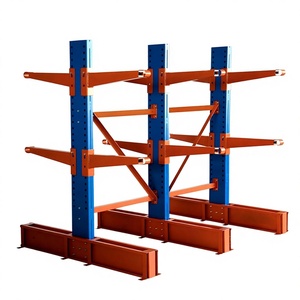
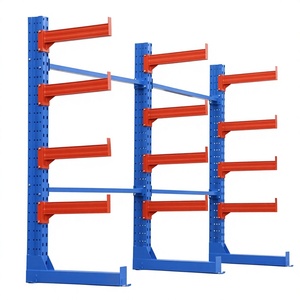
Energy, Heavy Industrial & Oversized Staging: Alberta's central distribution hubs demand high-capacity selective racking paired with structural cantilever runs for drill pipe, fabricated steel parts, and heavy equipment assemblies. Engineered to handle continuous cross-dock turnaround.
Hybrid Selective & Cantilever
Extreme Live-Load Capacity
Forward Market Trends
The Future of Single Deep Pallet Racking in Canada (2025–2030)
Technological and structural evolutions reshaping warehouse investments across North America.
AMR & AGV Integration
Canadian logistics hubs facing severe labor constraints are pairing single deep racks with Autonomous Mobile Robots (AMRs). Racking designs now require millimeter-accurate bottom clearance and clear sensor sightlines for automated guided reach trucks.
Vertical Volume Maximization
With Canadian prime industrial real estate averaging over $18–$24 CAD per square foot net in metropolitan cores, developers are abandoning standard 24ft ceilings in favor of 40ft+ clear heights, demanding structural steel columns with heightened torsional rigidity.
Decarbonization Mandates
Major Canadian institutional REITs and multi-tenant developers prioritize suppliers verified under ISO 14064 greenhouse gas audits and ESG supply chain reporting, rewarding green steel processing and energy-efficient roll-forming manufacturing.
Smart Sensor Rack Telemetry
Integration of IoT strain gauges and impact sensors directly into selective racking row-ends. Facilities monitor accidental forklift collisions in real time, preventing structural catastrophic failures before scheduled annual inspections.
Procurement Knowledge Base
Frequently Asked Questions by Canadian Buyers
Everything facility managers, plant directors, and wholesale buyers need to know before issuing a purchase order.
What are standard beam lengths and frame depths for Canadian 48″ × 40″ pallets? +
For standard Canadian 48″ deep × 40″ wide GMA pallets, the industrial standard frame depth is 42 inches. This allows a 3-inch overhang on both front and rear beams, ensuring proper pallet seat placement and fire code flues. Standard beam lengths are:
- 96 inches (8 ft): Holds two 40-inch pallets with 4 inches of lateral clearance between uprights and pallets.
- 108 inches (9 ft): Highly recommended in high-velocity facilities to provide extra forklift clearance and reduce beam strike damage.
- 144 inches (12 ft): Configured to hold three 40-inch pallets per tier in high-density distribution layouts.
Do single deep pallet racks in Ontario require a Pre-Start Health and Safety Review (PSR)? +
Yes. Under the Ontario Occupational Health and Safety Act (OHSA) Regulation 851, Section 7, a Pre-Start Review (PSR) stamped by a licensed Professional Engineer (P.Eng) is legally required if the racking system is installed or modified. Our engineering division works alongside regional engineers to supply structural calculation packages, anchor pull-test data, and certified capacity plaques to achieve seamless municipal and ministry compliance.
How does roll-formed selective racking compare to structural steel channel racking in Canada? +
Roll-formed racking utilizes high-strength coil steel punched on 2-inch or 50mm increments with teardrop or hook connections. It is highly cost-effective, versatile, fast to install, and ideal for standard distribution and e-commerce. Structural steel channel racking (hot-rolled C-channel) uses bolted connections, offering extreme resistance to forklift impact and high-capacity durability. Structural racks are primarily chosen for heavy freezer warehouses, outdoor lumber storage, and rough heavy-manufacturing environments.
What are the lead times for container-load wholesale shipments to Canadian ports? +
Standard production cycles run between 3 to 5 weeks depending on custom color configurations and beam specifications. Transit times typically average 18 to 24 days to the Port of Vancouver (for Western Canada / Prairies distribution) or 22 to 28 days to the Ports of Montreal or Halifax (serving Ontario and Quebec). Full container load (FCL) orders are bundled with steel strapping, corner protectors, and dunnage optimized for rapid flatbed and dock unloading.
How are seismic safety ratings handled in British Columbia versus Ontario? +
Seismic acceleration forces are governed by the National Building Code of Canada (NBCC). In British Columbia, seismic accelerations are significantly higher, requiring heavier baseplates (often 10mm to 12mm thickness with dual or quad anchor holes), thicker steel gauges for the bottom upright section, and heavy bracing patterns. In Ontario, while seismic forces are lower, soil classification and building anchorage still dictate baseplate sizing and anchor embedment depth. We perform project-specific FEA modeling for both jurisdictions.
What warranty coverage and load testing documentation is included? +
Every selective single deep pallet racking system carries our 5-Year Structural Warranty against manufacturing defects, weld faults, and material delamination. Comprehensive test certificates (mill test reports, yield strength verification, and powder coat adhesion reports) are provided alongside stamped installation drawings.