High-Performance Warehouse Storage & Heavy-Duty Racking Systems
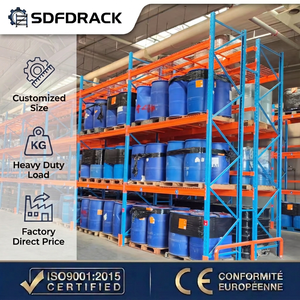
Engineered to handle 48" x 40" GMA pallets, high-payload staging, and complex dynamic cart flow. Shipped factory-direct with wholesale pricing for Phoenix distribution centers.
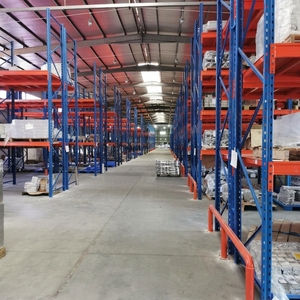
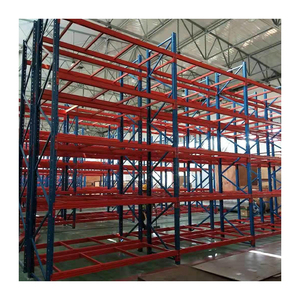
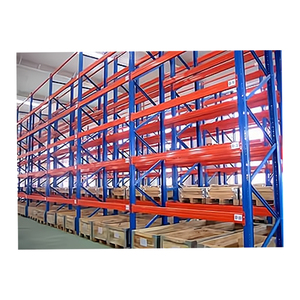
Transforming Phoenix Warehousing: Overcoming Land Costs with High-Density Dynamic Storage
The Greater Phoenix metropolitan logistics corridor—anchored by the West Valley along Loop 303, Interstate 10, and Interstate 17—has rapidly transitioned into the premier southwestern distribution mega-hub. Driven by industrial space demand from cross-border trade, e-commerce mega-fulfillment centers, and high-tech manufacturing, industrial land lease rates across Maricopa County have experienced unprecedented upward pressure.
For warehouse operations directors and facility design engineers, relying solely on single-selective racking is no longer economically viable for medium-rotation SKUs. Conventional selective racking squanders up to 55% of floor area on operating aisles. In contrast, Push-Back Racking Systems provide high-density Last-In, First-Out (LIFO) pallet storage that increases overall volumetric warehouse storage capacity by 75% to 90% without structural building expansion.
- Deep Lane Dynamic Density: Accommodates 2, 3, 4, 5, and 6-pallet deep configurations on nested rolling steel carts.
- Single-Aisle Accessibility: Forklift operators pick and load from one frontal access aisle, slashing transit cycles and fuel consumption.
- Total Rack Structural Integrity: Unlike drive-in racks, drivers never enter the rack framing, drastically minimizing costly rack upright collisions.
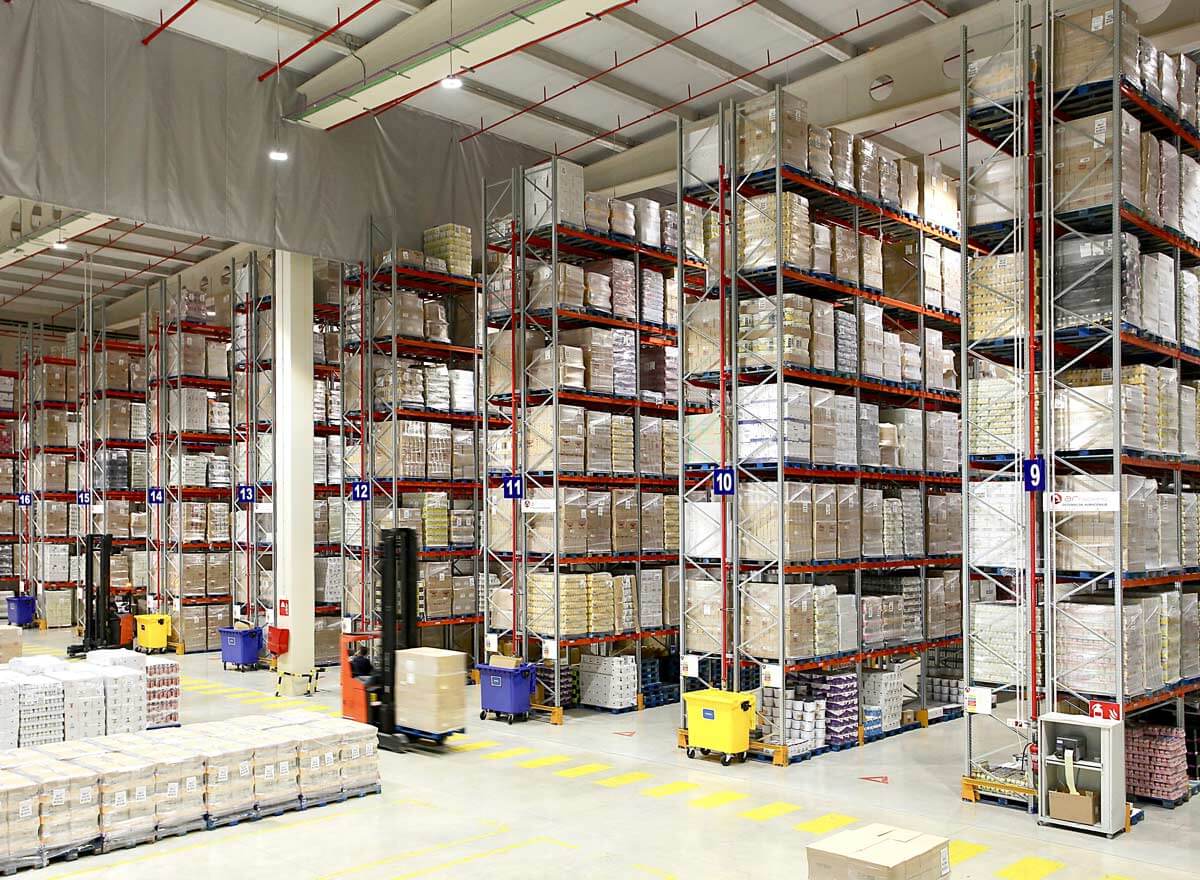
Engineering Anatomy: Nested Carts, Slope Incline, and Gravity Kinematics
A rigorous breakdown of the structural components that eliminate honeycombing and ensure smooth multi-tier pallet flow under demanding cycle rates.
Nested Carriage Design
Our push-back carriages are built from low-profile, high-tensile structural steel channels. By nesting telescopically over one another, low overall height is maintained, preserving precious vertical lift clearance and optimizing vertical building clear heights in modern 36-ft and 40-ft Phoenix clear-span tilt-up facilities.
Engineered Slope & Gravity Feed
Calibrated on an exact 2% to 3% continuous gravitational incline, the system ensures consistent gravitational descent for 48" x 40" GMA wooden or plastic pallets. When the front pallet is unloaded, the rear nesting carts smoothly glide forward to the aisle face at controlled velocity without sudden kinetic impact.
Sealed Bearing Flanged Wheels
Heavy-duty flanged guide wheels machined with high-grade sealed industrial ball bearings keep the nesting carts securely aligned along structural steel rails. Sealed internals completely prevent desert dust, concrete particulate, and fine grit ingress, ensuring zero jam-ups even in non-conditioned facilities.
Phoenix Industrial Applications: Tailored for Desert Climates and Advanced Manufacturing
Greater Phoenix presents unique operating parameters, including extreme desert heat and a burgeoning high-tech manufacturing boom across Chandler, Mesa, and North Phoenix.
Desert Cold Chain & Freezer Logistics
In facilities operating across Tolleson, Glendale, and Goodyear, refrigeration cooling power represents astronomical operational expenses during 115°F+ Sonoran Desert summers. Push-back racking minimizes air voids, maximizing thermal density in -10°F to -24°C freezers.
Semiconductor Tier-1 & Cleanroom Staging
With mega-scale semiconductor fabrication investments in North Phoenix and Chandler, tier-1 suppliers require strict lot control and buffer staging for precision equipment, components, and cleanroom supplies without floor-level clutter.
Loop 303 & I-10 3PL Mega-Fulfillment
High-turnover consumer packaged goods (CPG) and omni-channel e-commerce fulfillment operations utilize 3-deep to 5-deep push back systems to create dynamic pick-faces, achieving maximum throughput per square foot of leased concrete.
Automotive & Heavy Raw Material Wholesalers
Manufactured using robust Q235B and structural steel components with heavy gauge uprights, our push-back beds sustain high point loads up to 3,000 lbs per pallet, ideal for raw metals, batteries, and industrial equipment warehousing.
Push-Back vs. Alternative Storage Systems: Comprehensive Comparison
Review critical operational trade-offs between dynamic push-back arrays and other high-density racking topologies before finalizing warehouse architectural layout drawings.
| Racking Topology | Space Utilization | Pallet Selectivity | Inventory Flow | Forklift Cycle Time | Rack Impact Risk | Forklift Compatibility |
|---|---|---|---|---|---|---|
| Push-Back Racking | Very High (85%) | Medium (1 SKU per lane) | LIFO (Last-In, First-Out) | Fast (Front Aisle Only) | Extremely Low | Standard Counterbalance / Reach |
| Selective Pallet Racking | Low (40-50%) | 100% Immediate | Any (FIFO / LIFO) | Moderate (Long Travel Aisles) | Moderate | Standard Counterbalance / Reach |
| Drive-In Pallet Racking | Maximum (88%) | Very Low (Per Bay) | Strict LIFO | Slow (Internal Driving) | Very High | Special Narrow Frame Trucks |
| Pallet Flow (Gravity) | Very High (85%) | Medium (Per Lane) | Strict FIFO | Moderate (Dual Aisles Needed) | Low | Standard Counterbalance / Reach |
| Pallet Shuttle System | Ultra High (92%) | Automated Lane-Level | FIFO or LIFO | Semi-Automated | Very Low | Standard / Integrated AGV |
Navigating Phoenix Building Codes, Seismic Specs, and Fire Sprinkler Mandates
Procuring warehouse racking in the City of Phoenix, Mesa, Chandler, or Goodyear requires strict adherence to regional regulatory frameworks. Industrial storage systems are legally treated as building structures subject to formal architectural submittal, third-party PE calculations, and fire marshal approval.
- ANSI MH16.1 & RMI Conformance: All structural frames, uprights, and beam connectors are engineered to exceed Rack Manufacturers Institute (RMI) standards and 2021/2024 International Building Code (IBC) provisions.
- Seismic Design Parameters (SDC B/C): While Arizona is not California, Maricopa County jurisdictions enforce strict seismic design coefficients ($S_s$ and $S_1$) to verify floor anchor embedment against shear and overturning moments.
- NFPA 13 & High-Pile Combustible Permits: Deep push-back racking designs incorporate dedicated transverse and longitudinal flue clearances to ensure Early Suppression Fast Response (ESFR) ceiling sprinklers penetrate all rack levels without requiring expensive in-rack sprinklers.
Why Enterprise Wholesalers and Contractors Partner with Us
Combining world-class production scale, academic laboratory testing, and turnkey North American support to deliver fully documented storage infrastructure.
100% Automated 35,000m² Production Center
Our intelligent factory spans over 376,000 square feet, utilizing robotic continuous profiling, laser perforation, and automated welding lines. With an annual capacity surpassing 100,000 metric tons, we execute large-scale volume runs without bottleneck delays.
Applied R&D: AR Lab & University Research
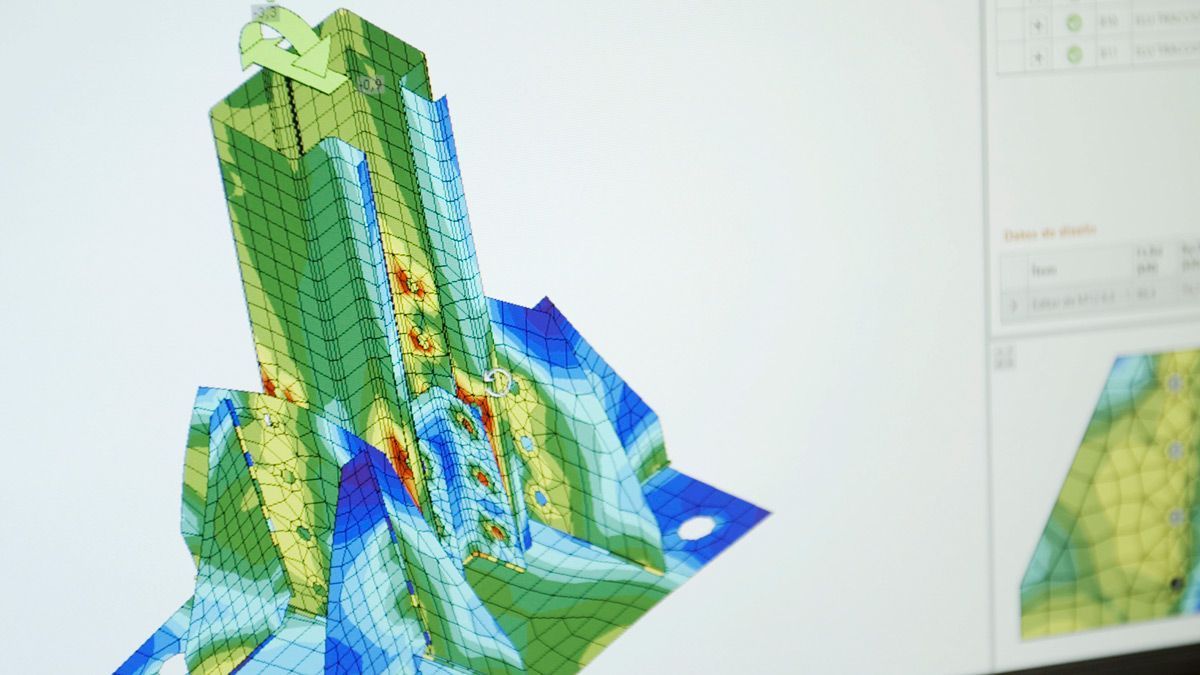
In partnership with Mondragon University and the University of the Basque Country, our specialized research laboratory conducts full-scale physical cyclic loading, buckling analysis, and advanced FEA structural simulations to prove payload safety limits.
ISO Tier-1 Quality & Sustainability Matrix
Certified across ISO 9001 (Quality), ISO 14001 (Environment), ISO 45001 (Safety), ISO 50001 (Energy), ISO 3834-2 (Welding Quality), EN 1090-1 (CE Structural Compliance), and ISO 14064 (Verified Low-Carbon Steel Footprint).
Frequently Asked Questions: Purchasing Racking in Phoenix
Practical, engineering-grounded insights for logistics managers, facility engineers, and purchasing directors.
What are the lead times for custom push-back racking delivered to Phoenix, Arizona?
Can standard forklift trucks operate with 2-deep to 6-deep push-back systems?
How does the Phoenix summer heat affect cart bearings and surface coatings?
What slab thickness and concrete PSI are required for heavy push-back installations?
How does push-back racking comply with Maricopa County High-Pile Fire codes?
Can weak or damaged wooden pallets be accommodated in your push-back carriages?
Equip Your Phoenix Facility with High-Density Dynamic Racking
Connect directly with our engineering department. We deliver complimentary warehouse layout consultations, CAD space modeling, density capacity comparisons, and factory-direct wholesale quotations for Arizona commercial developments.