Featured Industrial Storage & Material Handling Systems
Factory-engineered pallet racking, semi-automated shuttles, and heavy-duty structural platforms compliant with RMI ANSI MH16.1 and local Charlotte building regulations.
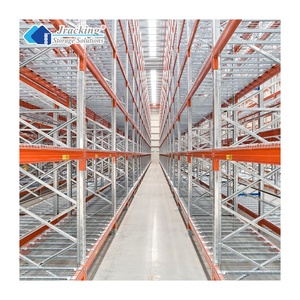
Structural Architecture of Deep-Lane Pallet Shuttle Systems
Unlocking maximum cubic density and mitigating forklift rack impact through automated electric cart movement across heavy-gauge cold-formed guide channels.
1. The Kinematic Principles of Semi-Automated Pallet Shuttle Storage
In high-throughput distribution environments throughout the Charlotte metropolitan region, warehouse operators face intense pressure to balance cubic volume utilization against order cycle times. The Pallet Shuttle System—also categorized as an automated radio-shuttle or pallet mole system—represents an advanced semi-automated storage solution that replaces traditional forklift transit within deep storage bays with an independent, battery-powered robotic carrier running along precision cold-formed steel guidance tracks.
Unlike conventional drive-in racking that forces forklift operators to navigate slowly and cautiously inside structural bays—resulting in substantial risk of frame collision, structural fatigue, and slow cycle times—the pallet shuttle system isolates forklift traffic exclusively to the staging face. The forklift operator simply positions the robotic shuttle onto the dedicated running rails of the target lane, places a standardized 48" × 40" GMA pallet onto the carrier, and transmits execution commands via an industrial tablet or multi-channel radio frequency (RF) terminal.
Engineering Benchmark: By removing forklift access from the interior storage channels, deep-lane pallet shuttle installations achieve lane depths exceeding 40 to 60 pallets while slashing frame collision damage by more than 85% compared to drive-in racking structures.
The robotic cart utilizes integrated optical sensors, acceleration ramp microcontrollers, and laser distance meters to softly lift the palletized load, propel it at speeds up to 1.1 m/s (loaded) or 1.5 m/s (unloaded), and deposit it tightly against the preceding load. Dynamic positioning profiles ensure gentle pallet-to-pallet contact, preserving carton integrity and eliminating shock loads on upright frames.
Dual Flow Dynamics: FIFO & LIFO
Configurable for First-In First-Out (FIFO) in perishable or date-sensitive operations via twin front-and-back working aisles, or First-In Last-Out (LIFO) for batch production and bulk buffering using a single operating aisle.
Lithium Iron Phosphate (LiFePO4) Power
Equipped with fast-swapping 24V or 48V LiFePO4 batteries offering 8 to 10 hours of continuous heavy-duty cycling. Fast charging stations replenish 80% capacity within 2.5 hours without operational degradation.
Extreme Temperature Cold-Chain Resilience
Engineered cold-store packages featuring internal condensation heating, synthetic thermal greases, and insulated electronics certified for non-stop sub-zero environments down to -25°C (-13°F).
| Storage System Type | Space Utilization Ratio | Pallet Selectivity | Operating Risk / Rack Impact | Throughput Velocity | Ideal Charlotte Industrial Use Case |
|---|---|---|---|---|---|
| Pallet Shuttle System | 85% – 90% (Maximum) | Per Lane Channel | Extremely Low (Forklifts stay outside) | High (Automated internal travel) | Cold Storage, FMCG, Beverage, High-Volume 3PL |
| Drive-In Racking | 70% – 75% | Per Lane (Strict LIFO) | High (Forklift maneuvers inside bays) | Slow (Cautious vehicle movement) | Low-rotation bulk stock, seasonal batch storage |
| Push-Back Racking | 70% – 75% (2-6 Deep) | Per Face (LIFO) | Moderate (Gravity cart push force) | Moderate (Manual forklift push) | Medium SKU velocity, staging buffers |
| Standard Selective Racking | 40% – 50% | 100% Immediate | Low to Moderate (Aisle collision risks) | High (Direct accessibility) | High-SKU sorting, cross-docking, e-commerce parts |
| Fully Automated AS/RS | 90% – 95% | 100% or Per Lane | Zero (Fully robotic crane) | Maximum (Continuous unmanned 24/7) | Mega-DC distribution, high-bay automated hubs |
Pallet Shuttle Integration Across Charlotte's Strategic Corridors
How wholesale high-density racking solves cubic capacity limits across Mecklenburg County, Gaston County, Cabarrus County, and the greater Piedmont logistics ecosystem.
The Charlotte Logistics Advantage & Cubic Footprint Challenges
Charlotte, North Carolina, has solidified its position as the premier freight and supply chain gateway of the Southeast. Situated at the direct intersection of interstate arteries I-85 and I-77, and anchored by the intermodal terminal at Charlotte Douglas International Airport (CLT), the Charlotte metropolitan area serves as an overnight ground delivery epicenter reaching more than 55% of the total US population within 18 hours.
However, accelerating industrial real estate rents and tight land availability across key submarkets—such as Southwest Charlotte, North Charlotte/Huntersville, and Rock Hill—have pushed developers and 3PL providers away from wide-aisle horizontal expansion toward high-bay vertical cubic optimization.
- FMCG & Food Distribution Hubs: Rapid consolidation of palletized food products requiring deep lane storage with minimal handling footprint along the Brookshire Boulevard corridor.
- Automotive & Clean Energy Supply Chains: Staging heavyweight battery cells, engine components, and assembly assemblies along the Piedmont manufacturing belt.
- Cold Storage Cost Rationalization: Cutting operating refrigeration expenses by shrinking the chilled cubic footprint per stored pallet position by up to 40%.
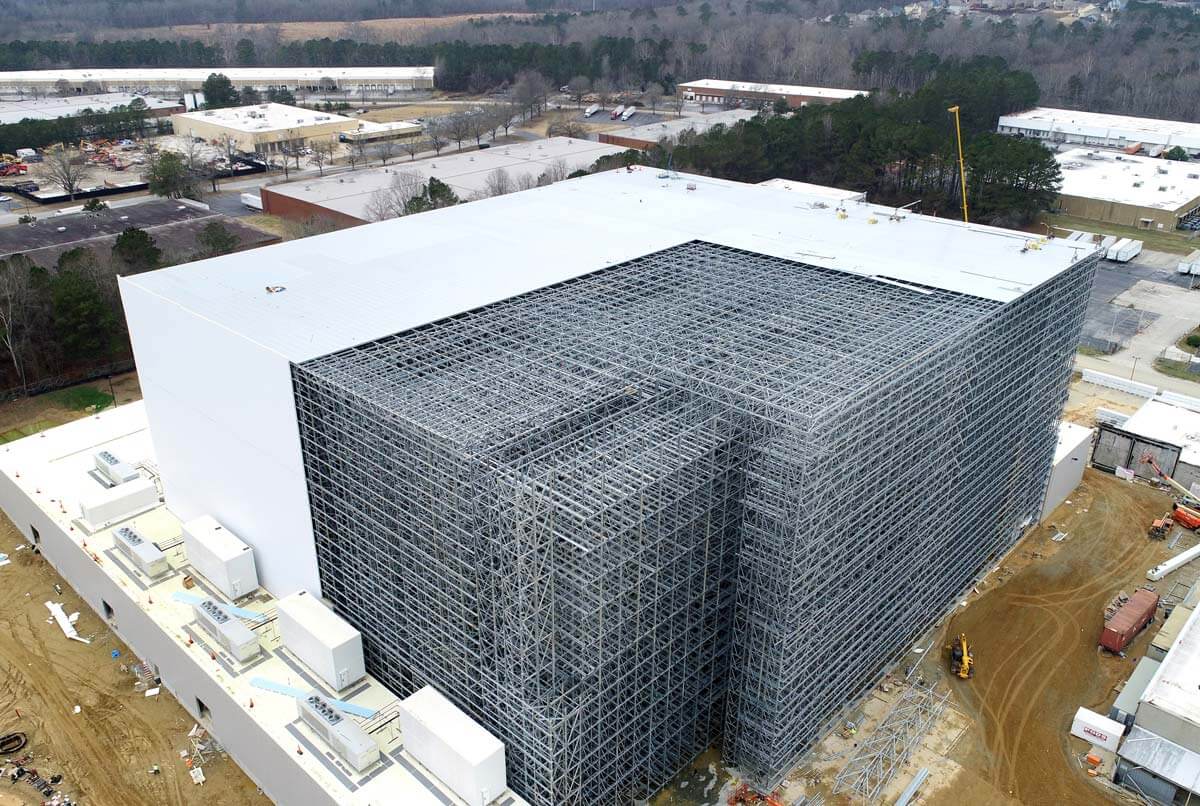
Southwest Charlotte / Steele Creek
Prime concentration of multi-tenant Class-A industrial parks requiring maximum pallet densities per square foot to offset premium per-acre land costs.
Concord & Cabarrus County
High-growth submarket driven by modern e-commerce fulfillment, beverage logistics, and light industrial manufacturing requiring high-throughput deep-lane racking.
Gastonia & I-85 West Corridor
Strategic logistics node accommodating extensive cold storage facilities, refrigerated food processors, and multi-temperature warehousing complexes.
Rock Hill / York County (SC Border)
Extensive regional freight transfer facilities capitalizing on strategic proximity to Norfolk Southern intermodal rail lines and I-77 south corridors.
Engineering Compliance for North Carolina Industrial Real Estate
Navigating the North Carolina State Building Code, RMI ANSI MH16.1, seismic anchoring, and NFPA 13 in-rack fire suppression protocols.
Structural Engineering Rigor for North Carolina Warehousing
Deploying high-density semi-automated pallet shuttle racking in Charlotte requires stringent adherence to local and national engineering standards. All steel rack structures supplied by our engineering facilities are designed, calculated, and manufactured in full accordance with the Rack Manufacturers Institute (RMI) Specification ANSI MH16.1 (Specification for the Design, Testing and Utilization of Industrial Steel Storage Racks) and the governing North Carolina State Building Code (NCSBC), which adopts the International Building Code (IBC) with statewide technical amendments.
A critical consideration for Mecklenburg County facilities is structural verification under local Seismic Design Category (SDC) B parameters. While the Piedmont region of North Carolina is generally characterized by low to moderate historic seismic activity, high-density shuttle systems consolidate massive point loads—often exceeding 20,000 to 30,000 lbs per upright frame column. Our structural engineering department performs finite-element calculations, dynamic modal response spectrum analysis, and post-installed anchor bolt pull-out simulations to confirm that base plates, anchor embedment depths, and concrete slab thickness (typically 6" to 8" reinforced 4,000 PSI slabs) fully comply with seismic shear and overturning moment demands.
NFPA 13 Fire Protection & Flue Space Integrity
One of the primary engineering challenges in deep-lane pallet shuttle design is fire protection compliance. Under NFPA 13 (Standard for the Installation of Sprinkler Systems), solid horizontal storage arrays without clear transverse and longitudinal flue spaces present severe sprinkler water penetration restrictions. Our custom cold-formed shuttle runner rails feature engineered vertical drainage perforations and precise pallet positioning sensors that maintain standardized 6-inch transverse flue spaces between pallet stacks.
For ceiling-only Early Suppression Fast Response (ESFR) sprinkler setups in modern 36-foot or 40-foot clear-height Charlotte warehouses, this precision engineering avoids the exorbitant capital expense of installing extensive internal in-rack sprinkler pipework.
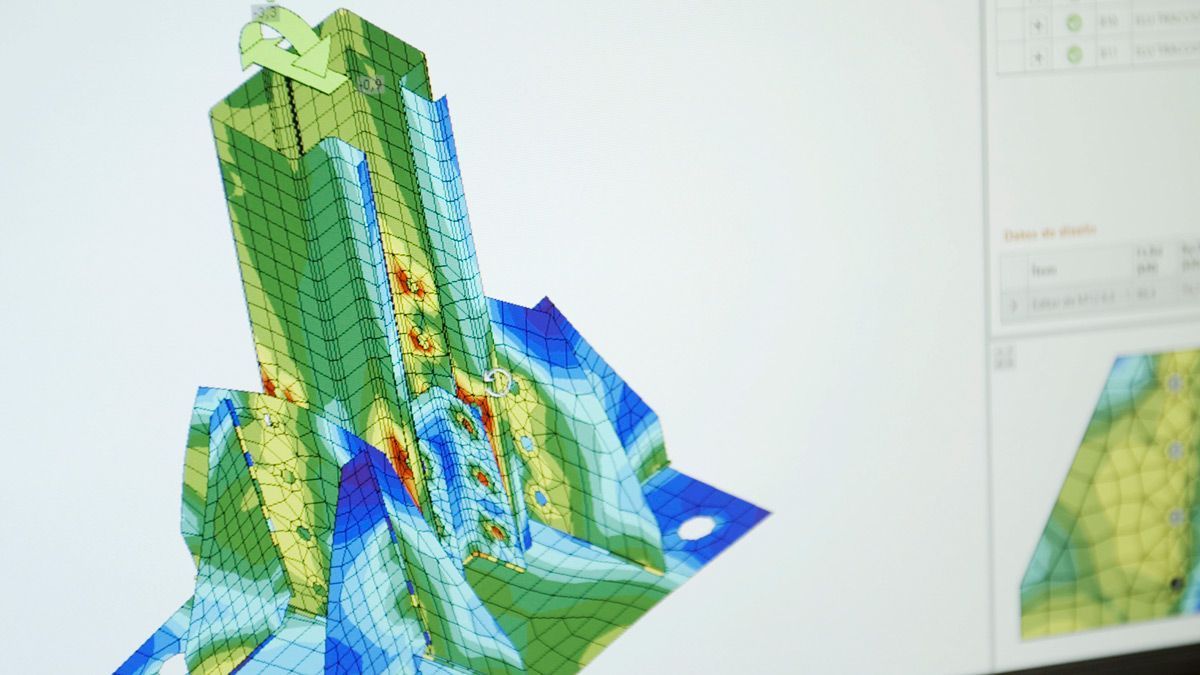
Wholesale Exporter Strengths: 100% Automated Production
Direct factory pricing, audited traceability, and accredited testing backed by our 35,000+ m² automated manufacturing center and university R&D laboratories.
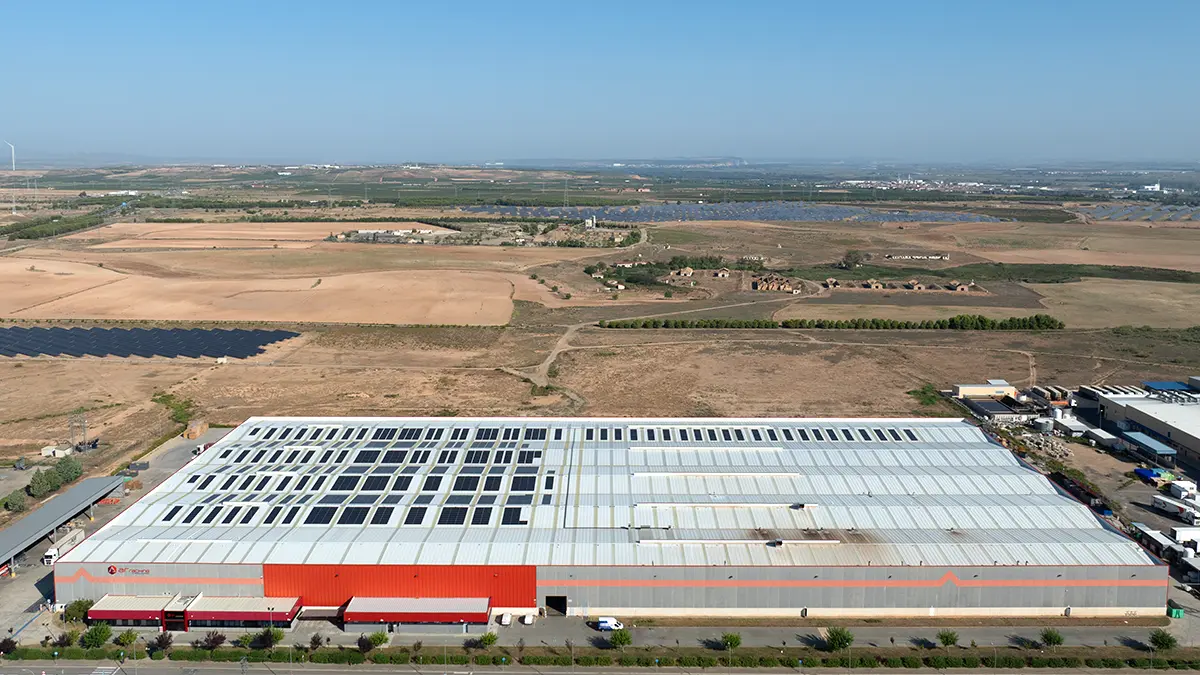
Industrial Steel Racking Direct from Manufacturer to Charlotte
As a premier global exporter and wholesale partner, we eliminate unnecessary dealer tiers, offering Charlotte industrial buyers direct access to advanced engineering and Tier-1 steel fabrication. Our state-of-the-art production complex covers over 35,000 m² (376,000+ sq ft) with an annual cold-forming and robotic welding capacity exceeding 100,000 metric tons, with over 90% exported to demanding logistics hubs worldwide.
- Traceability 4.0: Every upright profile, beam connector, and shuttle guidance track is laser-marked with production batch codes, steel coil mill heat numbers, and dimensional logs for lifetime auditability.
- Academic R&D Alliances: Continuous physical testing at the AR Lab (Mondragon University) and our Research Classroom at the Bilbao School of Engineering (UPV/EHU) guarantees proven cyclic load limits.
- Port-to-Charlotte Wholesale Freight: Seamless intermodal container routing through the Port of Charleston (SC) and Port of Wilmington (NC) with complete DDP / CIF clearing options and PE structural stamping.

ISO 9001
Certified Quality Management System
ISO 14001
Environmental Management Protocol
ISO 45001
Workplace Occupational Health & Safety
ISO 50001
Energy Efficiency & Consumption

ISO 3834-2
Metallic Fusion Welding Quality Standards

EN 1090-1
Factory Production Control & Structural Steel CE

ISO 14064
Greenhouse Gas Footprint Verification
Warranty Standard
All load-bearing uprights, beams, and shuttle running rails backed by a 5-year structural performance warranty.
Frequently Asked Questions for Charlotte Warehouse Buyers
Key engineering, permitting, and operational details for facility directors, project engineers, and supply chain procurement managers.
In Mecklenburg County and the City of Charlotte, industrial pallet rack systems taller than 8 feet require building permits and plan reviews overseen by the Mecklenburg County Land Use and Environmental Services Agency (LUESA). Requirements include signed and sealed structural calculation packages by a North Carolina licensed Professional Engineer (PE), anchor bolt pull-out calculations, life safety egress clearance checks, and high-piled combustible storage compliance under Section 3206 of the North Carolina Fire Code. Our engineering support coordinates directly with your project architect and local PE to deliver review-ready submittal packages.
Yes. Our shuttle runner rails and carrier platforms are specifically configured for standard Grocery Manufacturers Association (GMA) 48" × 40" 4-way entry wood pallets, as well as CHEP, PECO, and heavy-duty plastic block pallets. For multi-commodity facilities handling varied sizes (such as 42" × 42" chemical drums or 48" × 48" beverage pallets), our engineering team designs customized multi-width runner track brackets and integrated bottom support runners that safely accommodate variable overhang without wheel slippage or off-center lifting faults.
Because pallet shuttle configurations stack inventory 4 to 8 tiers high and up to 40 pallets deep, base plate concentrated loads can range from 15,000 to over 32,000 lbs per column. Modern Class-A industrial slabs in the Charlotte market typically feature 6-inch to 8-inch thick, unreinforced or fiber-reinforced slabs with a compressive strength of 3,500 to 4,000 PSI. During pre-engineering, we review your core drill and slab elevation reports to calculate exact base plate dimensions, anchor hole clustering, and anchor bolt edge distance parameters, ensuring no slab punch-through or micro-fracturing occurs.
Cold environments cause significant electrochemical resistance in standard batteries. Our cold-chain shuttle units are equipped with premium LiFePO4 batteries protected by internal self-regulating thermal jackets. When the carrier operates inside a sub-zero freezer, internal heating elements maintain the battery cell temperature within optimal discharge thresholds. Additionally, electronics compartments are vacuum-sealed with conformal silicone coatings to prevent condensation moisture ingress when shuttles transition through dock staging doorways.
Project layouts and custom structural fabrication are typically finalized within 4 to 6 weeks. Ocean transit from our automated European production hubs directly into the Port of Charleston or Port of Wilmington requires 14 to 18 days, followed by quick flatbed drayage to your Charlotte jobsite. Most turnkey projects—from initial engineering sign-off to full installation and commissioning—are fully delivered in 10 to 14 weeks, far outpacing the 24+ week backlogs common among domestic US suppliers.
We supply an essential plug-and-play maintenance kit with every shuttle installation, including replacement optical sensors, drive belts, guide wheels, motor controllers, and backup battery packs. Technical personnel receive full factory-level operational training during rack handover. For ongoing field service, annual structural rack inspections, and preventative shuttle servicing, our certified North American technical engineering network provides prompt on-site support across North and South Carolina.