Certified Storage Frameworks
Engineered Pallet Rack Systems & Profiles
Manufactured using certified high-tensile Q235B and cold-formed structural steel. Every unit undergoes laser-guided manufacturing and finite element deflection testing to ensure long-term structural reliability under extreme operational demands.
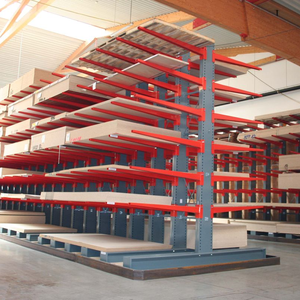
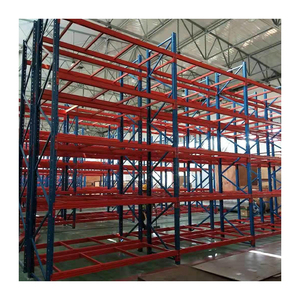
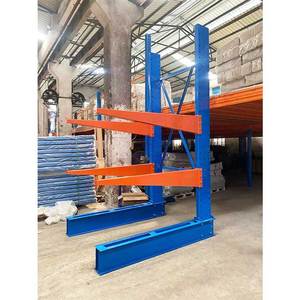
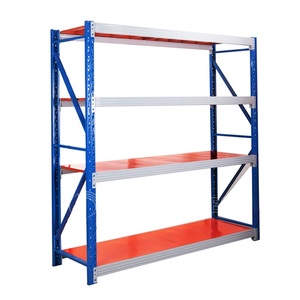
Structural Engineering White Paper
Engineering Classification of Pallet Rack Beam Types
In heavy-duty warehouse racking, the horizontal load-carrying member—the beam—governs both clearance limits and dynamic safety. Selecting the correct cross-sectional profile directly determines deflection resistance, seismic compliance, and fire-sprinkler drainage efficiency.
Roll-Formed Step Beams
Fabricated with an internal recessed step (typically 1-5/8″ or 7/8″) along the top inside edge, designed specifically to seat wire mesh decking, timber shelves, or steel drop-in panels completely flush with the beam edge.
- Standard Steel Grade: Q235B / ASTM A1011
- In-Step Drop Depth: 38 mm to 50 mm
- Connection: 3 or 4-Pin Welded End Connectors
- Recommended Load: 1,000 kg – 3,500 kg / Level
Optimal for commercial retail centers, multi-product distribution centers, and standard 48″ × 40″ GMA pallet racking systems requiring fall-through net protection.
Continuous Closed Box Beams
Formed by roll-forming two identical C-sections nested and continually seam-welded by automated robotic welders. This closed structural geometry delivers superior torsional resistance and bi-directional stiffness.
- Torsional Resistance: Maximum closed-loop rigidity
- Weld Integrity: ISO 3834-2 robotic fillet seam
- Connector Pins: Cold-extruded high-shear locking studs
- Recommended Load: Up to 5,000 kg / Level
Essential for high-bay Narrow Aisle (VNA) racking, heavily loaded manufacturing warehouses, and environments demanding stringent L/200 deflection limits.
Hot-Rolled Structural Channel Beams
Constructed from hot-rolled structural steel channels with bolted end plates rather than friction pins. Offers exceptional resilience against repeated forklift impact and heavy point loads.
- Material Standard: Hot-Rolled ASTM A36 / EN 10025
- Fastening Method: Grade 8.8 Structural High-Tensile Bolts
- Impact Resistance: High impact absorption tolerance
- Recommended Load: Exceeding 5,000 kg / Level
Standard selection for harsh industrial applications, heavy-machinery spare staging, cold-storage drive-in arrays, and seismic zones requiring moment connections.
Technical Comparison of Industrial Beam Cross-Sections
| Profile Architecture | Torsional Rigidity | Impact Tolerance | Deflection Ratio (L/d) | Deck Integration | Target Application |
|---|---|---|---|---|---|
| Standard Roll-Formed Step | Medium | Standard | L/180 – L/200 | Flush Seat Built-in | Carton flow, retail distribution, general logistics |
| Robotic Welded Box Beam | High (Closed Profile) | High | L/200 – L/250 | Requires step-over decks | Heavy industrial loads, AS/RS automated aisles |
| Hot-Rolled Structural C-Beam | Extremely High | Maximum (Tough) | L/250 – L/300 | Top-mount or drop-in brackets | Cold storage, seismic high bays, steel mills |
| Open Tube / Interlocking Beam | Standard | Medium | L/180 | Universal wire deck clips | Medium-duty stockrooms, automotive kit staging |
Localized Engineering Context
Engineered for Alajuela’s Dynamic Logistics Corridor
Alajuela has established itself as Costa Rica’s undisputed primary logistics and precision manufacturing capital. With close proximity to Juan Santamaría International Airport (SJO), major Free Trade Zones (Zonas Francas), and direct access to Route 1 and Route 27, warehouse storage structures face unique engineering demands.
Medical Device & Life Sciences
Operating inside Coyol Free Zone and BES Free Zone, life-sciences clusters require ultra-clean, epoxy-powder-coated beam systems with zero particle generation, full traceability lot tracking, and sterile cleanroom compliance.
Perishable Cold Chain Export
Alajuela acts as the export gateway for Costa Rican pineapples, bananas, and ornamental plants. Storage facilities require hot-dip galvanized beams and low-temperature ductile steels resilient down to -25°C without brittle failure.
Cross-Border 3PL Distribution
Distribution parks along the General Cañas Highway manage rapid SKU turnover. High-throughput demands box beams fitted with heavy-gauge safety pins and heavy-duty upright column protectors to resist daily forklift interaction.
High-Clearance Logistics Parks
Modern class-A logistics developments in El Coyol, Ciruelas, and San Rafael feature 12-meter clear ceiling heights. These facilities utilize narrow-aisle box beam profiles to maximize vertical cubic storage density safely.
Seismic & Engineering Evolution
Seismic Engineering Under Código Sísmico de Costa Rica (CSCR)
Costa Rica is located on the highly active convergence zone between the Cocos and Caribbean tectonic plates. Storage racks are not static furniture—they behave as unbraced steel structures that carry hundreds of tons of live weight under dynamic ground acceleration.
Moment Connections & Beam-to-Column Rotational Stiffness
In accordance with the Código Sísmico de Costa Rica (CSCR-2010 / 2014) and ANSI/RMI MH16.1 specifications, rack systems installed in the Central Valley (Alajuela, San José, Heredia, Cartago) must withstand rigorous peak ground acceleration coefficients.
Under horizontal ground movement, the junction between the beam connector and the upright column acts as a semi-rigid moment frame. Our beam connectors are engineered with cold-punched, multi-tooth claws and heavy-gauge locking pins that maintain beam engagement and rotational rigidity even during high cyclic displacement, preventing catastrophic progressive collapse.
Key Seismic Parameters for Alajuela Racking
- Seismic Zone Factor (Alajuela): Zone III / IV (High Hazard)
- Beam Deflection Limit: L / 200 of Clear Span
- Safety Pin Shear Resistance: Min. 1,000 kg Upward Uplift
- Base Plate Anchoring: Hilti / Rawlplug Wedge Anchors
- Compliance Code: ANSI MH16.1 & CSCR-2014
Enterprise Competence
Why Tier-1 Importers and Engineers Rely on Our Production
Combining world-class production capacity with university-backed structural research, we deliver turnkey warehouse systems with full component traceability and ISO-certified manufacturing precision.
100,000+ Tonnes Automated Production
Our intelligent factory spans over 35,000 m² equipped with robotic laser profiling lines, continuous automatic roll-formers, and closed-loop robotic seam welding for total dimensional consistency.
Applied R&D & FEA Structural Modeling
Partnered with leading technical university laboratories, our engineering teams perform physical load-to-failure testing and advanced Finite Element Analysis (FEA) to verify every beam and connector profile.
Global Certification & Traceability 4.0
Certified under ISO 9001, ISO 14001, ISO 45001, ISO 3834-2 welding standards, and EN 1090-1 CE marks. Each profile carries laser-etched batch identification for complete lifecycle accountability.
Direct Answers
Alajuela Warehouse Procurement & Engineering FAQ
Key technical, regulatory, and logistics answers for operations directors, project developers, and supply chain managers in Costa Rica.
What pallet rack beam types are best suited for Alajuela logistics parks?
+
For standard logistics operations handling 48″ × 40″ GMA pallets in Alajuela (such as Coyol or Ciruelas), roll-formed step beams paired with galvanized wire mesh decking are the industry standard due to ease of integration and fire sprinkler code compliance. For high-bay facilities (10m+) or heavy manufacturing tooling, continuous seam-welded box beams or hot-rolled structural C-beams are selected to provide maximum torsional resistance and satisfy local seismic moment requirements.
How do rack designs comply with the Costa Rican Seismic Code (CSCR)?
+
Our structural engineers calculate racking projects in Alajuela based on the specific seismic acceleration parameters defined by the Código Sísmico de Costa Rica and ANSI/RMI MH16.1. This includes calculating base plate dimensions, high-strength anchor bolt embedment depths, column gauge thicknesses, and moment connector capacities based on local soil categorization (typically Type S2 or S3 in the Central Valley) to prevent rack buckling during seismic events.
Can rack beams be customized for cold storage (-20°C) facilities?
+
Yes. Low-temperature environments cause ordinary carbon steel to experience a ductile-to-brittle transition. For refrigerated warehouses and blast freezers in Alajuela handling agricultural exports, we manufacture beams utilizing high-toughness steel grades tested for low-temperature Charpy V-notch impact performance, treated with high-durability epoxy coatings or hot-dip galvanization to stop moisture corrosion.
What shipping terms and container logistics apply to Costa Rica deliveries?
+
We provide full container load (FCL) export services under CIF Puerto Caldera (Pacific coast) or CIF Puerto Limón (Atlantic coast). Packaging is specifically configured with steel strapping, anti-corrosive VCI plastic wraps, and custom timber dunnage to withstand ocean transit, enabling direct overland transport via Route 27 directly into your Alajuela job site.
What documentation is supplied for Free Trade Zone (Zona Franca) customs clearance?
+
Every shipment is delivered with comprehensive commercial invoices, detailed packing lists with component piece counts, bills of lading (B/L), Mill Test Certificates (MTC) verifying raw material chemical and physical properties, and a 5-Year Structural Quality Warranty Certificate, facilitating expedited customs clearance under Costa Rica’s PROCOMER regulatory framework.
Upgrade Your Warehouse Capacity in Alajuela
Our dedicated engineering department provides computerized 2D/3D CAD layouts, load capacity calculations, and factory-direct export quotes tailored to your project’s spatial constraints and seismic conditions.