Featured Industrial Shelving & Racking Assemblies
Engineered to ANSI MH16.1 (RMI) standards, cold-formed with mill-certified yield strengths, and tailored for Baltimore cross-docking, deep freeze, and breakbulk maritime handling facilities.
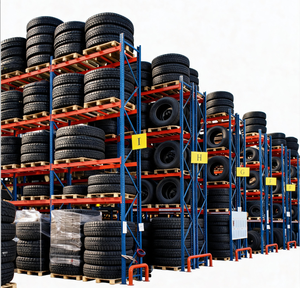
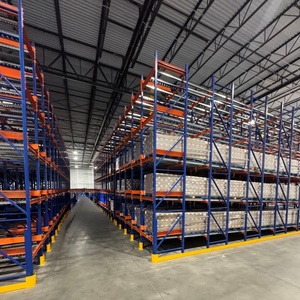
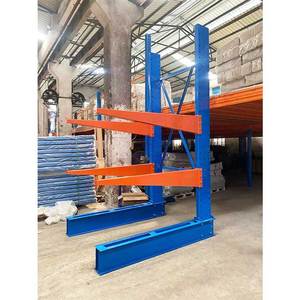
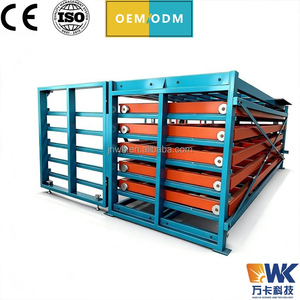
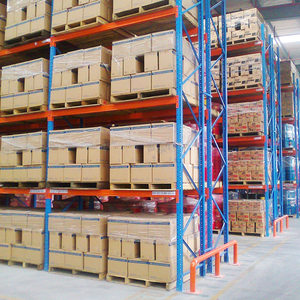
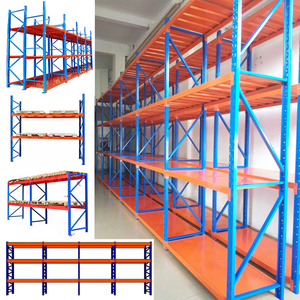
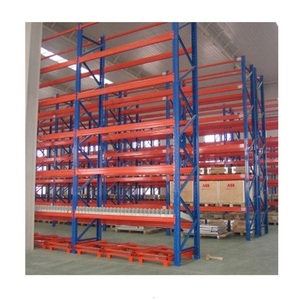
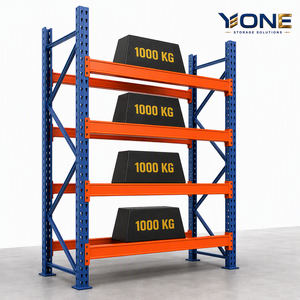
Engineering Heavy-Duty Storage Racks for the Baltimore-Washington Logistics Axis
The commercial distribution ecosystem flanking the Chesapeake Bay—anchored by the Helen Delich Bentley Port of Baltimore, the dense I-95/I-83 transport lanes, and the massive redevelopment at Tradepoint Atlantic (Sparrows Point)—operates under unique mechanical and environmental demands. Warehouses and third-party logistics providers (3PLs) in Baltimore County, Anne Arundel, and Howard County require storage structures that bridge high load-bearing capacity with exact dimensional reliability.
As a dedicated manufacturing factory serving regional distributors, facility managers, and automated system integrators in Maryland, our industrial shelving components are cold-rolled from high-tensile structural coil steel (conforming to ASTM A1011 / Q235B & Q355B standards). We engineer every structural element—from notched open-section vertical columns and step-down boxed beams to baseplates, column protectors, and frame cross-braces—to maximize clear height velocity while mitigating the impact of heavy cycle fatigue.
Structural Rigidity and RMI ANSI MH16.1 Design Integrity
In high-throughput facilities along the Mid-Atlantic corridor, static load tables alone are insufficient. Forklift dynamic impacts, slab deflection on coastal soils, and seismic response parameters dictate upright frame profiles. Our upright geometries use optimized omega and modified-c-channel configurations with multi-point interlocking beam end connectors. This suppresses beam-to-column rotational loosening even during high-frequency cycles with 48" x 40" GMA Class 1 wood and plastic pallets weighing upwards of 3,000 lbs per position.
Targeted Engineering Implementations in Greater Baltimore
Industrial storage is inherently contextual. A port drayage container terminal faces operational challenges vastly different from an ambient pharmaceutical fulfillment center in Columbia or a high-velocity grocery freezer in Jessup. Our components are manufactured to address these distinct operating realities:
Tradepoint Atlantic Megasites
Overcoming low-clearance constraints through specialized 36-foot to 44-foot continuous cold-rolled uprights. Configured for double-deep and narrow-aisle (VNA) reach trucks, maximizing cubic space efficiency for multi-tenant retail and e-commerce distribution centers.
Port Breakbulk & Heavy Cargo
Engineered structural cantilever racking and reinforced roll-formed sheet metal storage systems capable of handling sheet steel, structural lumber, coils, and automotive machinery parts transiting directly via Baltimore marine terminals.
Cold Storage & Saline Humidity
Specialized epoxy and thermoset powder coatings designed to withstand the corrosive coastal brackish atmosphere of the Patapsco River basin, operating flawlessly in blast freezers down to -24°F (-31°C) without micro-fissuring or delamination.
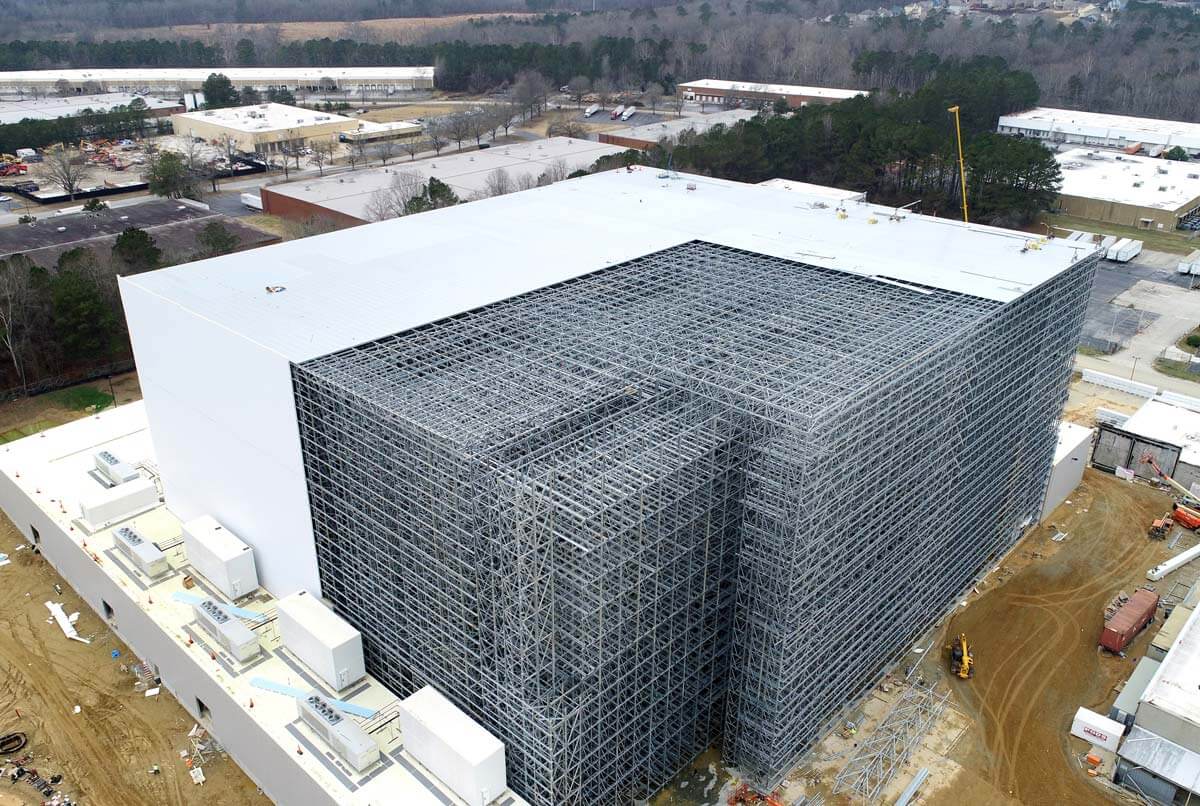
Optimizing Spatial Footprints Along the I-95 North Corridor
Industrial land acquisition costs throughout Harford and Baltimore Counties demand unprecedented storage density. Converting wide-aisle setups (12–13 ft) to Very Narrow Aisle (VNA) systems (5.5–6.5 ft) or implementing semi-automated Pallet Shuttle racks recovers up to 60% of lost footprint capacity.
- Millimeter-Level Punching Tolerances: Laser-monitored CNC punching ensures vertical slot intervals maintain pinpoint alignment along 40-foot vertical runs.
- Traceability 4.0: Every upright, beam, and connector is digitally stamped with heat numbers and production batches for seamless structural safety inspections.
- Seismic Baseplate Flexibility: Extended footings distribute floor loads to meet Maryland concrete slab shear stress specifications.
Structural Component Matrix for Warehouse Designers
Select the appropriate component class based on inventory rotation velocity, forklift classification, and load profile requirements:
| System Category | Primary Component Profile | Standard Load Threshold | Inventory Flow Model | Ideal Baltimore Application |
|---|---|---|---|---|
| Adjustable Selective Rack | Teardrop / Slotted Upright + Step Beam | Up to 2,500 lbs / pallet | FIFO / 100% Selective | General 3PL, e-commerce, consumer retail |
| Heavy Duty Drive-In | Structural Channel Uprights + Cantilever Arms | Up to 3,300 lbs / pallet | LIFO / High Density | Cold storage, food processing, raw ingredients |
| Structural Cantilever | Tapered I-Beam Column + Bolted Arms | 1,000–5,000 lbs / arm | Free Access Linear | Lumber, steel tubing, marine freight, extrusions |
| Vertical/Horizontal Sheet Metal | Welded Box Frame with Guide Rollers | Up to 4,400 lbs / shelf | Drawer / Slide Direct | Industrial machinery parts, sheet metal fabrication |
| Automated AS/RS Structure | Precision-Tolerance Hollow Beams & Ties | Custom Unit Loads (4,000+ lbs) | Computerized Crane | Port transshipment buffers, high-bay automated hubs |
Logistics Evolution Across the Mid-Atlantic Basin
The commercial warehousing landscape in Maryland is experiencing structural transformations. Supply chain adjustments following regional bridge and waterway infrastructure reconstructions have emphasized inland redundancy. Distribution nodes along the I-83 corridor toward Pennsylvania and the I-97 corridor toward Annapolis are operating at historically high occupancy rates. Consequently, warehouse operators cannot expand horizontally; they must densify vertically.
Our manufacturing lines support this densification trend through automation-ready racking components. Whether integrating automated guided vehicles (AGVs), autonomous mobile robots (AMRs), or crane-based Automated Storage and Retrieval Systems (AS/RS), structural deflections must be constrained to tighter limits (1/500th or tighter, rather than the traditional 1/200th deflection limit). Our production lines utilize laser-assisted punching and continuous roll-forming to preserve exact structural straightness across 50-foot clear-span heights.
Rigorous Academic Testing & Research Foundations
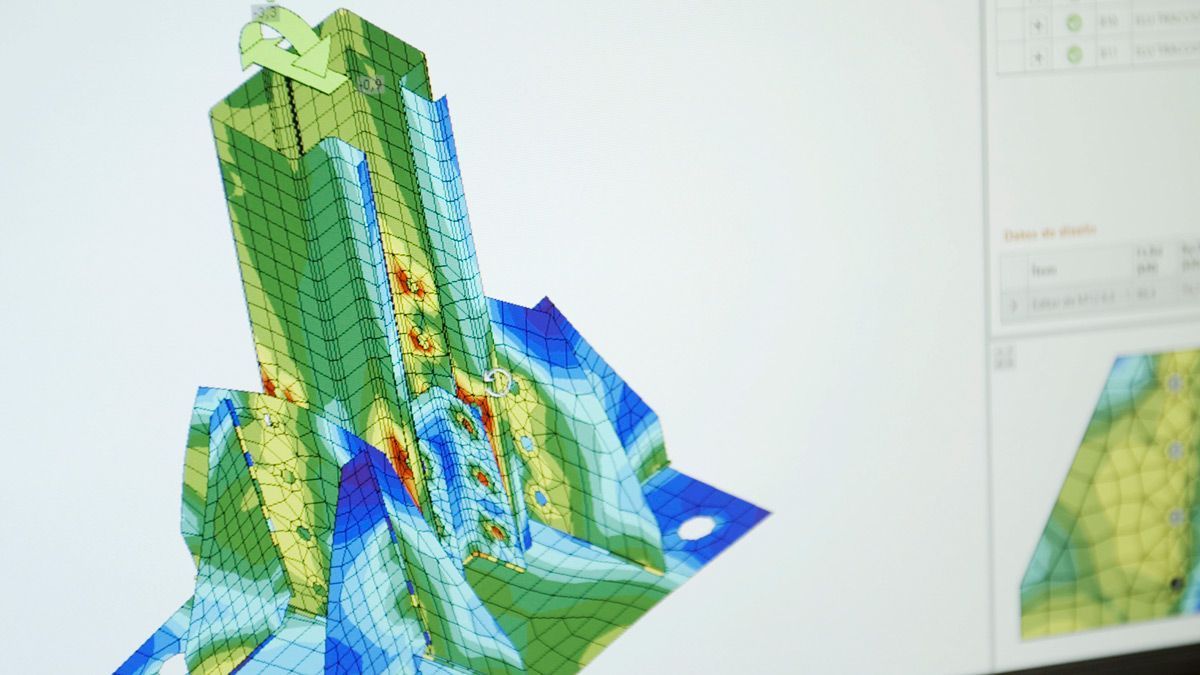
Structural reliability is backed by empirical research. Through dedicated research partnerships with leading engineering institutions—such as the AR Lab at Mondragon University and our Simulation Research Laboratory at the University of the Basque Country—every component profile undergoes intensive cyclic fatigue, buckling, and seismic performance modeling.
By applying full-scale finite element analysis (FEA) to our roll-formed sections, we give project engineers of record (EOR) across Baltimore County verified structural datasets, enabling rapid municipal permitting through Baltimore City, White Marsh, and Hanover planning boards.
Factory-Direct Engineering Credentials
Eliminate intermediary distributor markups and communication delays. When sourcing directly from our advanced 35,000+ m² automated manufacturing facility, logistics project teams secure uncompromised structural quality, direct engineering consultation, and rigorous international quality certification compliance:
Certified Quality Management throughout manufacturing cycles
Comprehensive Quality Requirements for Fusion Welding of Steels
Execution of Steel Structures & Structural Components
Environmental & Systematic Energy Management Standards
Every structural upright frame, load-supporting beam, and pallet drop stop leaves our production lines with full chemical analysis verification, tensile yield documentation, and uniform electrostatic powder coating (average 70-90 microns thickness) ensuring maximum impact and rust resistance.
Baltimore Commercial Racking: Frequently Asked Questions
Critical regulatory, environmental, and mechanical factors when procuring industrial shelving components in the Greater Baltimore metropolitan market:
What building codes and seismic zones govern pallet rack installations in Baltimore? +
How does maritime air from the Chesapeake Bay affect industrial shelving component selection? +
Can your components interface with existing teardrop racking systems installed in my facility? +
What is the standard production and shipping lead time to the Port of Baltimore? +
Do you provide stamped structural drawings for Baltimore County and City permitting? +
Connect Directly with Storage System Engineers
Planning a rack reconfiguration, building an automated fulfillment center at Tradepoint Atlantic, or upgrading high-density pallet racking along the Baltimore beltway? Our engineering specialists provide layout optimization, structural calculations, and factory-direct component pricing.