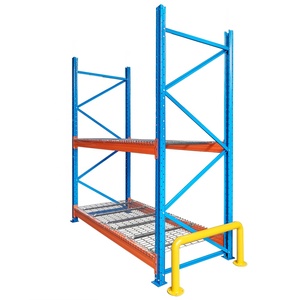
Heavy Capacity · 2,500 KG / Layer
The Greater Seattle logistics ecosystem—spanning the critical industrial hubs of Kent Valley, Sumner, Fife, Everett, and Georgetown—operates under distinct economic and structural pressures. As industrial lease rates across the Puget Sound region reach historical peaks and available horizontal land dwindles, facility executives and warehouse designers must maximize vertical cubic volume without compromising structural safety. Operating near the Cascadia Subduction Zone requires that all high-density and heavy-duty storage configurations adhere strictly to the International Building Code (IBC) and Rack Manufacturers Institute (RMI/ANSI MH16.1) seismic parameters. AR Racking provides engineered, ISO-certified, wholesale industrial rack storage systems built to safeguard inventories, enhance material handling throughput, and unlock cubic floor capacity.
Explore our heavy-duty configurations, customized for 48″ × 40″ GMA pallets, irregular manufacturing components, and automated order fulfillment.
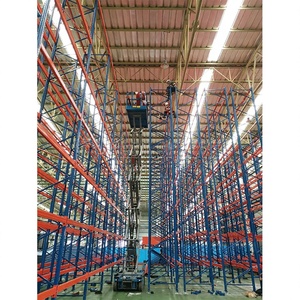
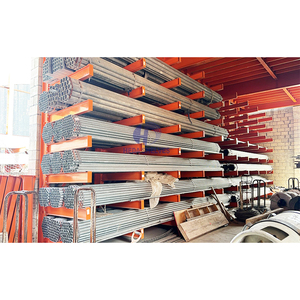
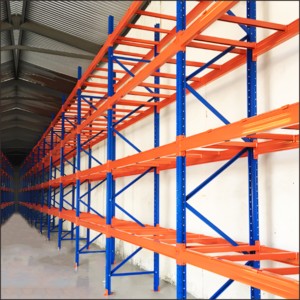
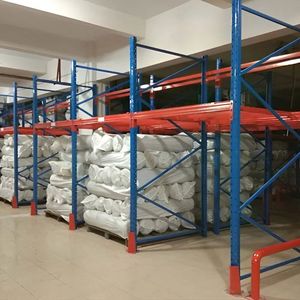
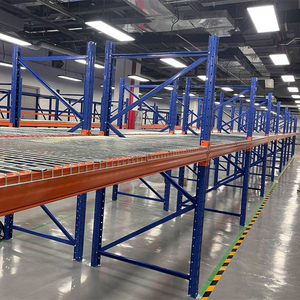
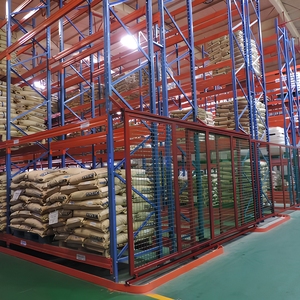
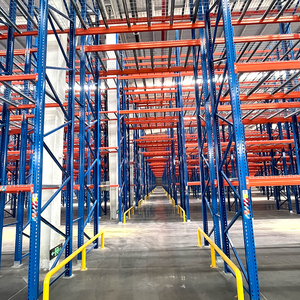
From aerospace precision engineering to maritime supply chains and cold storage distribution, our systems meet rigorous operational requirements.
Supporting suppliers in the aerospace corridor requires engineered heavy-duty cantilever and extra-wide selective beam systems. Designed to accommodate long composite tooling, extruded aluminum structures, and heavy aircraft components, these racks maintain tight deflection standards under uneven point-loading conditions.
High-cube cold storage facilities in Fife and Sumner demand structural integrity at temperatures dropping to -24°C (-11°F). Our high-density Mobile Pallet Racking and Drive-In configurations utilize low-temperature resilient alloy steel that prevents cold embrittlement while reducing refrigerated air cubic waste by up to 50%.
Fast-moving consumer goods and regional fulfillment centers in the Kent Valley rely heavily on Very Narrow Aisle (VNA) systems, multi-tier pick modules, and push-back racking. These systems maximize selectivity and throughput speed for standard 48″ × 40″ GMA pallets while seamlessly interfacing with robotic turret trucks and wire-guided AGVs.
Evaluate accessibility, footprint efficiency, and picking dynamics before engineering your facility layout.
| Racking Methodology | Direct Accessibility | Floor Density | Inventory Rotation | Target Puget Sound Application |
|---|---|---|---|---|
| Selective Pallet Racking | 100% Immediate | Baseline (40%) | FIFO / LIFO Flexible | High-SKU 3PL facilities, spare parts distribution (Kent, Renton) |
| Very Narrow Aisle (VNA) | 100% Immediate | Very High (75%) | FIFO / LIFO Flexible | High-ceiling logistics centers utilizing man-up turret trucks |
| Push-Back Racking | Per Lane (2–6 Deep) | High (70%) | LIFO | Medium-turnover grocery, food & beverage wholesale (Sumner, Fife) |
| Heavy Cantilever Racks | 100% Linear | Variable | Batch Handling | Pacific Northwest timber, architectural extrusions, pipe storage |
| Automated AS/RS Structures | Automated Crane | Maximum (90%+) | WMS Programmed | High-throughput automation hubs, cold storage distribution |
How automation, micro-fulfillment, and seismic resilience are transforming regional facility engineering.
With industrial land supply constrained between the Cascade Mountains and Puget Sound waters, greenfield expansions are rare. Operators are maximizing vertical cubic footage by engineering 36-foot to 42-foot clear-height structures, converting floor layouts into high-density narrow aisle systems.
Local permitting authorities in Seattle, Tacoma, and Auburn have enacted stringent regulatory oversight regarding RMI MH16.1 compliance. Racking installations now require verified PE-stamped calculations reflecting specific soil classifications (Site Class D/E) and floor slab anchor embedment depths.
Driven by regional labor competition in King and Pierce counties, distribution centers are retrofitting standard selective racks with guided base plates, anti-collision rack guards, and barcode-scannable beam levels designed specifically for AMR goods-to-person fleets.
Precision manufacturing, dedicated R&D partnerships, and traceable European quality built for global scalability.
Through our dedicated AR Lab at Mondragon University and our Simulation Classroom at the University of the Basque Country (Bilbao School of Engineering), our cold-formed profiles undergo rigorous finite-element simulations and cyclical destructive load testing to guarantee structural behavior under seismic shear.
Our 35,000 m² (376,000+ sq ft) production center utilizes laser-guided profiling lines and robotic welding stations. Every individual upright, beam, and connector is digitally tracked from raw coil to jobsite installation, providing verifiable safety documentation for safety audits.
Certified Quality Management
Environmental Stewardship

Comprehensive Welding Quality

Structural Steel Compliance
Essential guidance on seismic compliance, permitting workflows, and installation engineering.
Warehouses located throughout Western Washington fall into high seismic design categories (typically Seismic Design Category D, E, or F) as established by the International Building Code (IBC) and ASCE 7. Racking structures must conform strictly to ANSI/RMI MH16.1 specifications. This mandates engineered base plates with heavier gauge steel, expanded concrete anchor bolt patterns, reinforced column upright sections, and PE-stamped structural calculations signed by an engineer registered in the State of Washington.
Procuring and installing industrial rack systems exceeding 5 feet 9 inches in height in Washington requires a municipal non-structural building permit. The applicant must submit detailed architectural floor plans displaying egress corridors, travel distances to exits, aisle clearances for emergency personnel, fire sprinkler layout coordination (NFPA 13 compliance), concrete slab core-drilling engineering, and seismic structural calculations. We assist clients by supplying comprehensive engineering packages tailored for local building department reviews.
Yes. Our selective beam configurations are specifically dimensioned to support standard North American 48″ deep by 40″ wide Grocery Manufacturers Association (GMA) pallets. Standard beam lengths of 96 inches or 108 inches comfortably hold two GMA pallet loads with appropriate operational clearances, while our wire mesh decks provide required secondary support in accordance with fire protection codes.
All AR Racking structural steel racking systems come standard with an industry-leading 5-year quality warranty. Because our profiles are fabricated from certified high-yield steel in 100% automated facilities with complete Traceability 4.0 component markings, our clients receive verifiable structural performance, fatigue resistance, and dimensional uniformity.
Refrigerated and frozen cubic space commands the highest utility and capital costs in the logistics sector. Implementing high-density mobile racking or AR Shuttle pallet systems eliminates multiple redundant operating aisles, concentrating stored pallet density by up to 80% to 100% compared to traditional selective layouts. This drastically reduces the refrigeration volume required per pallet position and drives substantial long-term energy savings.
Planning a new distribution center, expanding an existing warehouse in the Pacific Northwest, or updating your facility for automated material handling? Connect directly with our project engineering team for comprehensive layout evaluations and wholesale supply pricing.