Engineered Product Systems
Industrial Pallet Storage & Automated Racking Portfolio
Precision-manufactured structural steel racking solutions engineered to European EN 15512 and global ISO benchmarks for maximum volumetric density and high-throughput warehouse efficiency.
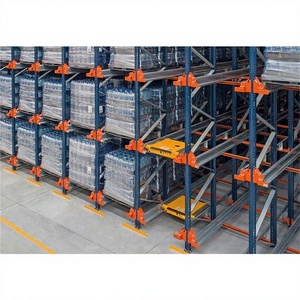
Heda Four Way Radio Shuttle Rack Intelligent Pallet Rack System Shuttle Pallet Racking Warehouse ASRS Shuttle Racking System
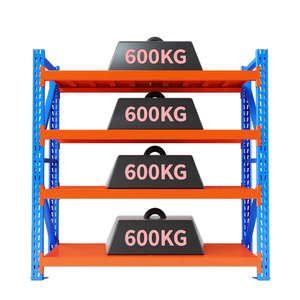
800kg Industrial Grade Pallet Racking for Large Warehouse
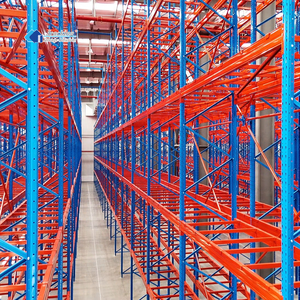
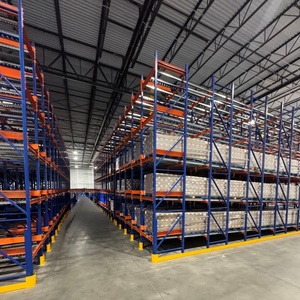
High Density Steel Storage Racks EU Standard Heavy Duty Adjustable Pallet Racking System for Warehouse Storage Solutions
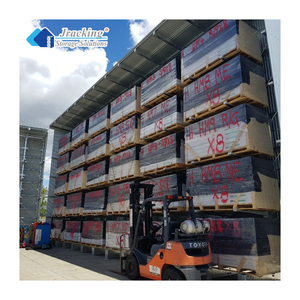
Heavy Duty Galvanised External Adjustable Metal Cantilever Racks
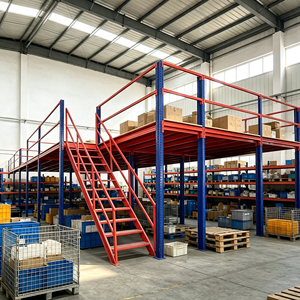
Heavy Duty Industrial Storage Warehouse Racks Pallet Racking Systems Attic Loft Mezzanine Floor Platforms
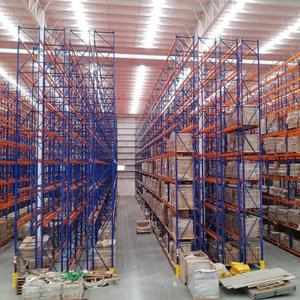
Interconnected Back Frame Integrated Support System Stacked Pallet Goods Storage Double Deep Pallet Racking Heavy Duty
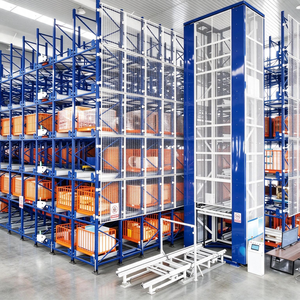
DASTECH Automated Shelving Radio Shuttle 3-Layer Drive-In Pallet Rack with Corrosion Protection for Warehouse Storage System
Industry White Paper
Engineering High-Density Storage Logistics in Northern Belize: The Strategic Function of Drive-Through Racking Systems
In modern intra-logistics architecture, warehouse storage density is fundamentally bounded by floor surface geometry, vertical clearance, and material accessibility requirements. While standard selective pallet racks allocate up to 60% of total footprint to forklift access aisles, high-density storage configurations eliminate dedicated service aisles to maximize volumetric utilization. For industrial operators across Orange Walk Town, the commercial epicenter of Northern Belize, storage engineering demands have shifted dramatically beyond basic warehousing into advanced supply chain optimization.
A critical engineering distinction must be established between Drive-In Racking and Drive-Through (Drive-Thru) Racking. Drive-in systems operate on a Last-In, First-Out (LIFO) inventory cycle where forklifts enter and exit through a single lane aperture, closing off opposite-side operations. Conversely, Drive-Through Racking Systems feature dual-sided access points, allowing lift trucks to load from the rear receiving zone and retrieve pallets from the forward staging aisle. This structural layout unlocks true First-In, First-Out (FIFO) material rotation while delivering between 75% and 85% volumetric space utilization.
Structural Performance Insight: By eliminating cross-aisles, Drive-Through Racking converts dormant square footage into active pallet positions. However, the absence of traditional horizontal load beams necessitates cantilevered support arms, continuous floor-to-top portal tie-beams, and specialized top-bracing trusses to maintain systemic lateral equilibrium under maximum allowable working loads (MAWL).
Localized Operational Applications Across the Orange Walk Town Market
Orange Walk District stands as Belize’s industrial powerhouse, anchoring the national sugar manufacturing core, expanding agricultural cooperatives, and serving as the primary logistics gateway to the Mexican border via the Chetumal–Santa Elena commercial corridor. In this specialized geographical and trade zone, drive-through racking architectures address distinct structural and operational challenges:
Agro-Industrial Processing & Sugar Byproducts
Orange Walk’s agricultural facilities handle bulk output such as packaged refined sugar, raw seed stock, fertilizers, and crop treatments. These commodities feature identical SKU profiles with uniform batch codes. Drive-through racking ensures strict FIFO turnover, preventing chemical clumping, moisture degradation, and packaging compression across prolonged storage intervals.
Sub-Tropical Cold Storage & Dairy Logistics
Surrounding farming settlements such as Blue Creek drive significant cold-chain operations for dairy, poultry, and processed meats. Operating refrigerated and frozen rooms in tropical climates imposes steep kWh thermal costs. Drive-through racking consolidates air volume, reducing refrigeration overhead by up to 40% per pallet position while preserving batch expiration traceability.
Corozal Free Zone Cross-Border Buffer Hubs
Operating along the Northern Highway, regional distribution centers function as consolidation nodes for fast-moving imported goods entering Central America. Dual-lane drive-through racks allow simultaneous cross-docking: replenishment trucks feed lanes on the northern receiving dock while delivery fleets pick pallets from the southern discharge face without collision risks.
Due to the humid tropical environment characteristic of the New River basin, standard surface paints are susceptible to early oxidative breakdown. AR Racking Storage integrates high-durability epoxy-polyester electrostatic powder coatings along with hot-dip galvanized steel options for outdoor and extreme moisture zones, verified under rigorous salt spray tests in compliance with ISO 12944 standards.
Technical Specification & Structural Tolerance Matrix
Drive-through systems operate under unique cantilever stress vectors. Because material handling equipment enters directly inside the storage bays, the system relies on specialized floor guide rails, heavy-duty column protectors, and high-tensile upright steel columns. Below is the structural comparison matrix applied by our engineering teams when calculating installations for industrial operators in Orange Walk Town:
| Engineering Parameter | Drive-Through Racking System | Drive-In Racking System | Selective Pallet Racking |
|---|---|---|---|
| Inventory Flow Principle | Strict FIFO (First-In, First-Out) | LIFO (Last-In, First-Out) | Direct 100% Random Access |
| Floor Space Utilization | 75% – 85% Active Footprint | 75% – 85% Active Footprint | 40% – 50% Active Footprint |
| Aisle Redundancy | Low (Requires Dual Access Aisles) | Minimum (Single Operational Aisle) | High (Aisle between Every Dual Rack) |
| Lateral Bracing Requirement | Top Horizontal & Vertical Portal Trussing | Back Wall X-Bracing + Top Bracing | Inter-Beam Horizontal Locking Pins |
| Pallet Compatibility | 48"x40" GMA, 1200x1000, 1200x800 | 48"x40" GMA, 1200x1000, 1200x800 | Universal / Mixed Pallet Types |
| MHE Equipment Match | Counterbalanced, Reach Truck (Slim Chassis) | Narrow Counterbalanced, Reach Truck | Standard Forklifts, Turret Trucks, Walkies |
Development Trends: The Modernization of Northern Belize Intra-Logistics
The supply chain infrastructure across Orange Walk District is experiencing systemic modernization, transitioning from manual floor stacking to engineered vertical cube utilization. Several regional economic tailwinds are accelerating this transition:
1. Transition Away from Block Stacking
Historically, agro-commodities in Belize were bulk-stacked on wood runners. This approach results in severe bottom-tier crushing damage, high product loss from ground moisture absorption, and strict vertical stacking limits. By moving to drive-through racking, facility managers isolate pallet weights entirely onto structural steel rails, achieving 4- to 6-tier vertical elevations without transfer stress on goods.
2. Integration of Radio Shuttle Automation
While standard drive-through racks require forklifts to drive inside the steel chassis—increasing the statistical probability of frame collisions—modern installations increasingly adopt semi-automated Pallet Radio Shuttle Systems. The shuttle car navigates inside the rails via remote or WMS direction, bringing the pallet forward to the picking face. This configuration merges the extreme density of drive-through design with high-speed cycle times and zero forklift mast impacts.
3. Climate-Resilient Warehouse Structural Codes
Positioned within the Caribbean hurricane belt, warehouse developments in Belize must conform to enhanced seismic and cyclonic wind shear standards. The structural connection points of AR Racking systems are engineered with full moment-resisting baseplates and high-anchor embedment depths, ensuring that internal racking structures stabilize internal floor slabs rather than presenting tipping hazards under seismic or wind-load shifts.
Manufacturing Precision, R&D Credentials, and Corporate Advantages
Procuring industrial racking systems for installation in Central America requires verified technical pedigree. AR Racking Industrial Storage Solutions Co., Ltd. operates an integrated, fully owned manufacturing complex spanning over 35,000 m² (exceeding 376,000 sq ft) with an annual steel transformation output exceeding 100,000 metric tons. Over 90% of our production is exported to sophisticated distribution projects worldwide.
Traceability 4.0 & University Research: In collaboration with the Mondragon University AR Lab and the University of the Basque Country Simulation Classroom, our engineers evaluate advanced finite-element stress modeling and full-scale destructive load tests. Every component carries unique digital production tracking markings, allowing complete quality traceability from raw structural coil to site delivery.
ISO 9001 / ISO 14001
Certified Quality & Environmental Production Systems
ISO 45001 / ISO 50001
Occupational Safety & Certified Energy Management
ISO 3834-2 & EN 1090-1
CE-Marked Robotic Structural Welding Compliance
ISO 14064 Verified
Audited Carbon Footprint Reduction & Sustainable Steel
Orange Walk Procurement FAQ: Practical Engineering & Logistics Answers
Direct technical responses addressing common procurement, structural engineering, and customs questions raised by warehouse managers in Belize.
How do drive-through racks differ structurally from standard drive-in systems?
Drive-through racks do not possess rear cross-bracing because forklifts require continuous access through both ends of the lane. Structural stability is achieved via overhead horizontal trusses and portal tie-beams. This allows true FIFO inventory rotation instead of the LIFO limitation common to drive-in configurations.
Can your pallet racking adapt to uneven concrete slabs typical of older local buildings?
Yes. Our engineering packages include heavy-duty shimming plates and adjustable base assemblies designed to level upright frames on concrete foundations with minor elevation variances. Prior to final engineering, our technicians review core drill tests and slab thickness measurements to ensure point-load safety.
What preventative measures guard against forklift impact inside narrow storage lanes?
We supply continuous steel floor guidance rails anchored directly along the base of each lane, guiding forklift wheels accurately into the bay. Additionally, we integrate heavy-gauge wrap-around upright protectors, bullnose floor anchors, and high-visibility safety rail entry guides.
How are customs, maritime freight, and Belize site delivery coordinated?
AR Racking operates dedicated international logistics frameworks. Racking components are bundled and containerized at our automated production plant, shipped directly via ocean freight to the Port of Belize (Belize City), and transported inland via the Philip Goldson Highway to your site in Orange Walk Town.
What pallet specifications can the support rails accommodate?
Support rails are engineered for standard North American 48"x40" GMA wooden pallets, plastic hygienic pallets, and European 1200x1000mm or 1200x800mm footprints. Custom rail profiles can be designed for perimeter-base containers or specialized metal agricultural harvest bins.
What warranty coverage is extended on structural steel components?
All AR Racking manufactured systems include a comprehensive 5-year quality warranty covering structural steel deflection limits, weld integrity, and material performance when loaded in accordance with our certified static calculation certificates.