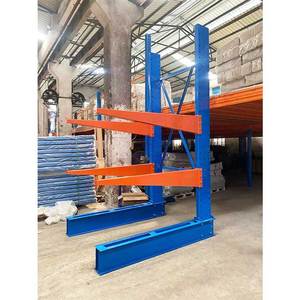
Industrial Product Lineup
Precision Storage Systems Engineered for Midwest Heavy Duty Operations
Manufactured in an ISO 9001, ISO 14001, and EN 1090 certified robotic plant with 100,000+ metric ton annual capacity. Every assembly is custom calculated for GMA 48"×40" pallets, structural deflection control, and regional seismic compliance.
+42,000
Global Warehouse Installations
+100,000 t
Annual Automated Production
5-Year
Comprehensive Structural Warranty
+60
Countries Export Footprint
Engineering White Paper
Structural Design Mechanics & Spatial Efficiency in the Greater Chicago Infill Market
With Cook County industrial square footage rates consistently setting historic highs, logistics providers are transitioning from standard selective layouts to precision-engineered double deep racking. Here is an engineering breakdown of structural behavior, reach kinematics, and floor-slab load distribution.
Aisle Elimination & Density Multiplier
Standard selective racking requires an operating aisle for every single storage run, yielding roughly 35% to 40% floor area utilization. Double deep racking configurations store pallets two positions deep from a single aisle access row (arranged back-to-back as 4-pallet deep banks), eliminating two out of every five operating aisles.
Up to 30% Pallet Position Increase
Pantograph Reach Kinematics & Deflection
Operating double deep uprights requires pantograph-scissor reach trucks or specialized telescopic forks. Because horizontal reach induces a severe torsional moment on the mast at elevated heights (exceeding 30 feet), our structural beams incorporate reinforced welded collar brackets that withstand localized dynamic impacts during rear-pocket pallet positioning.
Tested with Mondragon University AR Lab
Midwest Concrete Slab Footprint Dynamics
Concentrated point loads can stress concrete slabs in legacy industrial buildings across Elk Grove Village and Bedford Park. Our custom OEM uprights feature enlarged baseplate weldments and engineered anchor bolt patterns that dissipate vertical structural dead/live loads evenly across typical 6" to 8" unreinforced floor slabs.
Compliant with RMI & ACI Standards
| Storage Topology | Direct Accessibility | Floor Space Utilization | Standard Lift Equipment Needed | Inventory Discipline | Ideal Application Scenario |
|---|---|---|---|---|---|
| Selective Pallet Racking | 100% Immediate | 35% - 40% | Standard Counterbalance / Reach | FIFO / LIFO | High SKU variety, fast pick faces, 3PL distribution |
| Double Deep Racking (Custom OEM) | 50% Direct (Per Bay Face) | 55% - 65% | Double-Reach Truck (Pantograph) | FILO / Batch FIFO | 2-4 pallets per SKU, cold storage, fast cross-docking |
| Drive-In Racking | 15% - 20% (Lane Entry) | 70% - 75% | Standard Forklift (Drive-in cabin) | Strict LIFO | Homogeneous bulk commodities, extreme cold storage |
| Push-Back Pallet Racking | Per Lane Access (2-6 Deep) | 65% - 75% | Standard Forklift / Gravity Nesting | LIFO | High throughput per SKU lane, minimal reach truck need |
Local Strategic Integration
Solving Chicago’s Infill & Cold Storage Logistics Bottlenecks
The Chicago Metropolitan Area functions as North America's supreme intermodal freight nexus. However, industrial warehouse space along the I-55 Corridor, I-80 Logistics Submarket, and O’Hare Infill remains constrained by land scarcity, premium rents, and older ceiling-height profiles.
O’Hare Air Freight & Cross-Dock Facilities (Sub-32' Clear Heights)
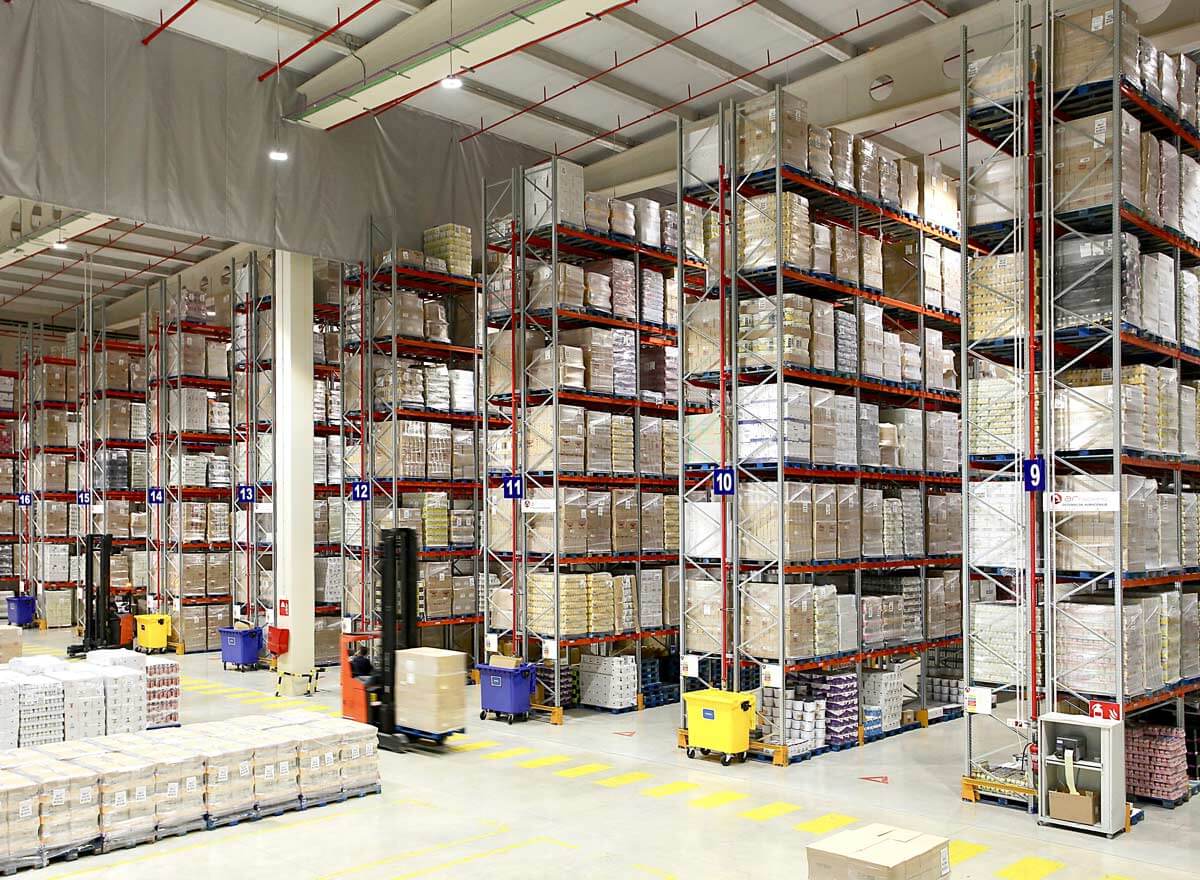
Distribution centers located immediately adjacent to O’Hare International Airport (ORD) frequently operate within legacy 24-foot to 30-foot clear height facilities. Standard selective setups waste critical horizontal cube volume on multiple aisles.
Our OEM Double Deep configurations optimize cubic capacity without requiring expensive structural building modifications. By integrating double-entry guide rails and rear-tier pallet backstoppers, forklift drivers can swiftly position time-sensitive transatlantic airfreight cargo with zero risk of rack push-through.
- Custom upright heights optimized for Class B and older industrial infill ceiling trusses.
- Welded structural pallet supports engineered for mixed North American GMA and Euro-pool pallets.
- Immediate proximity access to Class 1 railroad container terminals and airport tarmac logistics.
Cold Chain & Frozen Food Warehousing in Central DuPage and I-80 Corridors
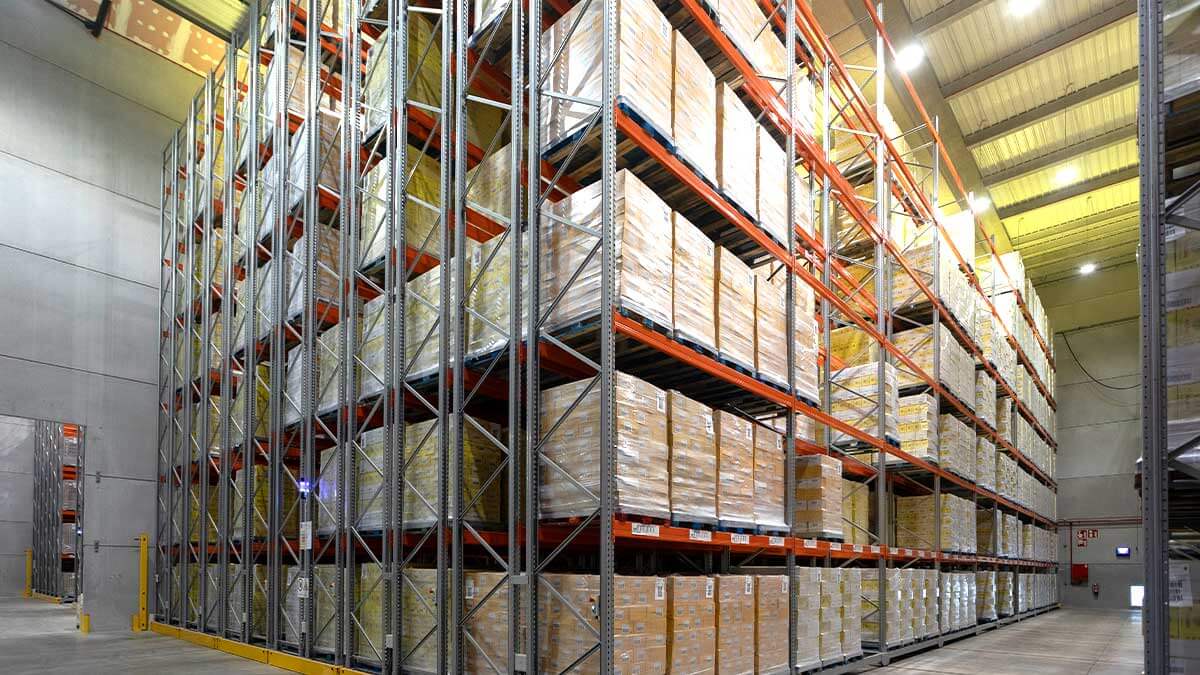
Refrigerated and frozen cubic footage is the most capital-intensive warehouse space in the Midwest. Operating at -10°F to -20°F demands dense storage to conserve massive refrigeration thermal energy.
Our double deep solutions implemented in refrigerated facilities employ specialized cold-resilience steel alloys and high-durability epoxy or galvanized finishes that eliminate structural brittle fracturing risks caused by sub-zero ambient temperatures.
- Thermal efficiency boost: Compresses cold store footprints while raising pallet storage counts by 28%.
- Structural steel tested in certified climatic simulation rooms down to -24°C (-11°F).
- Seamless compatibility with reach-truck heated cabins and camera-assisted optical fork alignments.
Emerging Market Trends
Macro Dynamics Driving Chicago Storage Infrastructure (2025–2030)
How automation, nearshoring supply chains, and municipal building codes are reshaping warehouse procurement for Illinois facility operators.
Automated Reach Trucks & Vision-Guided AGVs
Labor availability across Cook, Will, and Lake Counties is accelerating the adoption of automated reach trucks (AMRs). Our double deep uprights and horizontal load beams are engineered with robotic-level tolerances (±1.5mm), ensuring automated optical laser guidance sensors detect pallet openings without physical hang-ups.
Nearshoring Velocity Across the I-80 Joliet Hub
With major automotive, industrial equipment, and retail assembly expanding between Michigan and Indiana through Chicago’s intermodal railyards, staging raw materials in 2-pallet deep lots matching production batch runs has become the dominant inventory philosophy, superseding slow bulk stack staging.
NFPA 13 Fire Code In-Rack Sprinkler Integration
Chicago local municipal fire codes strictly monitor longitudinal and transverse flue spaces in deep racking setups. Our OEM structural configurations feature engineered beam spacing and flanged wire decking that maintain open vertical sprinkler channels, preventing costly warehouse permitting delays.
Enterprise Manufacturing Scale
End-to-End OEM Engineering: Why Tier-1 Logistics Firms Partner with Us
Direct from fully automated manufacturing lines to site assembly. We remove middleman distribution markups while maintaining verified structural traceability across every rolled beam.
Advanced R&D with University Laboratory Validation
Unlike standard commercial resellers, every profile in our double deep catalog is calculated and physically stress-tested in collaboration with academic engineering institutes, including the specialized AR Lab at Mondragon University and simulation divisions at the Bilbao School of Engineering.
Using non-linear finite element structural simulation (FEM), our technical team analyzes buckling limits, seismic ground acceleration, and rack joint moment resistance under dynamic forklift loading scenarios.
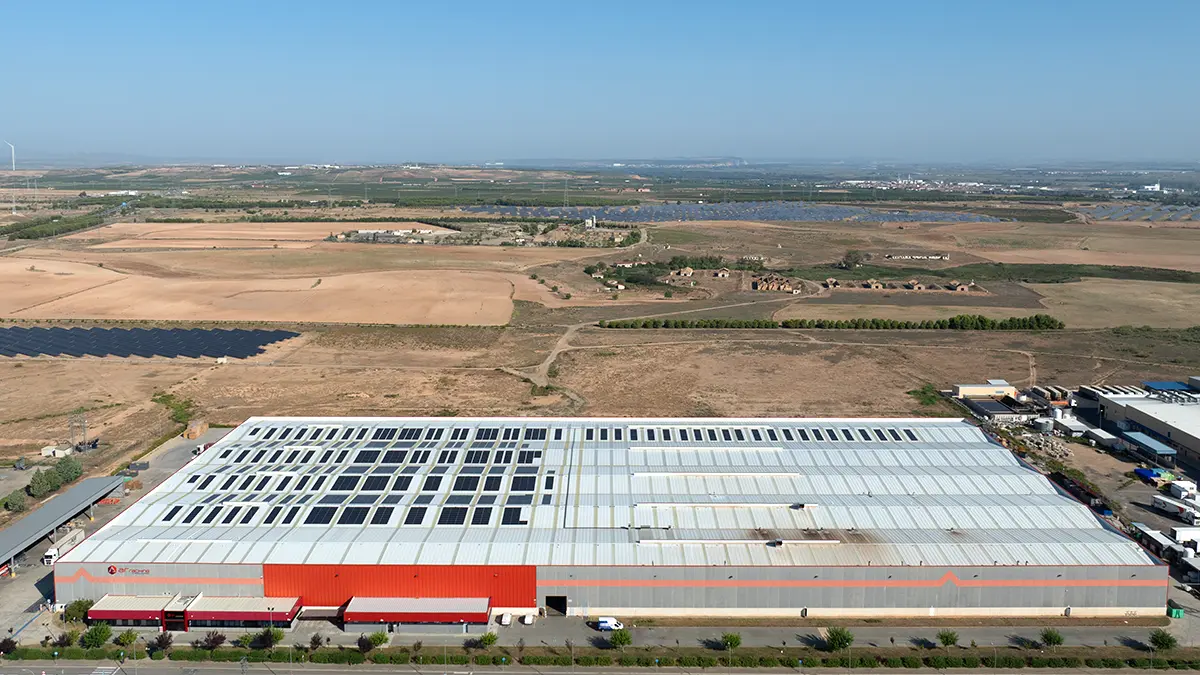
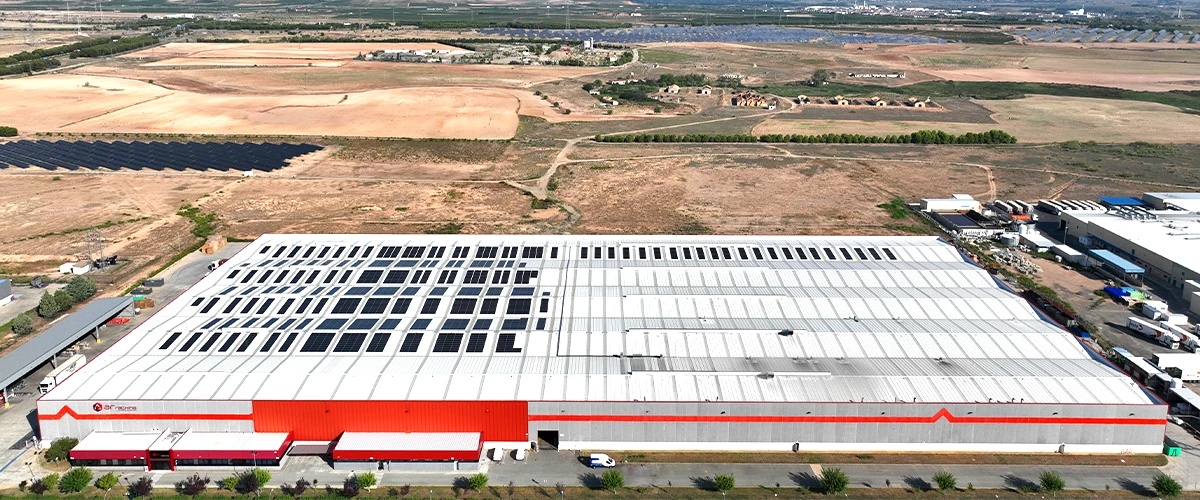
- Over 100,000 metric tons annual production capacity spanning 35,000+ m² facility space.
- 100% automated robotic profiling, laser cutting, and robotic welding lines.
- Traceability 4.0: Individual component laser tagging for life-cycle audits and routine inspections.
Rigorous International Certification Framework
Our products and production processes undergo continuous independent auditing. We guarantee full alignment with United States standard RMI (Rack Manufacturers Institute) guidelines and international construction safety protocols.
- ISO 9001, 14001, 45001, 50001: Covering quality, environmental stewardship, worker safety, and energy efficiency.
- ISO 3834-2 & EN 1090-1: Full structural steel welding validation and CE marking standards for high-bay rack buildings.
- ISO 14064 Carbon Footprint: Verified environmental accounting helping corporations satisfy ESG sustainability targets.
- Seismic PE Stamping: Project-specific structural calculations ready for Chicago & Cook County building permit sign-offs.
Local Procurement Guidance
Frequently Asked Questions by Chicago Warehouse & Operations Managers
Clear, direct answers regarding equipment compatibility, building code approvals, freight lead times, and structural calculations.
What type of forklift equipment is mandatory for a double deep racking setup?
Double deep racking requires reach trucks equipped with either a pantograph double-reach scissor mechanism or telescopic forks capable of extending into the second pallet depth position. Standard counterbalance forklifts cannot service the rear pallet.
Our engineers closely review your lift truck fleet specifications (mast tilt deflection, collapsed height, load deration curves at max lift) during initial layout generation to ensure safe aisle widths (typically 9.5 to 11.5 feet) and safe clearances.
Do your double deep systems meet City of Chicago and Cook County seismic building codes?
Yes. While northern Illinois is generally classified as low to moderate seismic zone compared to the West Coast, local municipal building authorities require compliance with the International Building Code (IBC) and ANSI/RMI MH16.1 specifications.
We provide full structural calculation packages, anchor pull-out data, and coordinated PE (Professional Engineer) licensed stamping specifically configured for Illinois building plan submissions.
How does double deep racking affect fire sprinkler requirements under NFPA guidelines?
Because double deep racks create back-to-back 4-pallet deep storage clusters, maintaining adequate 6-inch longitudinal and 3-inch transverse flue spaces is vital for early sprinkler actuation. Depending on building ceiling heights, early suppression fast response (ESFR) ceiling heads may suffice, or in-rack sprinkler lines may be mandated.
Our designs incorporate rigid pallet stop bars and offset back-to-back row spacers that ensure forklift operators cannot compromise flue clearances, maintaining complete NFPA 13 fire system compliance.
Can we store standard North American GMA 48"×40" pallets and Euro pallets in the same installation?
Yes. While 48"×40" GMA pallets are the industry standard for Chicago distribution, international import/export operations frequently handle 1200×800mm or 1200×1000mm pallet footprints. We customize our frame depths and supply heavy-duty flanged crossbars or structural welded wire decks designed to support mixed pallet geometries without deflection.
What are the lead times and shipping logistics into the Midwest from your production centers?
With an automated output exceeding 100,000 tons annually and dedicated North American freight channels, we provide tightly coordinated multimodal logistics directly to Chicagoland job sites. Our engineering team assists with phased on-site deliveries synchronized with your installation schedule to prevent staging clutter.
Optimize Your Chicago Storage Density & Request an Engineering Layout
Whether you are outfitting a newly constructed Class A distribution facility in Kenosha/Joliet or modernizing a legacy cross-dock in Cook County, our senior racking specialists calculate the optimum balance between storage density, equipment reach kinematics, and budget.
Comprehensive 5-Year Structural Quality Warranty • PE Stamp Available for All Illinois Jurisdictions