+42,000
Global Projects Completed
+100,000T
Annual Steel Output
+60
Export Destinations
5-Year
Full Structural Warranty
Direct Factory Solutions
Engineered Industrial Storage & Pallet Racking Systems
Precision-engineered, cold-formed structural steel racking systems manufactured according to international RMI (MH16.1), EN 15512, and seismic zone certifications, fully optimized for Mexican distribution logistics.
Technical Whitepaper
Industrial Racking Engineering for the Mexican Market: Adapting to Nearshoring Dynamics
The manufacturing and logistics landscape in Mexico is experiencing an unprecedented structural transformation driven by cross-border nearshoring (relocalización). As global tier-1 automotive suppliers, electronics manufacturers, and major FMCG operators expand production across the Northern and Bajío industrial corridors, the structural demand placed on warehouse storage systems has shifted from basic manual static storage to heavy-duty, high-precision, seismically certified racking architectures.
As a leading Chinese original equipment manufacturer (OEM) and structural engineering exporter with more than 35,000 m² of automated fabrication facilities and an annual steel throughput exceeding 100,000 metric tons, we engineer storage solutions strictly calculated to bridge international steel production value with domestic Mexican warehouse operational standards. Every system exported to Mexico complies with RMI (Rack Manufacturers Institute MH16.1), European EN 15512 static calculations, and localized Mexican building codes (CFE Manual de Obras Civiles y Criterios Sísmicos).
1. Seismic Engineering Compliance: Zone B, C, & D Structural Design
Mexico sits atop five tectonic plates, creating stark regional seismicity differences. Warehouses located in Mexico City (CDMX), the State of Mexico (Toluca, Cuautitlán Izcalli), Jalisco (Guadalajara), Puebla, and southern logistics zones face severe seismic drift parameters. Racking structures must withstand dynamic spectral accelerations without plastic hinge failure or beam-to-column disengagement.
Unlike off-the-shelf shelving, our engineering department performs project-specific Finite Element Analysis (FEA) and dynamic modal simulations. We employ high-yield structural steel (Q235B, Q355B, equivalent to ASTM A36 and ASTM A572 Grade 50) paired with heavy-gauge seismic baseplates, seismic bracing cross-sections, and high-ductility 5-hook beam connectors. This provides structural elasticity and critical energy dissipation during seismic activity, eliminating collapse risks and protecting inventory valued in millions of dollars.
RMI & NOM Safety Compliance
Fabrication tolerances and load calculations adhere directly to RMI MH16.1 standards and comply with NOM-006-STPS (Workplace material handling safety norms across Mexico).
Traceability 4.0 & Laser Punching
100% automated continuous roll-forming lines with in-line laser indexing guarantee pitch consistency (50mm / 75mm / 76.2mm) for seamless automation integration.
Custom Pallet Sizing (48" × 40" GMA)
Beam length, frame depth, and wire mesh decks tailored to the universal 48″ × 40″ GMA Mexican timber pallets, as well as Euro (1200×800) and ISO container skids.
2. Localized Industrial Applications Across Mexico's Primary Economic Corridors
Deploying industrial shelving in Mexico requires understanding distinct regional logistics behaviors:
Northern Maquiladora Corridor (Monterrey, Saltillo, Tijuana, Cd. Juárez)
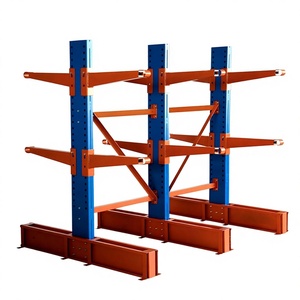
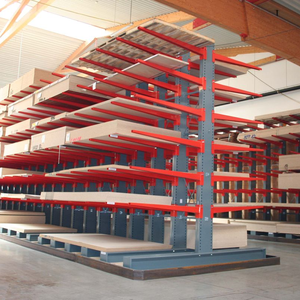
Primary Needs: Automotive sequencing, electronics raw materials, heavy stamping tooling. Heavy-duty cantilever racks for aluminum profiles and steel bars, alongside double-deep pallet racks and Push-Back systems that optimize space adjacent to US cross-docking points.
Central & Bajío Logistics Axis (El Bajío, Querétaro, Guanajuato, SLP)
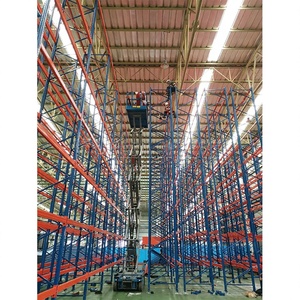
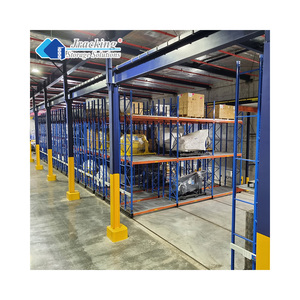
Primary Needs: Tier-1 aerospace and auto assembly lines requiring Class A warehouse fit-outs. Very Narrow Aisle (VNA) racking with wire-guidance paths, automated shuttle racking, and multi-tier picking structures that handle high-velocity SKU distribution.
Greater Mexico City Distribution Ring (Cuautitlán, Tepotzotlán, Tultitlán - CTT)
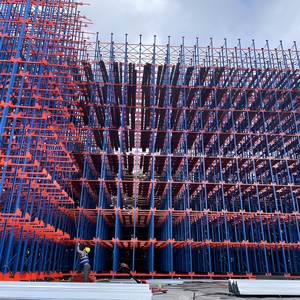
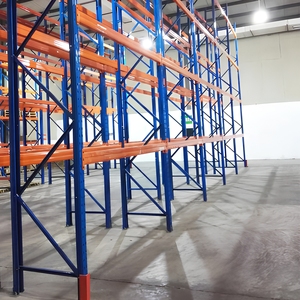
Primary Needs: E-commerce fulfillment (Mercado Libre, Amazon Mexico) and dry/cold grocery retail. Extreme real estate costs necessitate high-bay automated AS/RS storage, carton flow racks, and seismic-dampened selective racking up to 14 meters high.
3. Macroeconomic Trends Shaping Mexican Industrial Warehousing
According to Mexican industrial park associations (AMPIP), industrial real estate vacancy rates in key border hubs remain historically low. This scarcity has triggered three defining infrastructure trends:
- Vertical Cubing Strategy: Warehouse developers are expanding clear heights from 9.5 meters up to 14–16 meters. This height demands structural upright column sections with thick steel profiles (up to 2.5mm–3.0mm wall thickness) capable of sustaining combined axial and lateral buckling loads under full live inventory weight.
- Agro-Export Cold Chain Expansion: In Michoacán, Sinaloa, and Jalisco, Mexico’s agricultural cold chain requires corrosion-resistant galvanized racking and electric mobile racking structures capable of operating inside harsh blast-freezer atmospheres (-24°C to -30°C) without steel embrittlement.
- Integration of Automated Guided Vehicles (AGVs) & Shuttles: As labor efficiency gains traction, traditional manual warehouses are converting buffer zones into semi-automated Pallet Shuttle systems, demanding precise rail fabrication and rigid beam deflection controls under L/300 or L/500 thresholds.
Direct Manufacturer Advantage
Why Mexican Industrial Groups Source Directly from Our Plant
Combining world-scale Chinese steel fabrication economics with in-house European and American certified structural engineering standards.
In-House R&D & Testing
We do not broker racking; we engineer it. In collaboration with university structural engineering faculties and specialized test laboratories, every upright section, connector lug, and beam weld profile undergoes rigorous destructive dynamic testing.
- Finite-element structural simulation
- ISO 3834-2 robotic welding compliance
- Certified raw steel mill test reports (MTR)
Comprehensive Certifications
Our quality management frameworks provide full legal and insurance audit compliance for Mexican logistics facilities and international real estate funds (FIBRAs).
- ISO 9001, ISO 14001, ISO 45001
- EN 1090-1 CE Marking for structural racks
- ISO 14064 Verified Carbon Footprint
Direct Shipping to Manzanillo & Lázaro Cárdenas
We provide full container export coordination (FCL) to primary Pacific ports in Mexico, including optimized packing density that minimizes oceanic freight per pallet position.
- Direct sea lanes to Manzanillo & Veracruz
- Customs tariff classification assistance
- Complete installation drawings & assembly support
Procurement Knowledge Base
Frequently Asked Questions by Industrial Buyers in Mexico
Addressing structural calculations, customs procedures, sea freight logistics, and onsite installation.
How do your racking systems adapt to Mexico's seismic zones (CDMX, Guadalajara)?
Every project destined for high-seismic Mexican territory (Zones B, C, and D under the CFE seismic classification) is individually calculated. We incorporate seismic frame bracings, enlarged baseplates with heavy-duty mechanical or chemical chemical anchors (Hilti/Simpson standard), and thickened cold-formed upright profiles to satisfy drift and ductility factors required by local structural municipal DROs (Directores Responsables de Obra).
Are the systems compatible with Mexican 48" x 40" GMA wooden pallets?
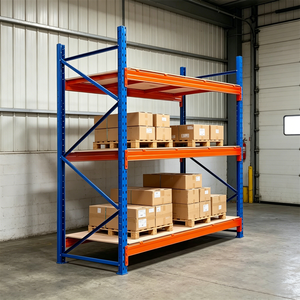
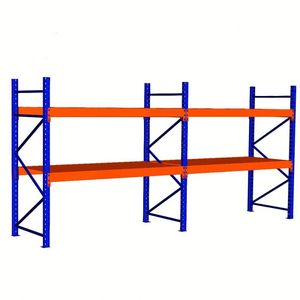
Yes. The standard configuration for Mexico utilizes clear entry beams of 2.3m (for 2 pallets) or 3.3m–3.8m (for 3 or 4 pallets) with standard 42-inch (1067mm) or 44-inch frame depths. This ensures proper 3-inch overhang front and back for 48″ × 40″ GMA pallets, with optional heavy-gauge galvanized waterfall wire mesh decks and pallet support bars.
What are the lead times and shipping routes from China to Mexican ports?
Fabrication lead times for custom projects typically range from 20 to 35 days depending on tonnage. Direct ocean transit times from Chinese ports (Shanghai, Ningbo, Qingdao) to the Port of Manzanillo or Lázaro Cárdenas average 18 to 25 days. Containerized packaging is engineered into bundles with protective corner boards, steel strapping, and moisture barrier wrap to ensure pristine condition upon arrival.
Can you support local installation and assembly within Mexico?
We provide comprehensive installation CAD layouts, 3D structural drawings, anchor layout plans, and component torque checklists. For large-scale projects, we coordinate with accredited local Mexican installation teams or dispatch engineering supervisors directly to your warehouse site in Monterrey, Querétaro, CDMX, or Guadalajara to oversee assembly, laser alignment, and anchor torque validation.
What anti-corrosion protection options do you provide for humid coastal hubs?
For standard dry inland facilities, we apply an electrostatic thermosetting epoxy-polyester powder coat cured at 200°C (thickness 60–80 microns) with high scratch resistance. For coastal or humid facilities (e.g., Veracruz, Altamira, Mérida) or aggressive cold-storage environments, we supply hot-dip galvanized steel components (HDG according to ISO 1461) or send pre-galvanized roll-formed structural elements.
What warranty and after-sales load safety certifications are included?
All structural industrial racking systems carry a 5-year written structural quality warranty against raw material defects and weld fractures. Shipments include comprehensive load capacity safety plaques (placas de carga) compliant with NOM-006-STPS and OSHA regulations, specifying maximum permissible uniformly distributed load (UDL) ratings per beam level and bay.
Ready to Optimize Your Mexican Logistics Facility?
Consult with our structural engineering team today. Share your warehouse CAD layout, clear height, pallet dimensions, and seismic location for a customized calculation and quotation.
Get a Quote