High-Performance Industrial Racking Portfolio for NY Warehouses
Engineered to handle high-capacity static loads, tight floor footprints, and rapid inventory turns across Queens, Brooklyn, Central Jersey, and Long Island logistics hubs.
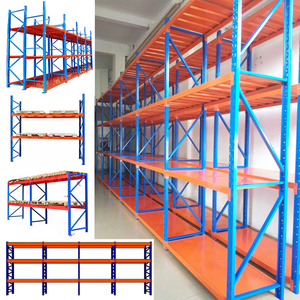
The Tri-State Industrial Real Estate Squeeze: Maximizing Cubic Clearance Over Costly Footprints
Industrial warehousing across the New York Metropolitan area represents one of the most cost-intensive real estate sectors in North America. With commercial asking rents in the Outer Boroughs (Queens, Brooklyn, the Bronx) consistently hovering between $25.00 to upwards of $42.00 per square foot NNN, and Northern New Jersey distribution corridors commanding historic premiums, facility executives cannot afford inefficient floor utilization.
Sourcing directly from an established Tier-1 Chinese steel storage manufacturer provides US procurement directors and 3PL integrators with unprecedented capital efficiency. By lowering raw component procurement costs by 30% to 45% compared to local distributor middle-tier markups, operations can reallocate budgets toward advanced high-density configurations, seismic-rated uprights, and heavy-duty structural engineering.
- Cubic Volume Capitalization: Designed to clear standard 32' to 40' ceilings with heavy-duty structural columns.
- Standardized 48" × 40" GMA Compatibility: Engineered for domestic GMA Grade A/B pallets with custom safety load stops.
- Direct Harbor Inbound: Streamlined delivery through the Port of New York and New Jersey container terminals.
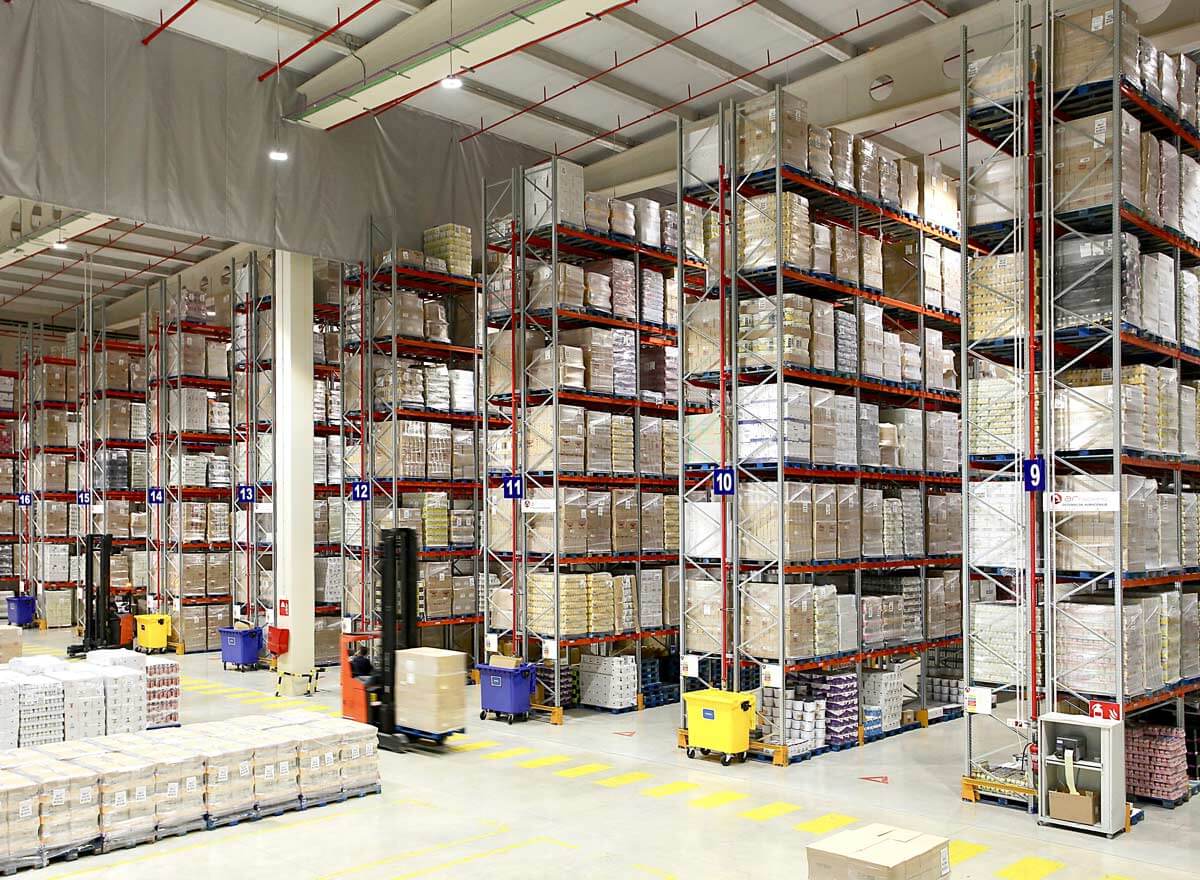
Engineering Rigor: Meeting RMI ANSI MH16.1, NYC DOB, and Seismic Mandates
Purchasing overseas storage infrastructure requires unyielding verification of material grades, structural safety factors, and fire code adherence.
RMI & AISC Standard Alignment
Every beam, connector clip, and cold-rolled upright profile is calculated according to the American National Standard ANSI MH16.1: Specification for the Design, Testing and Utilization of Industrial Steel Storage Racks. We utilize certified Q235B and high-yield Q355B structural steel equivalent to ASTM A36 and ASTM A1011 Grade 50, providing high tensile capacity and safe operating limits under continuous cyclical loading.
NYC DOB Chapter 17 Special Inspections
New York City Department of Buildings (DOB) enforces some of the nation's strictest permitting requirements for steel storage systems exceeding 8 feet in height. Our engineering division produces full PE-stamped calculation packages (Professional Engineer review), base plate anchoring calculations for concrete slabs down to 6 inches, and weld certifications certified to ISO 3834-2 and AWS D1.1 specifications.
NFPA 13 Flue Space & Fire Suppression
Compliance with the Fire Department of the City of New York (FDNY) and NFPA 13 sprinkler guidelines demands exact engineering of longitudinal and transverse flue spaces. Our rack systems are detailed with mechanical row spacers maintaining mandatory 6-inch vertical flue pathways, preventing water obstruction from Early Suppression Fast Response (ESFR) ceiling sprinkler arrays.
Tailored Storage System Topologies for the Greater New York Regional Hubs
From micro-fulfillment hubs in Queens to expansive multi-acre distribution campuses in the Meadowlands, our heavy-duty racking configurations solve specific regional supply chain bottlenecks.
Last-Mile E-Commerce Hubs
Multi-tier pick modules and heavy-duty selective pallet racks optimized for rapid SKU sorting, high SKU-density, and narrow aisle counterbalanced order-pickers in Brooklyn, Long Island City, and Bronx logistics hubs.
Cross-Dock Container Buffers
Extra heavy-duty drive-in and push-back rack lanes capable of absorbing 2,500+ lb pallets directly off ocean container drayage chassis, preventing staging congestion adjacent to the marine terminals.
Cold Storage & Food Wholesale
Mobile racking and automated shuttle systems engineered with low-temperature resilient steels that operate down to -24°C (-11°F), slashing refrigeration energy costs by condensing storage footprints up to 50%.
Industrial & Building Supply
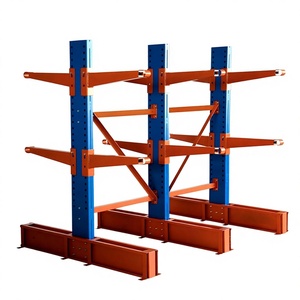
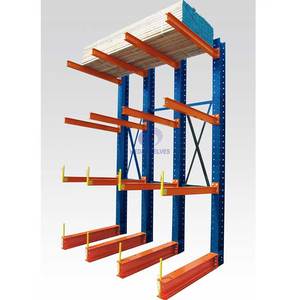
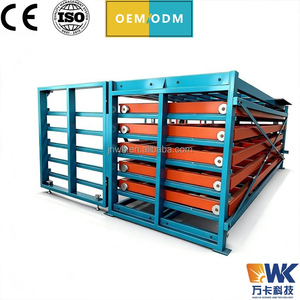
Heavy-duty structural cantilever racks and vertical sheet metal storage arrays built for lumber, steel piping, architectural extrusions, and heavy machinery parts distribution across Nassau, Suffolk, and Westchester counties.
Automated Manufacturing Center with Over 100,000 Metric Tons Capacity
Structural reliability in high-capacity warehouse shelving begins at the steel roll-forming mill. Our primary manufacturing campus encompasses over 35,000 square meters (over 376,000 square feet) of advanced automated production facilities. Utilizing fully robotic cold-roll profiling lines, automated continuous laser punch presses, and robotic welding cells, we deliver component tolerances down to +/- 0.5 millimeters.
Through our comprehensive Traceability 4.0 architecture, every batch of upright profiles, step beams, and seismic baseplates carries a unique laser-etched tracking identifier. This guarantees that steel coil heat-treatment records, tensile strength test certificates, and epoxy powder-coating adhesion data can be produced on demand during New York DOB structural audits or third-party engineering inspections.
- University Testing Lab Partnerships: Physical destructive load testing executed in partnership with the AR Lab at Mondragon University.
- Finite-Element Simulation (FEA): Computer-modeled dynamic seismic load simulations conducted at the UPV/EHU Bilbao School of Engineering.
- High Durability Finishes: Multi-stage iron-phosphate wash followed by electrostatic epoxy-polyester powder baking (60-80 microns).
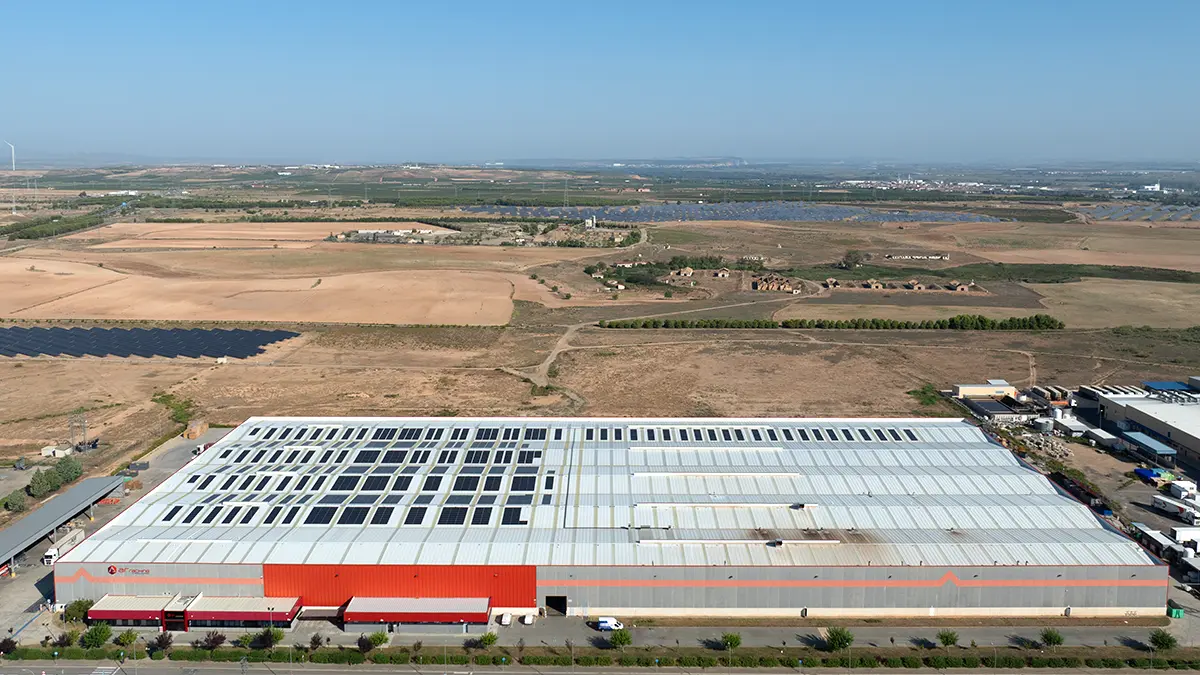
Technical Comparison: Heavy-Duty Storage Topologies
Evaluate load limits, access speeds, and cubic density ratings to specify the ideal system for your New York operations.
| Racking System Type | Typical Beam Load | Pallet Access Rate | Storage Density | Inventory Flow | Recommended NY Industry |
|---|---|---|---|---|---|
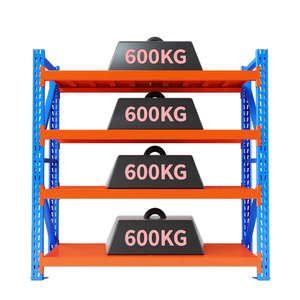
| Heavy Duty Selective Rack | 1,600 kg – 4,000 kg / level | 100% Direct Access | Standard | FIFO / LIFO | E-commerce, 3PL Fulfillment, Retail |
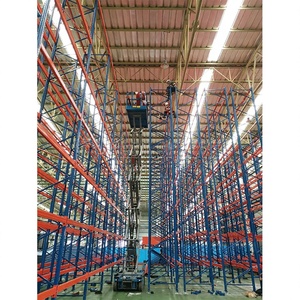
| Very Narrow Aisle (VNA) | 1,500 kg – 3,500 kg / level | 100% Direct Access | Very High | FIFO / LIFO | High-Bay Urban Warehousing (Queens/NJ) |
| Push-Back Pallet System | 1,000 kg – 1,800 kg / lane | Lane Dependent | High | LIFO | Cold Storage, Batch Distribution |
| Structural Cantilever Racks | 500 kg – 3,000 kg / arm | Immediate Open Access | Custom | Any | Lumber, Steel Piping, Sheet Metal (Long Island) |
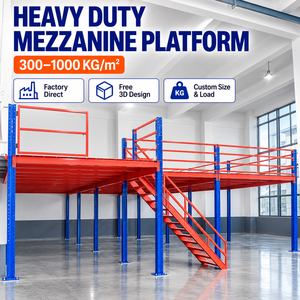
| Heavy Industrial Mezzanines | 300 kg – 1,200 kg / m² | Multi-Floor Access | Maximum Cubic | Dynamic | Micro-Hubs, Parts Sorting, Assembly |
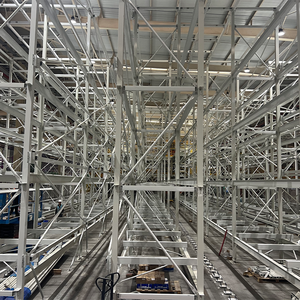
| Semi-Automated Pallet Shuttle | 500 kg – 2,000 kg / pallet | Deep-Lane Automated | Ultra High | FIFO or LIFO | Freezer Warehouses, Hunts Point Produce |
Internationally Certified Quality, Safety, and Carbon Management
Our manufacturing and engineering workflows hold rigorous global accreditations, streamlining building inspector approvals across the United States.
ISO 9001
Quality Management
ISO 14001
Environmental Systems
ISO 45001
Occupational Safety
ISO 50001
Energy Efficiency
ISO 3834-2
Welding Integrity

EN 1090-1
Structural CE Mark
ISO 14064
Carbon Verification

Ocean Freight Optimization to Port Newark & Maher Terminals
Navigating global supply chain dynamics requires disciplined logistics execution. We coordinate comprehensive containerized export programs shipping from Ningbo or Shanghai directly into the Port of New York and New Jersey, servicing APM Terminals Elizabeth, Maher Terminals, Port Newark Container Terminal (PNCT), and GCT Bayonne.
Using 3D computer automated container stuffing software, we maximize cubic volume within 40ft High-Cube (40HQ) containers. Uprights are bundled with specialized protective dunnage to eliminate transit distortion, while step beams, row spacers, and wire mesh decks are palletized for high-speed forklift unloading at your cross-dock or direct jobsite staging bay.
- Transit Time: 28 to 35 days direct ocean carrier transit to New York harbor gates.
- Complete Documentation: Verified Bills of Lading, Mill Test Reports (MTR), commercial invoices, packing lists, and EPA/ISPM-15 compliant crating.
- Custom DDP/CIF Terms: Flexible Incoterms tailored for general contractors, 3PL distributors, and facility owners.
Frequently Asked Questions: Sourcing Racking Systems for NY Warehouses
Detailed engineering, permitting, and shipping answers tailored for US procurement professionals and project engineers.
How do your racking systems ensure compliance with the New York City Building Code and DOB permitting?
The NYC Department of Buildings (DOB) enforces specific structural requirements under Chapter 17 of the NYC Building Code for all industrial storage racking structures exceeding 8 feet in height. Our engineering division collaborates with licensed New York State Professional Engineers (PE) to provide full structural calculations. We supply certified drawings verifying dead load, live load, seismic acceleration coefficients, and baseplate anchor bolt pull-out resistance calculations against the facility's existing concrete slab thickness (typically 6-inch to 8-inch 3,000 to 4,000 PSI concrete).
Are Chinese wholesale storage racks compatible with standard US 48" × 40" GMA pallets?
Yes. Our systems are engineered specifically for the North American logistics market. The standard selective beam length is fabricated at 96 inches (for two standard 48" × 40" Grocery Manufacturers Association pallets with 3-inch side clearances) or 144 inches (for three pallets). Frame depths are manufactured at a precise 42-inch depth, providing the ideal 3-inch overhang on both front and rear beams as mandated by US warehouse safety practices.
How is seismic design handled for facilities located in the New York Tri-State fault zones?
While New York is not considered a high-risk zone like California, areas of the Tri-State (including northern New Jersey and downstate New York) are classified under Seismic Design Categories (SDC) B and C under IBC and ASCE 7 guidelines. Our structural design accounts for ground spectral response accelerations (Ss and S1 values). We increase upright column gauges, utilize widened heavy-duty baseplates, reinforce diagonal and horizontal bracing patterns, and specify seismic wedge anchors to satisfy building officials.
What are the requirements for longitudinal and transverse flue spaces under FDNY regulations?
FDNY and NFPA 13 sprinkler standards strictly require clear flue spaces to ensure vertical fire suppression penetration. In back-to-back rack arrangements, we integrate rigid mechanical row spacers that maintain a continuous 6-inch to 12-inch longitudinal flue space. Additionally, pallet stop beams or wire mesh deck backstops prevent pallets from encroaching into the transverse flue space between loads.
What is the typical shipping lead time from factory completion to arrival at the Port of NY/NJ?
Production cycles for standardized wholesale orders (1 to 10 full 40HQ container loads) average 20 to 30 days. Direct ocean transit time from Ningbo or Shanghai port through the Panama Canal to the Port of New York and New Jersey terminals (Maher, Elizabeth, or Bayonne) typically ranges between 28 and 35 days. We provide comprehensive tracking, Bill of Lading documentation, and customs clearance support to ensure on-time delivery to your staging yard.
Can your cold-rolled steel racks withstand refrigerated and sub-zero freezer environments?
Absolutely. For cold chain distribution facilities, including cold rooms and commercial freezers operating down to -24°C (-11°F), we use certified high-resilience structural steel grades (such as Q355D/E) that prevent low-temperature ductile-to-brittle transitions. Furthermore, components receive hot-dip galvanized finishes or cold-cure epoxy powder-coating that resists moisture condensation, ice accumulation, and corrosion.
What warranties, mill test certificates, and structural inspection records are provided?
All our heavy-duty racking systems carry an industry-leading 5-year structural quality warranty. With each export shipment, we supply original Mill Test Reports (MTR) confirming the steel chemical composition and mechanical yield strength, ISO 9001 and ISO 3834-2 welding quality records, and a formal structural warranty certificate.
Ready to Optimize Your New York Warehouse Facility?
Connect with our structural engineering team to receive complimentary CAD layout calculations, RMI-compliant load profiling, and direct wholesale pricing for your upcoming Tri-State warehouse buildout or facility modernization.