+100,000 t
Annual Production Capacity
+42,000
Global Projects Handled
5-Year
Structural Quality Warranty
35,000 m²
Robotic Manufacturing Base
Factory-Direct Catalog
Engineered Warehouse Storage Racks for Central American Logistics
Discover our advanced material handling and dense storage equipment. Engineered with laser tolerance verification, FEA structural validation, and full batch traceability for demanding industrial facilities.
Whitepaper & Engineering Guide
Transforming Intralogistics in Tegucigalpa & Central Honduras
Tegucigalpa, nestled in the mountainous topography of the Francisco Morazán department, faces distinct physical constraints that directly impact industrial warehousing and supply chain infrastructure. With steep terrain restricting outward horizontal development, industrial land values within corridors such as the Ring Road (Anillo Periférico), Amarateca Valley, and the Southern Highway (Carretera al Sur) command high premiums. Warehousing facilities cannot afford wasted vertical cube volume or excessive aisle allocations.
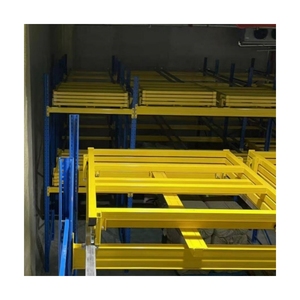
The semi-automated Pallet Shuttle Racking System represents a transformative technological advancement for Honduran operations. By replacing traditional forklift access lanes with an autonomous motorized cart running inside specialized rails, operations achieve up to 80% storage density gains over conventional selective configurations. This enables warehouse operators to maximize cubic capacity without requiring massive structural footprint expansions.
- ✓ Seismic Zone Structural Safety: Engineered in strict compliance with the Honduran Seismic Code (CHOC) and international RMI/EN 15512 structural standards.
- ✓ Dual FIFO / LIFO Versatility: Adaptable logic tailored for seasonal fast-moving consumer goods (FMCG) and date-sensitive pharmaceutical storage.
- ✓ Reduced Equipment & Operating Collisions: Forklifts remain at the aisle edge, drastically lowering upright frame damage and reducing lift-truck fuel consumption.
Key Engineering Parameters for Local Procurement
When engineering pallet shuttle racking for Central American installations, structural calculations must account for more than simple static loads:
1. Floor Slab & Deflection Tolerances: Shuttle systems require strict leveling (DIN 18202 Category 3 or ASTM E1155 F-min numbers). In high-density operations, high concentrated wheel and point-load reactions are transferred to the warehouse slab. Our structural engineers provide exact baseplate calculations to prevent slab punching failures.
2. Cold Chain Thermal Resilience: tegucigalpa’s emerging cold-chain distribution centers require steel alloys that do not suffer ductile-to-brittle transitions at sub-zero temperatures. Our systems utilize structural grades certified down to -24°C (-11°F) paired with long-life lithium iron phosphate (LiFePO4) shuttle battery packs.
3. Pallet Standardization: Projects must accommodate standard North American GMA pallets (48″ × 40″ / 1000 × 1200 mm) alongside specialized industrial runners, complete with bottom deflection safety sensors and redundant photo-electric end stops.
Industrial Use Cases
Targeted Applications Across Tegucigalpa’s Growth Sectors
From consumer goods distribution along the CA-5 corridor to bonded manufacturing and cold logistics, our high-density racking solves complex spatial challenges.
🏢
Valley of Amarateca Logistics Parks
Serving as the primary industrial gateway connecting Tegucigalpa to San Pedro Sula and Puerto Cortés via the CA-5 highway, modern distribution centers in Amarateca deploy high-density shuttle lanes to aggregate fast-moving retail, apparel, and hardware inventory with minimum cycle delays and rapid dock turnaround.
❄
Cold Storage & Food Distribution
Refrigerated and frozen food distributors supplying major supermarket chains and quick-service restaurant networks in the capital eliminate costly uncooled air volume. Operating seamlessly down to -24°C, our pallet shuttle systems reduce per-pallet cooling energy expenditure by up to 35%.
💊
Pharmaceutical & Bonded Warehouses
High-value medical supplies, cosmetics, and regulated goods demanding strict batch management leverage FIFO (First-In, First-Out) shuttle channels. Complete system integration with Enterprise Resource Planning (ERP) and Warehouse Management Systems (WMS) ensures total inventory traceability.
Future Outlook
Intralogistics Trends Reshaping Honduras Supply Chains
Analyzing macro supply chain shifts, nearshoring integration, and warehouse modernization drivers across the Central American dry corridor.
⚙
Nearshoring & Regional Hub Transition
As multinational manufacturing operations expand their footprint under CAFTA-DR, Honduran operations are transitioning from manual static shelving to semi-automated pallet shuttle systems to support regional supply chain throughput.
📈
Warehouse Urban Consolidation
Urban delivery hubs near Tegucigalpa’s Anillo Periférico are transforming legacy structures into compact, high-bay warehouses. Retrofitting automated shuttle systems allows businesses to double storage density within existing physical facility envelopes.
🤖
Integration with WMS & Automated Guided Vehicles (AGV)
The convergence of radio-frequency shuttle carriers with Automated Guided Vehicles (AGVs) and Autonomous Mobile Robots (AMRs) represents the logical evolution for premier third-party logistics (3PL) providers operating in Central America.
Manufacturing Excellence
Why Engineering Teams Choose Our Systems
World-class manufacturing capability, rigorous laboratory stress testing, and proven global project delivery.
ISO 9001 / ISO 14001
Quality & Environmental Systems
EN 1090-1 & ISO 3834-2
Certified Structural Welding
RMI / FEM 10.2.02
Global Structural Compliance
Traceability 4.0
Laser Marking per Component
Full In-House Engineering & FEA Simulation
Every racking system is custom-calculated by structural engineers. Using finite-element analysis (FEA) validated by ongoing university research labs, we evaluate dynamic load distribution, seismic accelerations, and structural deflection before production begins.
Automated Robotic Production Lines
Operating across 35,000 m² of specialized production floor, continuous roll-forming lines, robotic welding stations, and automated electrostatic powder coating guarantee millimeter-level dimensional accuracy required for smooth shuttle cart travel.
Turnkey Central American Logistics Support
From initial design sketches and structural anchor calculation packages to coordinated ocean freight routing directly to Puerto Cortés, our logistics support delivers hassle-free, load-ready installations supported by a 5-year quality warranty.
Buyer Knowledge Base
Frequently Asked Questions for Tegucigalpa Buyers
Practical engineering, commercial, and operational answers for supply chain directors and warehouse managers in Honduras.
What structural adjustments are made for seismic zones in Tegucigalpa? +
Central Honduras is categorized under moderate to high seismic risk per the Código Hondureño de la Construcción (CHOC). Our structural calculation team accounts for dynamic lateral seismic accelerations, utilizing thickened baseplates, higher-grade structural anchoring bolts, cross-aisle vertical bracing towers, and specialized ductile steel frames to guarantee life-safety performance and system integrity during a seismic event.
Can the Pallet Shuttle handle both FIFO and LIFO rotation methods? +
Yes. The pallet shuttle racking structure can be configured as Last-In, First-Out (LIFO) against a wall for maximum density with a single charging/loading aisle, or as First-In, First-Out (FIFO) with separate loading and retrieval aisles. This dual-capability is optimal for food, beverage, and pharmaceutical facilities that manage strict expiration tracking.
What are the clearance and leveling requirements for the warehouse floor slab? +
Semi-automated shuttles travel at speeds up to 1.1 m/s (loaded) and 1.5 m/s (unloaded). Floor tolerances must align with DIN 18202 or ASTM standards for narrow aisle systems. Prior to shipping, our engineers review your slab core samples and elevation surveys, advising if self-leveling underlayment or specialized load-spreading baseplates are required.
How does shipping logistics work from China to Tegucigalpa? +
Shipments depart directly from major Chinese container ports (such as Shanghai, Ningbo, or Shenzhen) via ocean freight to Puerto Cortés on Honduras’ Atlantic coast. From Puerto Cortés, cargo is transported overland along the CA-5 direct express corridor to your project facility in Tegucigalpa or Amarateca. We provide comprehensive export documentation, packing lists, and bill of lading (B/L) support for smooth customs clearance.
What battery technology powers the shuttle carts in cold storage installations? +
Our shuttle carts utilize high-capacity Lithium Iron Phosphate (LiFePO4) or Lithium-Ion battery packs equipped with internal heating elements for cold environments down to -24°C (-11°F). The systems feature quick-swap battery bays and intelligent charging stations, ensuring continuous 24/7 multi-shift operations without voltage drops.
Can existing drive-in or selective racking be converted to pallet shuttle lanes? +
In many instances, existing drive-in systems can be retrofitted if the upright frame profile, beam connections, and bay depths match structural deflection standards. Our engineering team conducts an initial audit of your existing layout drawings to determine if a shuttle retrofit or a new purpose-built modular installation provides better return on investment.
Upgrade Your Tegucigalpa Facility with High-Density Pallet Shuttle Systems
Consult with our structural engineering team today. Send us your facility floor plan, clear height dimensions, pallet weights, and throughput objectives for a comprehensive layout analysis and direct manufacturer quotation.
Inquire Now