Engineering Whitepaper & Market Analysis

China Best AMR Compatible Racking Factories & Suppliers serving the St. George’s market

Precision-engineered seismic-certified structural storage infrastructure, custom automated mobile robot (AMR) interface tolerances, and robotic cold chain solutions engineered specifically for Caribbean supply chain nodes.

Automated Storage Portfolio

High-Tolerance Robotic & Conventional Racking Systems

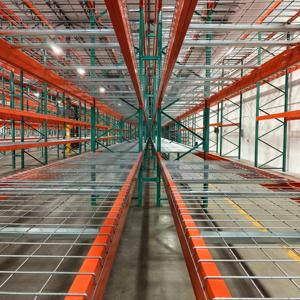
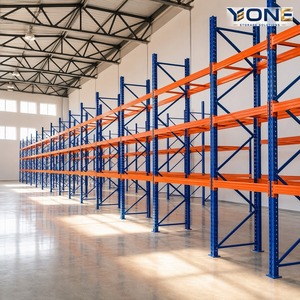
Engineered with Q235B high-tensile structural steel, strict deflection tolerances under ±1.5mm, and seamless navigation interface surfaces for autonomous guided vehicles and dynamic warehouse operations.

+42,000
Global Projects Handled
100,000 t
Annual Steel Output
±1.0 mm
Robotic Tolerances
5 Years
Structural Warranty
Strategic Application Engineering

Engineering AMR-Compatible Racking for St. George's Supply Chain Nodes

Island-based supply chains face unique microclimate stress, seismic activity, port-centric demurrage risks, and critical land limitations. Here is how modern precision racking transforms intralogistics in St. George's.

Seismic & Wind Uplift Mitigation

Caribbean territories are prone to seismic shifts and extreme tropical weather. Our structural uprights feature custom base plates, chemical anchoring depths engineered for localized concrete slabs, and diagonal bracings that surpass standard RMI and EN seismic criteria, preventing resonant harmonic failure when AMRs dynamically brake with heavy loads.

Marine Atmospheric Anti-Corrosion

Salt air humidity in coastal St. George's environments rapidly degrades low-grade structural steel. Our factory uses pre-treated hot-dip galvanizing and multi-stage thermo-cured epoxy polyester powder coating with a 1,000-hour neutral salt spray test guarantee, protecting racking integrity in non-climate-controlled cross-dock and port facilities.

Sub-Millimeter Robotic Deflection

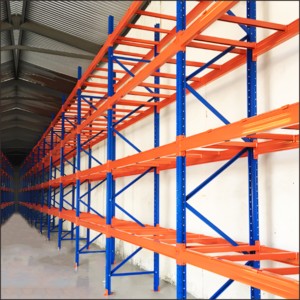
Autonomous Mobile Robots (AMRs) operating with top-mounted lifting mechanisms require extreme structural rigidity. Beams engineered with laser-assisted precision guarantee beam deflection ratios lower than L/300 under dynamic multi-tier loads, ensuring optical sensors, LIDAR navigation strips, and QR fiducial tags are never occluded.

Localized Technological Trends: Autonomous Evolution in St. George's

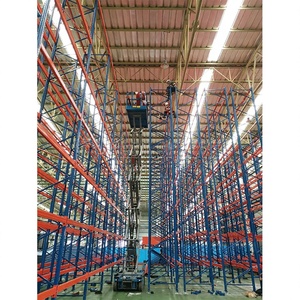
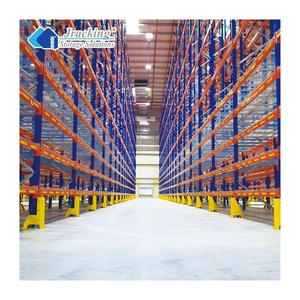
In developing Caribbean trade logistics hubs such as St. George's, real estate footprint optimization is paramount. Warehouses supporting cold foods, retail import distribution, and pharmaceutical stocks cannot afford sprawling horizontal footprints. Logistics operators are shifting towards Narrow Aisle (VNA) and AMR Goods-to-Person (G2P) architectures that maximize clear vertical bay heights up to 14 meters.

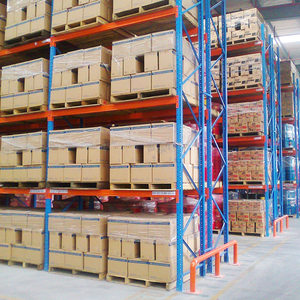
Unlike standard forklift-operated pallet racks, AMR-compatible systems require integrated ground-level transfer stations, clearance for underside-drive robot fleets, and rigid floor levelness (compliant with DIN 18202 or ASTM E1155 F-min 75 standards). Our manufacturing hubs supply prefabricated modular guide channels, custom robot-docking floorplates, and load-distribution beams designed to dissipate concentrated ground pressure.

Evaluation Parameter Standard Conventional Racks AMR-Compatible Precision Racking Cold-Chain Robotic Racks (-24°C)
Vertical Deflection L / 200 standard tolerance Strict L / 300 to L / 350 limit L / 350 with low-temp ductile steel
Leveling Tolerance ± 3.0 mm across bays ± 1.0 mm laser-aligned datum ± 1.0 mm thermal expansion comp.
Safety Pin Resistance Manual snap-lock clips Bolt-secured 4-point robotic lock Cold-forged non-brittle safety pins
Surface Protection Single-coat standard paint Impact-resistant anti-abrasion epoxy Electrostatic polyester cold-proof coat
Manufacturing Rigor

Why Tier-1 Engineers Choose Our Production Center

Every racking component exported to the Caribbean is manufactured under fully audited ISO certified ecosystems, leveraging automated continuous cold roll-forming lines, robotic welding arms, and traceable QA workflows.

35,000 m² Automated Hub

Fully automated production featuring laser cutting, high-speed progressive punching, and continuous profiling machinery ensuring repeatable tolerances across large-scale export batches.

Certified Metallurgy

Fabricated exclusively from high-yield Q235B and Q355B coils with full mill test certificates (MTC), tested for tensile strength, elongation, and impact resilience in cold storage facilities.

Academic R&D Backing

Components and assemblies undergo dynamic physical strain and finite-element modeling (FEA) at dedicated testing centers to simulate harmonic earthquake and cyclic robot load behavior.

Global Compliance

Fully compliant with international racking standards including FEM 10.2.02, EN 15512, RMI MH16.1, ISO 9001, ISO 14001, ISO 45001, and EN 1090-1 CE marking for heavy structural steelwork.

Procurement Insights

Frequently Asked Questions by Caribbean Buyers

Direct answers for logistics directors, operations leads, and facility developers in St. George's planning an AMR or high-density warehouse overhaul.

Q1 How are containers packed to prevent corrosion during ocean transit to St. George's?

All uprights and beams are wrapped with micro-perforated VCI (Vapor Corrosion Inhibitor) plastic film, bundled on timber runners with corner protection sleeves, and desiccated inside dry 40HQ ocean containers to prevent salt air condensation and oxidation during long Caribbean voyages.

Q2 Can our existing concrete slab support AMR automated racking loads?

AMR fleets exert localized dynamic rolling axle loads, while multi-tier racks exert concentrated point loads through baseplates. We review your slab thickness, rebar mesh, and concrete compressive strength (psi/MPa) to calculate required baseplate dimensions and ensure uniform load spreading without slab cracking.

Q3 How do AMR navigation markers integrate with your rack footings?

Our structural rack bases include pre-machined mounting holes for magnetic strip fixtures, optical barcode reflectors, and ground-level QR code plates, allowing AMR vision guidance sensors to accurately calculate clearance during automated picking and drop-off cycles.

Q4 What lead time should local St. George's logistics operators anticipate?

Standard engineering layout validation and production require 20 to 30 working days. Port transit to St. George's typically takes 35 to 45 days. We provide comprehensive erection drawings, 3D CAD models, and video guidance to enable rapid installation by local mechanical assembly teams.

Upgrade Your St. George's Logistics Facility Today

Connect with our senior structural engineers to calculate floor loadings, evaluate AMR clearance profiles, and receive custom factory-direct drawings for your facility.

Inquire Now