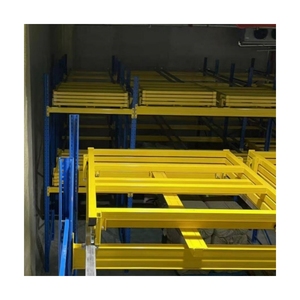
 High Density LIFO
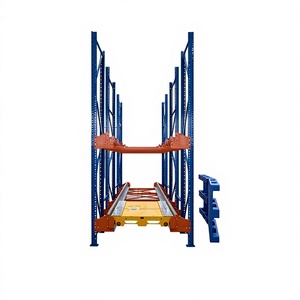
Heavy Duty Push Back Pallet Racking Systems
- Storage Depth: 2 to 6 Pallets Deep
- Steel Metallurgy: Q235B / Q355B Cold Rolled
- Weight Capacity: Up to 1,500 kg / Pallet
- Operational Flow: LIFO Nested Cart System
Direct from advanced manufacturing facilities: explore precision-calculated selective, dynamic, and high-density warehouse racking lines engineered for 48"×40" GMA pallets, high-tonnage industrial loads, and automated AS/RS integration.
High Density LIFO
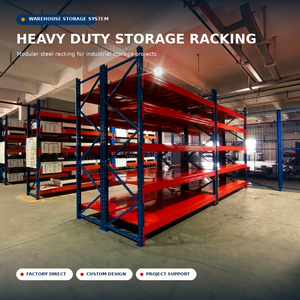
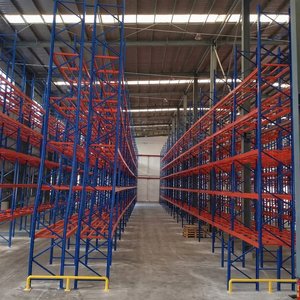 100% Selectivity
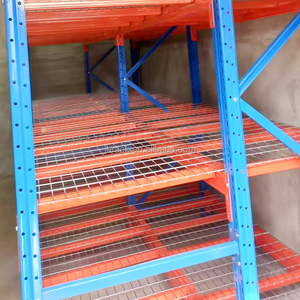
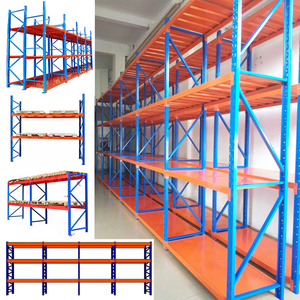 Ultra Heavy Duty
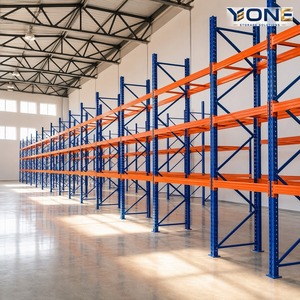 Standard Industrial
 OEM Customization
 Semi-Automated
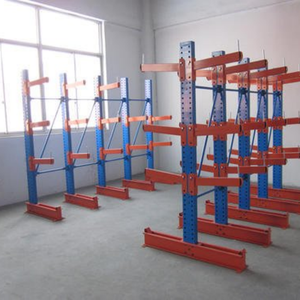 Long-Load Specialist
 Fire Code Compliant
In high-throughput distribution environments, selecting industrial storage racking extends far beyond rudimentary price-per-pound calculations. Warehouse racking forms the physical skeleton of your supply chain infrastructure, directly dictating cubic efficiency, material flow velocity, seismic compliance, and occupational safety.
Global third-party logistics (3PL) providers, omni-channel retailers, cold chain facilities, and Tier-1 automotive manufacturers require structural racking systems calculated precisely against dynamic stress models. Cold-formed steel profiles must maintain certified yield strengths (such as certified Q235B, Q355B, and structural steel ASTM A1011 standards) to resist cyclic fatigue, micro-deflection under sustained rated live loads, and fork truck mechanical impacts at critical rack aisle interfaces.
When partnering with high-volume industrial shelving suppliers and wholesalers, corporate procurement leaders must examine the supplier's vertical integration: from proprietary roll-forming metallurgy and automated robotic welding to independent university structural testing, finite element analysis (FEA), and localized seismic engineering coordination (RMI ANSI MH16.1 in North America, EN 15512 in Europe, and CSA A344 in Canada). A minor variance in upright gauge or beam connector mechanical tolerance can yield structural deformation, compromising AS/RS automated crane tracking or triggering catastrophic rack collapse under maximum live load capacity.
Our primary automated production center operates continuous roll-forming lines integrated with robotic plasma cut-to-length systems, laser-guided punch lines, and automated dual-pass gas metal arc welding (GMAW). With an annual output exceeding 100,000 metric tons and an export ratio surpassing 90%, we guarantee volume scalability, precision fitment, and dependable batch consistency for multi-thousand bay developments.
Engineering excellence is verified through institutional alliances. At our specialized AR Lab (developed in conjunction with Mondragon University), components undergo mechanical destruct testing, buckling assessment, and cyclic loading. Additionally, our Research and Simulation Classroom at the University of the Basque Country (Bilbao School of Engineering) performs advanced finite-element structural simulation for high-bay and seismically volatile geographic zones.
Every upright column, structural load beam, and diagonal brace carries permanent laser-etched identification indicating production shift, mill raw coil batch, steel tensile heat-treatment lot, and machinery profiling parameters. This comprehensive Traceability 4.0 data architecture enables frictionless third-party safety audits, straightforward structural re-certification, and rapid ongoing lifecycle maintenance tracking.
Examine spatial density metrics, mechanical handling access, floor-area utilization, and capital expenditure dynamics across primary warehouse racking archetypes.
| Storage Topology | Direct Selectivity | Volumetric Density | Material Flow Strategy | Forklift / Equipment Interface | Ideal B2B Application Profile |
|---|---|---|---|---|---|
| Selective Pallet Racking | 100% Instant Direct Access | Standard (40-45%) | FIFO or LIFO | Counterbalance, Reach, Articulated | High-SKU fulfillment, FMCG distribution centers, 3PL staging facilities |
| Very Narrow Aisle (VNA) | 100% Instant Direct Access | High (55-65%) | FIFO or LIFO | Wire-guided or Rail-guided Turret (VNA) | High-bay warehouses, premium cost-per-sqft real estate, high SKU velocity |
| Double Deep Racking | 50% Direct Accessibility | Medium-High (60%) | LIFO Operational Priority | Deep-Reach Pantograph Forklifts | Medium SKU consolidation, bulk dry goods, manufacturing buffer staging |
| Push Back Cart Racks | Lane-Dependent Front Pick | High Density (70-75%) | LIFO Gravity-Fed Nested | Standard Counterbalance, Reach Trucks | 2–6 pallet lot sizes, refrigerated staging buffers, perishable cold stores |
| Radio Shuttle Automation | Lane-Indexed Selective | Ultra-High (80-88%) | Configurable FIFO / LIFO | Semi-automated Cart + Reach Truck | Food & Beverage mass production, industrial sub-zero cold rooms (-24°C) |
| Cantilever Systems | 100% Clear Front Access | Load-Specific Profile | Open Matrix Selective | Standard, Side-Loader, Multi-Directional | Lumber, steel extrusions, tubing, building materials, non-palletized cargo |
| Rack-Supported Buildings | AS/RS Crane Integrated | Maximum Cube Utilization | Fully Automated System | Automated Stacker Cranes, AMRs | Mega-scale distribution hubs, greenfield high-bay installations up to 45m |
As real estate costs rise and automation scales globally, commercial warehouse procurement is evolving from purchasing static steel shelves to implementing dynamic, robotic-ready structural frameworks.
Autonomous Mobile Robots (AMRs) and automated stacker cranes require structural fabrication tolerances measured in millimeters rather than centimeters. Modern procurement demands tighter vertical plumbness, precise deflection limits (L/300 minimum), and laser-verified guide-rail alignments to prevent robotic sensor trips and emergency system stoppages.
Driven by rapid growth in biopharma logistics and frozen retail food fulfillment, cold storage demand is surging. Procuring steel for -24°C (-11°F) facilities requires low-temperature impact tested structural steels (such as Q355D/E) with specialized ductile properties that prevent brittle fracturing under dynamic forklift impacts.
Next-generation racking includes integrated IoT impact sensors, fiber-optic strain gauges, and wireless load cells embedded in baseplates and high-stress beam-to-column connectors. Real-time telemetry notifies warehouse operations of mechanical impacts, dynamic overload warnings, and post-seismic frame displacement instantly.
Global Fortune 500 procurement mandates now evaluate Scope 1, 2, and 3 embedded carbon within industrial racking. Facilities utilizing electric arc furnace (EAF) recycled green steel, zero-emission electrostatic powder curing, and ISO 14064 verified carbon reduction benchmarks obtain distinct supplier competitive advantage in formal tender bids.
Compliance is non-negotiable. Our engineering and manufacturing processes are independently verified across European, North American, and International regulatory bodies.
Direct answers to the structural calculations, seismic zoning permits, safety factors, and manufacturing lead time questions commonly presented by enterprise supply chain directors.
Our heavy-duty industrial racking primarily utilizes high-yield cold-rolled structural steel grades Q235B and Q355B (equivalent to European S235JR and S355JR, or North American ASTM A36 and ASTM A572 Grade 50). These steels provide high tensile yield strengths (yielding between 235 to 355 MPa) and superior elongation properties (≥20%). Under continuous loading, cold-rolled profiles deliver exceptional elastic memory, preventing structural deflection past the permissible L/200 limit (where L represents clear beam span distance). For freezer and sub-zero cold room environments, we utilize specialized low-temperature impact certified steel (Q355D) tested down to -20°C and -40°C Charpy V-Notch standards to prevent brittle material failure.
Every structural pallet racking project deployed in the United States and Canada undergoes structural engineering review based on the International Building Code (IBC), NFPA fire safety standards, RMI (Rack Manufacturers Institute) Specification ANSI MH16.1, and Canadian CSA A344 standards. Our engineering team calculates ground motion accelerations ($S_s$ and $S_1$ factors) specific to the jobsite ZIP code, evaluates site soil classification, and models seismic lateral sway, frame baseplate anchor shear, and tension uplift. We coordinate directly with local licensed Professional Engineers (PE) or SE structural engineers to provide stamped calculation packages necessary to secure municipal building and fire permits.
In a conventional warehouse facility, an independent structural building (steel portal frame or concrete tilt-up wall) is constructed, and free-standing pallet racks are subsequently anchored to the concrete slab. In contrast, a Rack-Supported Warehouse (Clad-Rack building) utilizes the heavy-duty industrial storage rack framework itself as the primary load-bearing structural skeleton. The external roof trusses, wall cladding, exterior insulation panels, wind cross-bracings, and automated stacker crane guide rails are attached directly to the high-bay racking uprights. This eliminates traditional civil building columns, slashes construction timelines, maximizes vertical storage heights up to 45 meters, and significantly reduces total capital expenditure (CapEx).
Under OSHA in North America and EN 15635 regulations across Europe, warehouse operators must conduct systematic annual structural rack inspections and maintain documented records of load capacity compliance. Traceability 4.0 ensures that each individual upright profile, beam member, and splice plate features a permanent laser-etched matrix. This mark indexes the steel coil raw material certificate, manufacturing shift timestamp, yield tensile test results, and robotic weld cell identifier. In the event of a localized forklift impact incident or insurance liability audit, the exact structural lineage can be referenced to source original OEM replacement components without field modification.
Yes. Our automated warehouse structures and shuttle-compatible racking lines are engineered specifically to interface seamlessly with modern intralogistics robotics, including Radio Shuttles, Autonomous Mobile Robots (AMRs), Automated Guided Vehicles (AGVs), and Automated Storage and Retrieval System (AS/RS) cranes. We maintain manufacturing tolerances within ±1.0mm per bay, incorporate CNC-punched optical positioning slots for shuttle positioning lasers, and supply rigid anti-sway bracing configurations that withstand the continuous dynamic braking and acceleration forces exerted by high-speed automated machinery.
To withstand diverse industrial environments, we offer multiple surface protection treatments. Our standard line features an automated 7-stage pre-treatment wash followed by high-adhesion electrostatic epoxy-polyester powder coating cured at 200°C, producing a resilient 60–80 micron thick protective film resistant to chipping, corrosion, and industrial chemical fumes. For high-humidity facilities, chemical storage, or outdoor covered yards, we provide hot-dip galvanized (HDG) steel components compliant with ISO 1461, ensuring zinc coating thicknesses exceeding 70–100 microns for long-term corrosion prevention.
Standard lead times for high-volume wholesale racking orders (10 to 50+ 40ft High Cube containers) typically range from 4 to 6 weeks from technical drawing sign-off and structural design approval. Because over 90% of our production is exported internationally, packaging is optimized for maritime shipping. Uprights and beams are bundled using structural steel dunnage, high-density polyethylene edge protectors, moisture-resistant shrink wrapping, and designated forklift lifting straps to eliminate mechanical transit damage, corrosion from ocean humidity, and ensure rapid, damage-free container unloading at the destination warehouse.
All industrial pallet racking frameworks and storage systems are backed by a comprehensive 5-year structural quality warranty covering manufacturing defects, material failure, and structural welding flaws under rated design loads. Additionally, we provide complete post-installation technical services, including annual safety inspection protocols, certified repair kits, column guard accessories, and capacity re-rating engineering analyses if your facility alters pallet dimensions or increases inventory unit weights.
Planning a new regional distribution facility, sub-zero cold room, or warehouse expansion? Submit your building architectural CAD drawings, pallet dimensions, and operational throughput goals. Our engineering division will generate tailored layout options, structural load calculations, and competitive wholesale pricing.