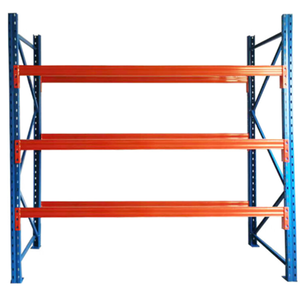
Mracking Industrial Pallet Racking Shelving System
Engineered for dynamic mid-to-heavy distribution operations, offering flexible modular multi-bay configurations and reinforced column profiles.
Technical Specs →Engineered to international design specifications (RMI, EN 15512, ISO standards), our racking assemblies deliver maximum dynamic structural resilience and volumetric optimization for supply chain infrastructure.
Engineered for dynamic mid-to-heavy distribution operations, offering flexible modular multi-bay configurations and reinforced column profiles.
Technical Specs →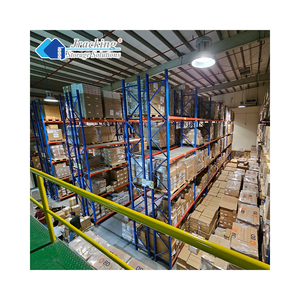
Strict adherence to European FEM standards with multi-hole pitch adjustments, structural connector interlocks, and 100% immediate pallet selectivity.
Technical Specs →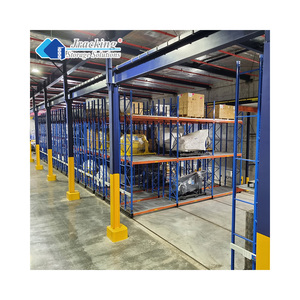
Motorized floor-embedded mobile bases designed to consolidate aisle space, slashing refrigeration footprints and cold-chain operational expenditures.
Technical Specs →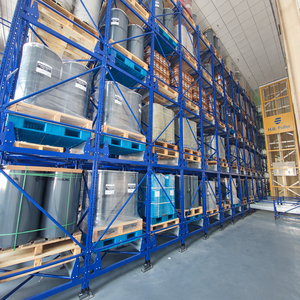
Cutting-edge multi-depth pallet buffer automation utilizing high-speed robotic shuttles, bidirectional tier transitions, and deep-lane software control.
Technical Specs →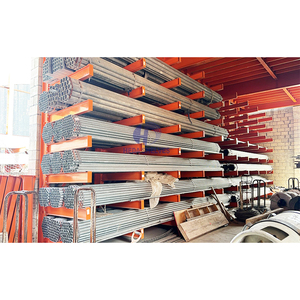
Unobstructed horizontal storage arms calculated for high moment capacities, safe for storing structural steel, PVC extrusions, pipes, and bulk lumber.
Technical Specs →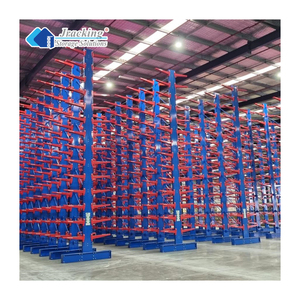
Custom pivot connection pins and non-marring arm protections engineered explicitly for sensitive aluminum profiles, bar stocks, and sheet packs.
Technical Specs →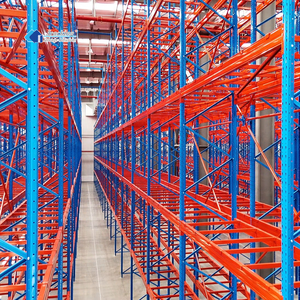
High-tensile structural upright columns optimized for intensive reach-truck operations and narrow-aisle (VNA) configuration arrays.
Technical Specs →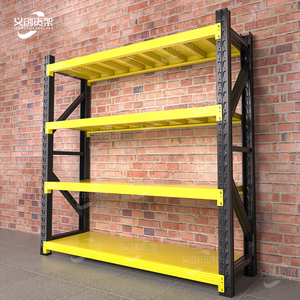
Interlocking boltless shelving frames rated up to 500kg-1000kg per layer, designed for high-density carton manual pick zones and multi-tier catwalks.
Technical Specs →As an internationally certified manufacturer and exporter, our fully automated 35,000 m² plant bridges advanced metallurgical science with civil engineering rigors to mitigate operational liabilities.
Continuous robotic profiling lines, automated punching arrays, and laser-guided welding cells eliminate dimensional creep. Our ISO 3834-2 welding qualifications guarantee absolute structural conformity under severe cyclic dynamic loadings.
Every cold-formed upright, beam member, and connector connector pin receives unique batch engraving. Fully certified under ISO 9001, ISO 14001, ISO 45001, ISO 50001, EN 1090-1 (CE), and ISO 14064 carbon standards.
Backed by active structural testing laboratories in partnership with prestigious technological polytechnics. Finite-element structural analysis (FEA) and full-scale physical collapse tests allow safe engineering for earthquake zones.
Industrial warehousing is decisively pivoting away from traditional tilt-up concrete envelopes housing free-standing racking. Rising industrial real estate costs, urban logistics zoning pressures, and the scarcity of zoned buildable acreage are accelerating the adoption of Rack-Supported Warehouses (Clad-Rack Structures). In these engineering executions, the racking matrix itself forms the load-bearing skeleton of the building, supporting roof trusses, insulated insulated wall cladding, dynamic wind shear, snow loads, and seismic forces simultaneously.
Because rack-supported buildings circumvent conventional foundation slab delays and clear-height civil engineering ceilings—routinely surpassing 40 to 45 meters in height—they reduce capital footprint expenditure by up to 28% while boosting volumetric density by up to 60%. Procurement teams must recognize that sourcing a clad-rack system is not an off-the-shelf equipment procurement; it is a collaborative civil-structural project that demands manufacturer competence in EN 1090-1 CE structural steel execution, precise dynamic anchor engineering, and localized wind-tunnel simulations.
The acceleration of Automated Storage and Retrieval Systems (AS/RS), 4-Way Pallet Shuttles, and Autonomous Mobile Robots (AMRs) has fundamentally disrupted beam and upright deflection parameters. Traditional selective systems permitted beam deflection ratios of L/200 under maximum rated payload. However, modern high-speed robotic stacker cranes operating at 5 m/s with micro-millimeter optical sensors demand structural deflections restricted to L/400 or stricter.
Minor out-of-plumb deviations caused by loose rolling tolerances or floor unevenness propagate upward through high-bay structures. When a racking system reaches 30 meters, an angular deviation of merely 0.2 degrees at the base can shift top guide rails by several centimeters, resulting in optical misreads, shuttle rail jams, or emergency stops. Forward-looking procurement engineering requires manufacturers to prove automated cold-roll forming consistency, laser-guided punching precision, and continuous factory run-out checks.
As pharmaceutical supply lines, biotherapeutics, and global frozen perishable distribution expand, cold-storage logistics are operating under harsher thermal gradients, typically down to -24°C to -30°C. Structural steel subject to continuous sub-zero conditions faces severe ductile-to-brittle transition risks. Standard hot-rolled or conventional cold-rolled carbon steel profiles run the danger of brittle fracture along welded joints or sharp perforation radii under dynamic forklift impact.
Next-generation procurement criteria explicitly dictate impact-tested structural steels with verified Charpy V-notch energy absorptions at -20°C or below (such as EN 10025 S355J2 or high-grade micro-alloyed automotive cold-forming steels). Furthermore, finishes must undergo specialized passivation and epoxy-polyester electrostatic powder coating to avoid micro-fissuring and condensation blistering during defrost cycles.
Enterprise buyers and Fortune 500 multinationals are under mandatory ESG governance, requiring verified Scope 3 embedded carbon disclosures for new distribution capital deployments. Racking systems comprise thousands of tons of high-tensile steel per installation. Consequently, industrial manufacturers operating with certified ISO 14064 greenhouse gas audits and energy-efficient induction fabrication (ISO 50001) offer measurable competitive margins during corporate sustainability scoring. Traceability 4.0—where raw coil origins, mill test certificates, and recycling loops are linked to individual project lot numbers—is transitioning from a luxury to an indispensable contractual clause.
Choosing the correct storage typology requires balancing access velocity, selectivity percentages, floor utilization, and capital expenditure amortization.
Selectivity: 100% Immediate
Volumetric Efficiency: 40% - 50%
Inventory Logic: FIFO / LIFO
Target Profile: High-SKU distribution, active FMCG e-commerce picking, 3PL facilities requiring unrestricted forklift accessibility.
Selectivity: 100% Direct
Volumetric Efficiency: 65% - 75%
Inventory Logic: Flexible
Target Profile: Facilities with high vertical clearances (12m - 18m) utilizing wire or rail-guided turret trucks to maximize cube usage without losing selectivity.
Selectivity: Controlled Dynamic
Volumetric Efficiency: 85% - 95%
Inventory Logic: Auto FIFO / LIFO
Target Profile: High-volume, consolidated SKU matrices, cold-storage distribution, and lights-out automated fulfillment centers demanding continuous 24/7 output.
Selectivity: 100% (Single Active Aisle)
Volumetric Efficiency: 80% - 90%
Inventory Logic: Batch Controlled
Target Profile: Cold-storage warehouses and high-cost urban footprints where maximizing cubic utilization dramatically lowers ongoing power and refrigeration bills.
Essential technical clarifications addressing structural engineering specifications, seismic calculations, local building codes, and export compliance.
Seismic design requires evaluating the site-specific spectral acceleration parameters (Ss and S1 under IBC / ASCE 7 in North America, or Eurocode 8 across Europe). Our structural engineers conduct dynamic modal spectral analysis on specialized finite-element software to calculate ductility factors, base plate anchor shear resistances, and second-order (P-Delta) structural stability, ensuring systems endure design-basis earthquakes without localized catastrophic collapse.
Heavy racking assemblies generate immense point-load pressures through their upright footplates (often exceeding 10 to 18 metric tons per leg). The warehouse slab must be verified for compressive strength (commonly minimum 25-30 MPa), punch shear resistance, and structural rebar mesh placement. For VNA and automated shuttle systems, precise floor flatness certifications (such as DIN 18202 or TR34 Superflat / DM2 classifications) are critical to prevent vehicle swaying.
To deliver an optimized structural drawing and load-capacity calculation, our engineering department requires: (1) Architectural CAD floor layout indicating clear heights, column grids, and dock doors; (2) Pallet specifications including 48"x40" GMA, Euro, or custom sizes, overhang tolerances, and max gross pallet weight; (3) Materials handling equipment (MHE) turning radiuses and mast lift heights; and (4) Environmental factors (ambient or sub-zero temperature, seismic zone classifications).
With an export ratio exceeding 90% to North America, Europe, Australia, and Latin America, packaging integrity is fully standardized. Beams, upright frames, and diagonal bracing members are bundled with high-tensile steel strapping, timber dunnage blocks, and moisture-proof plastic filmwrapping designed specifically for 40ft High-Cube container ocean freight. Component tagging matches structural assembly schematics for swift jobsite staging.
All fabricated racking systems carry our standard 5-year structural quality warranty covering manufacturing and material integrity. Deliveries are accompanied by certified Mill Test Certificates (MTCs) for raw steel coils, galvanization/powder coating dry film thickness (DFT) reports, ISO compliance documentation, and stamped structural calculations vetted by project engineering authorities.
While theoretical retrofitting is possible, it is economically and structurally risky unless designed from inception. Automated robotic shuttles and cranes mandate tighter guide rail tolerances, custom horizontal beam punch patterns, reinforced baseplates, and stricter floor levelness than standard forklift-accessed selective racks. We recommend engineering "automation-ready" structural framing during initial capital installation if future robotic phased expansion is planned.
Connect with our technical design team for custom layout simulations, seismic structural calculations, and direct-from-manufacturer export pricing schedules.
Get Catalog