Authoritative 2026 Industry White Paper & Sourcing Matrix

Top China Warehouse Shelving Racks Factories & Wholesalers

Direct-mill structural steel fabrication, automated roll-forming tolerances, FEM/RMI seismic design compliance, and turnkey logistics solutions for North American and European industrial distribution centers.

100,000+ t
Annual Steel Output
60+
Export Nations Served
42,000+
Global Projects Handed Over
5-Year
Structural Quality Warranty
Factory Direct Portfolio

Precision-Engineered Heavy Duty Warehouse Racking Systems

Manufactured on continuous CNC automated cold-roll lines with high-yield Q235B and Q355B structural steel, tailored to international pallet standards including GMA 48"x40", Euro 1200x800mm, and industrial bulk cargo.

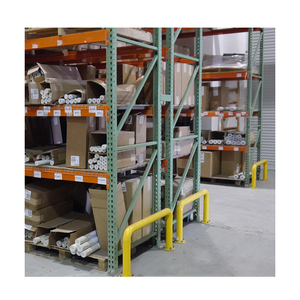
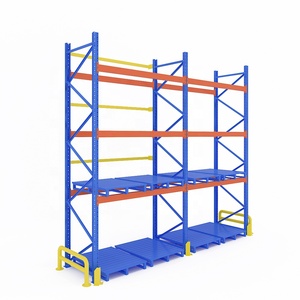
Warehouse Storage Industrial Pallet Rack with Back Stopper OSHA Safety Shield
Safety Add-On Protection

Warehouse Storage Industrial Pallet Rack with Back Stopper

Equipped with rear beam safety push-through stops and welded mesh anti-collapse screening. Prevents unit load overhang into pedestrian aisles or damage to wall cladding.

  • Stopper Type: Tubular Offset Beam
  • Safety Compliance: OSHA / ANSI MH16.1
  • Mounting: Direct Upright / Beam Clamp
Technical Datasheet
Enterprise Manufacturing Scale

35,000 m² Fully Automated Production Infrastructure

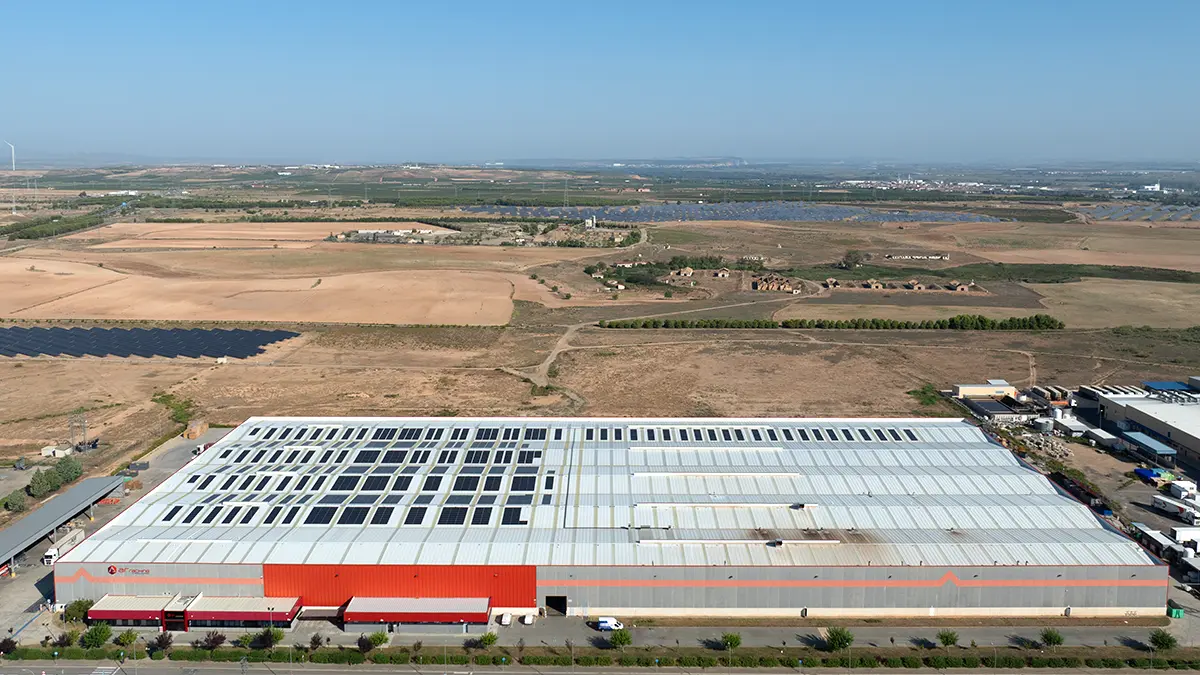
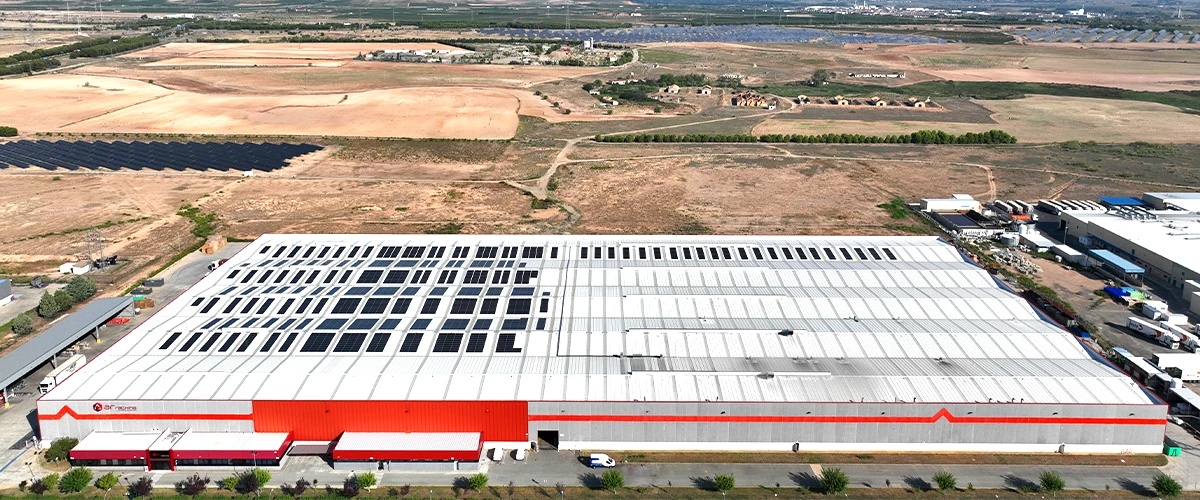
As one of China's premier racking engineering and fabrication hubs, our manufacturing base features a built footprint exceeding 35,000 square meters (376,000+ sq. ft.). With an operational annual output exceeding 100,000 metric tons of certified structural steel, more than 90% of our production is exported directly to high-standard markets across North America, Europe, Australia, and South America.

By leveraging continuous automated roll-forming lines, automated laser-guided punching stations, robotic weld cells, and fully automated continuous multi-stage powder coating tunnels, we eliminate manual dimensional drift. Every upright column and step beam meets strict millimeter tolerances required by high-bay automated warehouses and robotic AS/RS installations.

Our comprehensive supply chain integration spans raw hot-rolled coil slitting directly from premier domestic tier-1 steel mills down to in-line packaging and sea-freight nesting, guaranteeing consistent metallurgical stability and unmatched wholesale pricing power.

Fully automated racking production line with robotic processes
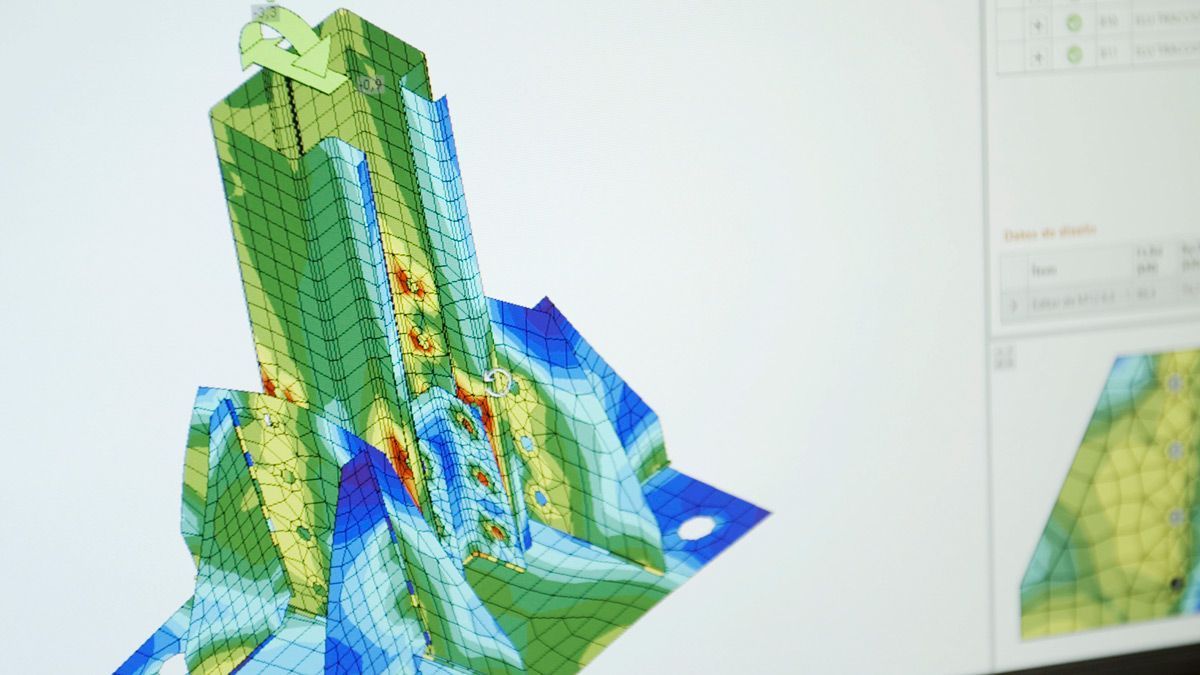
Structural testing and simulation of storage racking components
Academic R&D Rigor

Applied Engineering: Testing Labs & University Research

Structural reliability in complex seismic conditions cannot rely on guesswork. We invest extensively in physical material characterization and Finite Element Analysis (FEA) modeling in conjunction with premier academic engineering faculties.

Through our dedicated laboratory partnerships—including continuous structural component stress testing at the AR Lab with Mondragon University and advanced calculation modeling at the Research & Simulation Classroom (Bilbao School of Engineering, University of the Basque Country)—every profile is rigorously scrutinized under compressive, torsional, and cyclic seismic load scenarios.

Our engineering division calculates structural load matrices for both static gravity loads and dynamic seismic interactions in strict alignment with regional codes including ANSI/RMI MH16.1 (USA), NBCC (Canada), EN 15512 (Europe), and AS 4084-2023 (Australia), coordinating directly with the buyer's local Engineer of Record (EOR).

Traceability 4.0 Component Laser Marking

Every upright column, horizontal brace, and load beam is marked in-line with permanent batch codes. Procurement directors can trace the parent steel coil heat number, chemical mill certificate, yield test records, roll-line date, and robotic welding shifts for seamless maintenance audits.

  • Automated Batch Level QR & Alphanumeric Stamping
  • Lifetime Material Certification Retrieval

Turnkey Lifecycle Engineering & 5-Yr Warranty

From primary CAD site layout simulation, aisle optimization, and floor-slab loading calculation to international export logistics and on-site tolerance auditing, we deliver complete turnkey accountability. Every industrial system includes a backed 5-year structural performance warranty.

  • Global Installation Supervision & As-Built Audits
  • Comprehensive Professional Liability Protection

ISO 14064 Verified Carbon Footprint Decarbonization

Supporting environmental criteria for global logistics leaders. Our production operates under verified ISO 14064 greenhouse gas reporting and certified ISO 50001 energy management, utilizing clean electric melting scrap ratios and high-efficiency thermoset powder recycling.

  • Low-Carbon EPD Material Documentation Available
  • Zero Solvent VOC Discharge in Coating Process

Independently Audited Quality, Safety & Structural Certifications

Verified compliance across structural fabrication, environmental stewardship, welding integrity, and energy management.

ISO 9001 Quality Management System

ISO 9001

Quality Management System

ISO 14001 Environmental Management

ISO 14001

Environmental Management

ISO 45001 Occupational Health and Safety

ISO 45001

Occupational Health & Safety

ISO 50001 Energy Management

ISO 50001

Certified Energy Management

ISO 3834-2 Welding Quality Standards

ISO 3834-2

Fusion Welding Quality (Metals)

EN 1090-1 CE Marking for Structural Steel

EN 1090-1

CE Certified Structural Steel

ISO 14064 Greenhouse Gas Verification

ISO 14064

Carbon Footprint Audit

Industry Horizon

Key Technology & Engineering Trends Transforming Industrial Storage

The warehouse racking industry is moving rapidly from passive static storage toward active automated structures, tight mechanical tolerances, and microclimate resilience.

1. Convergence of AS/RS & Autonomous Mobile Robots (AMRs)

Traditional static pallet racking is rapidly adapting to support automated interfaces. Tolerances that were once acceptable for standard counterbalance forklifts (±5mm) fail when integrating automated guided vehicles (AGVs) or shuttle shuttles, which demand deflection thresholds tighter than L/300 or L/500. Structural designs now integrate floor-level laser positioning targets, specialized baseplate shimming, and top tie-back sway bracing specifically calculated to withstand high-acceleration robotic mast dynamics.

2. Cold Chain -30°C Cryogenic Metallurgy

With global temperature-controlled food logistics surging, cold storage facilities cannot utilize standard structural steels, which become brittle below zero Celsius. The industry development focuses on low-temperature impact resilience steel (such as Q355D and Q355E with Charpy V-notch impact testing verified at -20°C and -40°C). Furthermore, mechanical rack components incorporate low-temperature synthetic grease, stainless steel hardware pins, and specialized moisture-repelling epoxy powders.

3. Rack-Supported Building Enclosures (Clad Racks)

Skyrocketing land acquisition costs in primary logistics corridors have accelerated the adoption of rack-supported buildings. Rather than erecting a conventional steel warehouse building and installing racking inside, the storage rack uprights act as the primary structural skeleton that directly supports the roof purlins, side cladding, and insulation sandwiches. This reduces total project civil build schedules by up to 35% and allows storage clear heights reaching 40+ meters.

4. IoT Structural Health Monitoring (SHM)

Impact damage caused by heavy material handling equipment remains the leading cause of catastrophic warehouse collapses. Progressive factories are integrating IoT load sensors and strain gauges into primary aisle end-frames and lower upright columns. These telemetry modules monitor real-time mechanical vibration, upright displacement, beam overload deflections, and seismic shock, feeding immediate alerts directly into the facility WMS or facility ERP dashboard.

5. Closed-Loop Circular Powder Coating & Green Steel

Environmental scrutiny in the international supply chain has elevated the requirement for verified low-carbon steel. Chinese top-tier mills and rack fabricators are adopting scrap-based Electric Arc Furnace (EAF) steel and zero-effluent nanotechnology pre-treatment wash systems (zirconium-based conversions replacing toxic phosphate sludges), ensuring high salt-spray resistance (ASTM B117 > 500 hrs) without heavy metals.

Procurement Strategy

Future Sourcing Trends for Warehouse Racks Wholesalers & 3PLs

B2B supply chain procurement is transitioning from transaction-based price-per-kilogram quotes to Total Cost of Ownership (TCO), seismic liability compliance, and localized nesting efficiencies.

Shift from Ex-Factory Price to Landed Lifecycle Cost

Savvy North American and European procurement teams recognize that an ultra-low ex-factory quote often conceals sub-optimal freight nesting, light-gauge steel substitutions, and non-compliant cold-formed profiles that fail municipal engineering building permits.

Future-proof procurement focuses on:

1. Volumetric Container Optimization: Upright profiles designed with nesting geometry allow factory crews to pack up to 26 metric tons into a single 40' High Cube container without dead shipping volume, reducing ocean freight cost per pallet location by 18-24%.

2. Structural Weight Optimization via High-Strength Alloys: Utilizing Q355B (50 ksi yield strength) over standard Q235B (36 ksi yield) allows reduced gauge thickness with increased structural moment of inertia ($I_x$ and $I_y$). This reduces gross steel tonnage while satisfying RMI seismic ductility parameters.

3. Pre-Engineered Permit Packages: Wholesalers now mandate full structural calculation documentation signed off in advance, detailing baseplate shear reactions, anchor embedment calculations, and seismic coefficient ($S_s, S_1$) resilience for smooth city permitting.
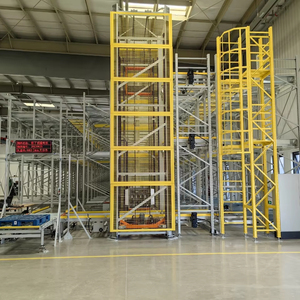
Steel racking manufacturing and installed warehouse project

Comprehensive System Engineering Comparison Matrix

Racking Topology Pallet Accessibility Floor Utilization Throughput Speed Standard Steel Grade Ideal Application Profile
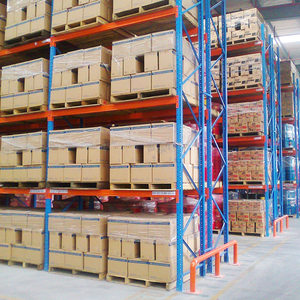
Selective Pallet Racking 100% Direct 40% - 50% Fast / Simultaneous Q235B / Q355B Multi-SKU distribution, 3PLs, general FMCG retail
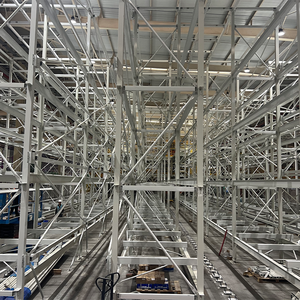
Very Narrow Aisle (VNA) 100% Direct 65% - 75% High (Wire Guided) Q355B High Yield High-bay warehouses, expensive urban square footage
Double Deep Racking 50% Semi-Direct 60% - 65% Medium (Reach Mast) Q235B / Q355B Batch manufactured goods, identical 2-4 pallet lots
Drive-In Racking Per Bay Lane (LIFO) 75% - 85% Moderate Q355B Cold Form Bulk cold stores, low SKU counts with seasonal turn
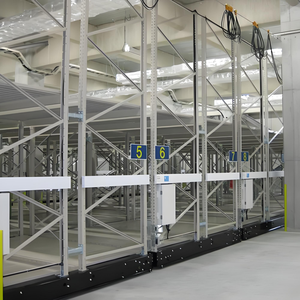
Mobile Pallet Racking 100% (Dynamic Aisle) 85% - 90% Controlled Automated Q355D / Low-Temp Freezer rooms (-30°C), ultra-premium pharmaceutical bays
Pallet Flow (Gravity) Per Lane (FIFO) 75% - 80% Continuous Gravity Q235B Galvanized Perishables, date-sensitive foods, fast cross-docking
Radio Pallet Shuttle Lane Automated (FIFO/LIFO) 80% - 88% Rapid Semi-Auto Q355B Laser Cut Deep-lane storage, high-volume beverage and bulk storage
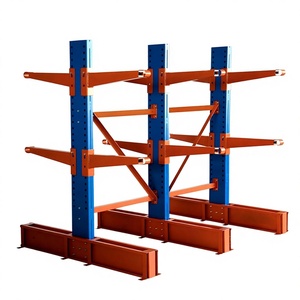
Heavy Duty Cantilever 100% Clear Front Variable (Linear) Rapid Crane / Fork Structural H-Beams Pipes, lumber, sheet panels, steel coils, extrusions
Engineering Knowledge Base

Frequently Asked Questions: Sourcing Storage Racks from China

In-depth structural, metallurgical, and commercial answers for international logistics engineers and procurement managers.

How do Chinese racking manufacturers verify compliance with North American RMI (ANSI MH16.1) and European EN 15512 standards?

Tier-1 Chinese factories conduct full-scale physical stub-column testing, beam-end connector moment-rotation tests, and baseplate uplift tests in accredited independent facilities (or through university research laboratories such as our AR Lab with Mondragon University). These empirical tests establish the precise torsional spring constant, structural stiffness, and weld capacity required for seismic finite element modeling under local building codes (IBC/NBCC/Eurocode 3). Full test curves, certified material test reports (MTRs), and stamped structural calculations are prepared in coordination with the project's regional Engineer of Record (EOR).

What are the mechanical differences between Chinese structural steel grades Q235B / Q355B and Western equivalents like ASTM A36 / Grade 50?

Q235B is an industry-standard carbon structural steel featuring a nominal minimum yield strength of 235 MPa (approx. 34-36 ksi) and tensile strength of 370-500 MPa, directly comparable to ASTM A36 or European S235JR. Q355B is a low-alloy, high-strength structural steel delivering a minimum yield of 355 MPa (approx. 51.5 ksi) and tensile range of 470-630 MPa, matching ASTM A572 Grade 50 and European S355JR. Utilizing Q355B allows thinner cold-formed profile walls while maintaining identical or superior flexural capacity, lowering overall gross structural weight and sea-freight costs.

What surface treatment standards are utilized, and how does electrostatic powder coating compare to hot-dip galvanizing for cold storage?

Standard indoor dry applications utilize automated electrostatic thermoset epoxy-polyester hybrid powder coating applied at a dry film thickness of 70 to 90 microns after a multi-stage pre-treatment degreasing and zirconium rinse. This delivers high impact resistance and passes 500-hour ASTM B117 salt spray tests. For sub-zero blast freezers (-30°C), exterior environments, or caustic chemical facilities, hot-dip galvanizing to ISO 1461 / ASTM A123 (yielding a minimum coating thickness of 55 to 85 microns of sacrificial zinc metallurgical bond) or pre-galvanized high-yield strip steel is utilized to eliminate coating micro-cracks and corrosion peel.

What mechanical and dimensional tolerances are enforced for automated AS/RS and shuttle interfaces?

Manual forklift selective racks accommodate plumbness tolerances of H/500 and beam deflection limits of L/200. In contrast, automated AS/RS and robotic shuttle racks require strict adherence to FEM 9.831 / 9.832 standards: upright plumbness must remain within ±1.5mm per 10 meters of height, beam level variation across paired rails cannot exceed ±2mm, and beam deflection under full working load is constrained to L/300 or L/500 to ensure optical sensors on stacker cranes or AMRs maintain laser guide contact without faulting.

How are ocean shipping containers packed to prevent transit deformation and rust during sea transit?

Upright frames are bundled with customized dunnage cradles and banded using high-tensile steel straps with corner edge protectors. Upright open profiles are nested front-to-back to prevent nested friction abrasion. Load beams are packed on heavy-duty wooden skids with corrugated interleaving between painted tiers. To prevent condensation rust (container sweat) across trans-ocean voyages, industrial VCI (Vapor Corrosion Inhibitor) plastic wrapping and high-absorption desiccant bags (2kg calcium chloride units) are distributed throughout every 40' container.

What information must a buyer provide to receive an engineered layout and factory-direct quote?

To produce an optimized structural layout and bill of materials (BOM), the engineering department requires: (1) Architectural CAD floor plans showing column grid spacing, building clear ceiling height, overhead obstructions, and fire sprinkler drop clearances; (2) Pallet unit specifications: Width, Depth, Height including pallet structure, and maximum gross weight; (3) Material handling equipment (MHE) specs: Forklift turning radius, mast lift height, outrigger dimensions, and aisle transfer clearances; (4) Local seismic zone coefficients or municipal site postal code; and (5) Operational ambient temperature range.

Direct Factory Partnership

Ready to Engineer or Wholesale Your Next Warehouse Project?

Connect directly with our senior structural engineering team. Receive custom AutoCAD/BIM layout proposals, comprehensive seismic load calculation sheets, certified mill test reports, and factory-direct wholesale pricing tailored to your exact facility dimensions.