Precision-Engineered Industrial Warehouse Racking Systems
Manufactured from certified high-tensile structural steel (Q235B / Q355B / ASTM A36 / SS400) under robotically controlled roll-forming lines. Every upright frame and beam connector is custom-calculated to deliver maximum load capacity, seismic stability, and long-term deflection resistance.
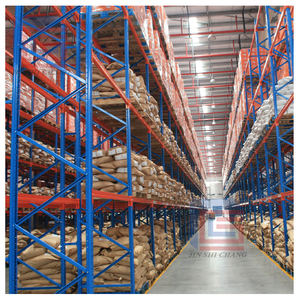
Selective Pallet Rack for Heavy-Duty Storage
Engineered for immediate access to every pallet position. Features adjustable connector brackets, safety locking pins, and custom step beams tailored for standard 48"×40" GMA or Euro pallets.
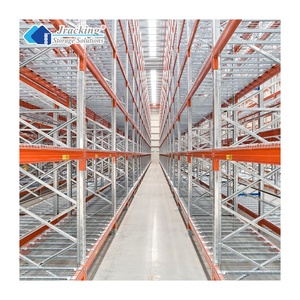
Adjustable Industrial Logistics Pallet Racks
Built to Australian AS 4084 and European CE directives. Upright pitch allows 50mm or 75mm beam adjustment increments, supported by double-sided bolted diagonal bracing frames.
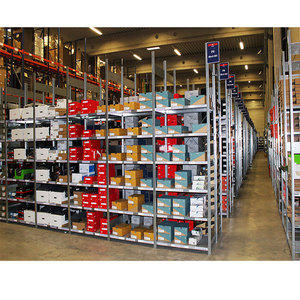
European Standard Heavy-Duty Storage Racks
Optimized for high-density logistics distribution centers. Incorporates box beams with claw connectors and heavy baseplates engineered for seismic dissipation and high floor-load dispersion.
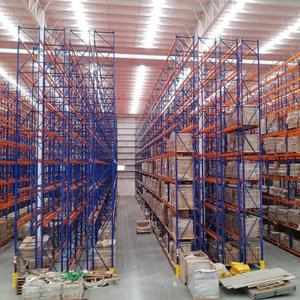
Heavy Duty Double Deep Pallet Racking
Stores pallets two deep per aisle side, increasing floor utilization by up to 30% compared to standard selective setups. Seamlessly integrates with pantograph reach forklifts.
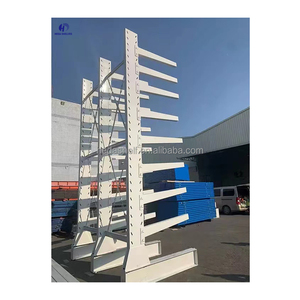
Industrial Heavy-Duty Cantilever Racking
Designed for unhindered horizontal storage of long, irregular materials like steel rebar, structural piping, timber, and sheet packs. Features pivot arm protection to mitigate impact shock.
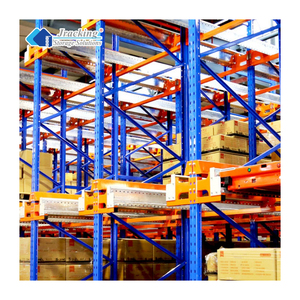
Radio Shuttle High-Density Storage System
High-speed automated platform where battery-driven radio shuttles transport pallets within deep channels. Eliminates forklift entry into rack aisles, ensuring pristine safety and rapid cycle times.
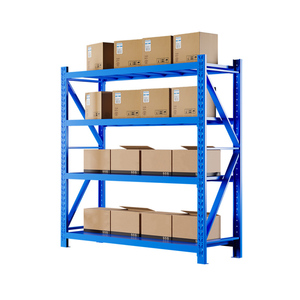
5-Layer Tire & Specialty Storage Racking
Multi-tier modular framework with custom contoured step beams specifically designed to hold vehicle tires, cylindrical barrels, and rim assemblies without surface distortion.
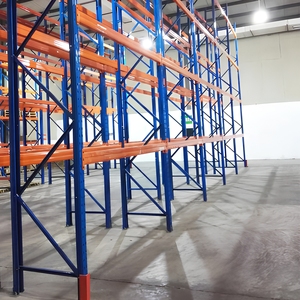
Multi-Tier Heavy-Duty Warehouse Storage Rack
Versatile heavy-load architecture offering 1,000kg to 3,000kg load thresholds per tier. Accommodates mesh decks, steel drop-in shelves, and aisle crossovers for multi-level order picking modules.
Structural Matrix: Comparative Engineering Selection Guide
Selecting the optimum warehouse storage architecture requires balancing pallet selectivity against volumetric cubic efficiency. Below is an engineering evaluation comparing the primary pallet racking configurations manufactured in our facility.
| System Type | Pallet Accessibility | Storage Density | Floor Space Utilization | Ideal Handling Equipment | Governing Structural Code |
|---|---|---|---|---|---|
| Selective Pallet Racking | 100% Immediate Direct Access | Standard (40%) | 35% – 45% Floor Area | Standard Counterbalance, Reach Truck | EN 15512 / RMI MH16.1 |
| Very Narrow Aisle (VNA) | 100% Immediate Direct Access | High (65%) | 50% – 60% Floor Area | Articulated Trucks, Wire-Guided Turret | FEM 10.2.02 / AS 4084 |
| Double Deep Pallet Racking | 50% Direct Access (2-deep) | Medium-High (60%) | 50% – 55% Floor Area | Deep-Reach Pantograph Forklift | RMI MH16.1 / EN 15512 |
| Drive-In / Drive-Through | Last-In First-Out (LIFO) Lane | Very High (75%) | 65% – 75% Floor Area | Counterbalance Forklift (Inside Lane) | EN 15620 / ISO 9001 |
| Automated Radio Shuttle | High Throughput FIFO / LIFO | Maximum (85%) | 75% – 85% Floor Area | Self-Powered Shuttle Carrier + Lift | CE Machine Directive / FEM |
| Cantilever Storage System | 100% Access to Long Products | High for Bulky Loads | Custom Layout Dependent | Side Loaders, 4-Way Combilift Trucks | EN 1993-1-3 / AS 4084 |
Deflection Limits and Structural Mechanics
Under international seismic and static load regulations, the allowable vertical deflection of a loaded rack beam must not exceed L/200 of the clear span length (or L/250 in automated AS/RS installations). This ensures that structural steel stays comfortably within its elastic limit during peak operational capacity.
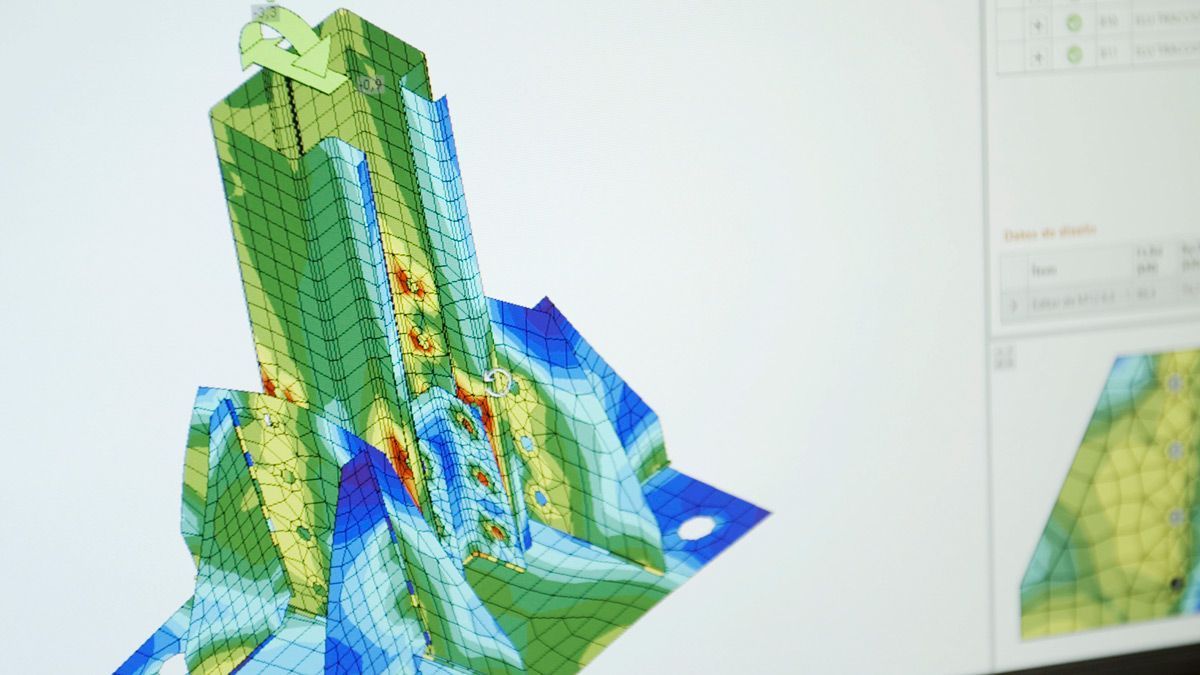
Finite Element Simulation (FEA): Our engineering teams run non-linear elastic and plastic stability analyses on all custom upright columns (omega, diamond-perforated, and roll-formed box channels) to avoid global frame buckling under combined axial and eccentric horizontal seismic loads.
By tailoring corner joint rigidity and column-to-baseplate anchor moments, we engineer racking configurations with certified safety factors between 1.5 and 1.67, verified by physical destruction tests at accredited university labs.
Future Procurement & Technological Trends in Warehouse Storage
As global supply chains navigate supply volatility, industrial real estate inflation, and labor shortages, international EPCs and logistics operators are modernizing their racking procurement strategies. Here are the macro trends shaping industrial storage through 2030.
1. Convergence of AS/RS & High-Tolerance Racking
The acceleration of automated guided vehicles (AGVs), autonomous mobile robots (AMRs), and high-bay stacker cranes requires millimeter-level structural tolerances (Class 100/200 classification under EN 15620).
- Laser-cut slot alignment with ±0.5mm precision
- Zero-clearance beam-to-column interlocking joints
- Automated crane tie-in trusses up to 40 meters
2. Cold Chain Surge & Low-Temp Metallurgy
Global pharmaceutical logistics and fresh-food distribution demand massive cold-storage facilities operating at -25°C to -35°C. Extreme cold induces ductile-to-brittle transition risks in structural steel.
- Use of sub-zero impact tested steels (Q355D/E)
- Charpy V-notch energy tests at -40°C (>27 Joules)
- Hot-dip galvanization for frost & corrosion protection
3. Decarbonization & Scope 3 Traceability
Tier-1 multinational enterprises (e.g., retail and FMCG giants) now mandate Environmental Product Declarations (EPDs) and documented carbon verification across steel fabrication processes.
- ISO 14064 verified greenhouse gas audits
- Recycled electric-arc furnace (EAF) steel sourcing
- Lead-free, low-VOC electrostatic powder coatings
Why Tier-1 Global Supply Chains Choose Our Racking Infrastructure
Combining heavy structural steel production scale with rigorous Western engineering governance, our manufacturing center produces over 100,000 metric tons of export-grade storage racking annually.
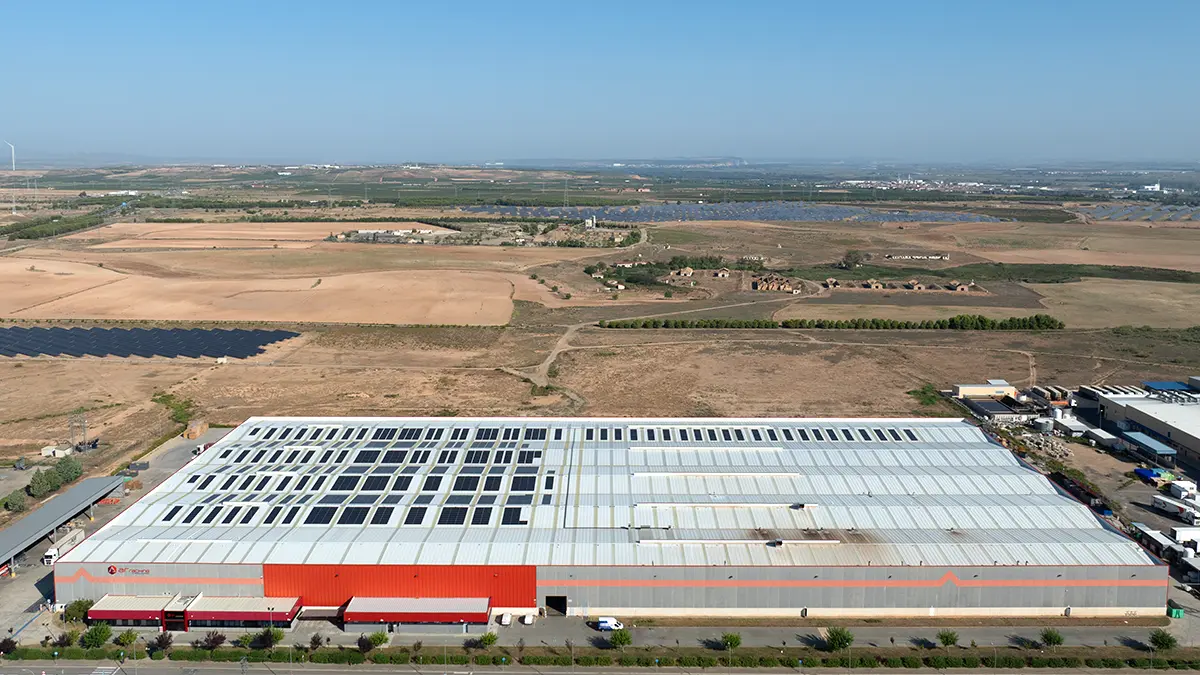
35,000+ m² Fully Automated Manufacturing Complex
Equipped with state-of-the-art continuous roll-forming lines, automated laser-punching cells, robotic welding stations, and high-efficiency pre-treatment powder coating tunnels. Every component is produced under strict digital process controls.
- Traceability 4.0: Each batch of steel features QR tracking linking mill test certs directly to the installed uprights.
- Academic Research Joint Labs: Structural modeling validated in conjunction with Mondragon University and UPV/EHU Bilbao School of Engineering.
- Turnkey Project Handover: Comprehensive design, shipping logistics, container loading plans, and PE-stamped site engineering.
ISO 9001:2015
Certified Quality Management
ISO 14001:2015
Environmental Management
ISO 45001:2018
Health & Safety Compliance
ISO 50001
Energy Management System
ISO 3834-2
Comprehensive Welding Quality

EN 1090-1 (CE)
Execution of Steel Structures

ISO 14064
Verified Carbon Footprint
Frequently Asked Technical Questions
Review engineering answers to critical inquiries raised by global procurement directors, industrial consultants, and EPC structural engineers when evaluating Chinese storage rack exports.
Need a custom seismic structural review or tailored containerization schedule?
1. Which structural standards and seismic design codes do your racking systems comply with?
Our engineering division designs and calculates rack frameworks to satisfy the primary jurisdictional codes of target export markets:
- North America: ANSI/RMI MH16.1 (Specification for the Design, Testing and Utilization of Industrial Steel Storage Racks), IBC (International Building Code), and ASCE 7 seismic parameters (SDC A through F).
- European Union: EN 15512 (Steel Static Storage Systems: Adjustable Pallet Racking Systems - Principles for Structural Design), EN 15620, EN 15629, and EN 15635.
- Australia/New Zealand: AS 4084-2023 (Steel Storage Racking) parts 1 and 2.
Every proposal can be accompanied by signed structural calculations and finite element load charts stamped by an independent local Registered Professional Engineer (PE).
2. How do you guarantee tight dimensional tolerances required for AS/RS and robotic interfaces?
Automated high-bay warehouses and robotic shuttles operate with clearances measured in single millimeters. We utilize CNC roll-forming lines with in-line laser measurement and servo-hydraulic punching heads that control pitch variations within ±0.5 mm over a 12-meter upright.
Beam claw connectors are stamped using precision progressive dies to ensure zero play upon engagement with the upright columns. Furthermore, trial assembly checks are performed prior to export packaging to verify plumb, level, and square tolerances per FEM 9.831 / EN 15620 standards.
3. What steel grades and surface finishes are utilized for cold storage down to -30°C?
Standard carbon steels (like Q235A) risk brittle fracture in cold chain facilities. For freezer projects operating between -20°C and -35°C, we mandate killed, micro-alloyed fine-grain steels such as Q355D or Q355E (equivalent to EN 10025-3 S355NL / ASTM A572 Grade 50), which undergo mandatory Charpy V-notch impact testing at -20°C or -40°C with absorbed energy ≥27 Joules.
For surface protection, we offer continuous pre-galvanized strip (275 g/m² zinc coating), hot-dip galvanizing per ISO 1461 for maximum rust protection in condensing environments, or specialized low-temperature flexible epoxy-polyester powder coats that resist micro-cracking.
4. How is export logistics, container optimization, and protection handled?
International shipping freight directly impacts landed costs. Our logistics engineering team uses computerized 3D container packing software (optimizing 40' High Cube containers) to achieve payload densities exceeding 24 to 26 metric tons per container without crushing light profiles.
Uprights are nested in wooden skids strapped with heavy steel banding and edge protectors. Beams are stacked with high-density corrugated foam spacers and wrapped in heavy-duty polyethylene stretch film to prevent transit abrasion, moisture ingress, and container vibration wear during oceanic voyages.
5. What documentation and material test certificates (MTC) are delivered with an order?
Every commercial export project includes a full quality dossier:
- Mill Test Certificates (MTC) according to EN 10204 3.1 detailing chemical composition and mechanical tensile/yield performance.
- Comprehensive structural calculation sheets verifying frame load limits, beam deflection ratios, and baseplate anchor shear forces.
- Welding inspection reports under ISO 3834-2 / AWS D1.1 specifications.
- CAD installation blueprints, component bill of materials (BOM), and color-coded loading capacity safety plaques for warehouse post-installation signoff.
6. Can you accommodate customized upright pitch punching and retrofit older systems?
Yes. In addition to our standard proprietary 50mm, 75mm, and 76.2mm (3-inch) pitch upright configurations, our tooling workshop manufactures custom-punched profiles compatible with established Western brands (such as teardrop profiles common across the USA, or European slotted systems).
This allows warehouse operators to expand or repair existing facilities without replacing their entire racking infrastructure.