Heavy Duty Steel
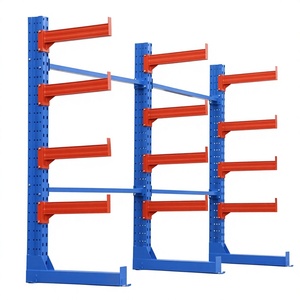
Manufactured using automated CNC cold roll-forming lines and high-tensile structural steel (Q235B / Q355B). Directly calculated for GMA 48"×40", EUR 1200×800, and non-standard industrial load formats.
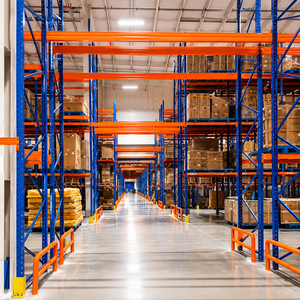
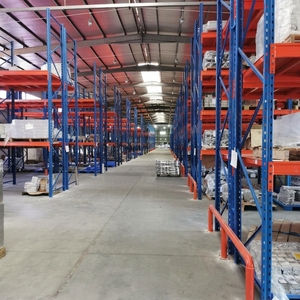
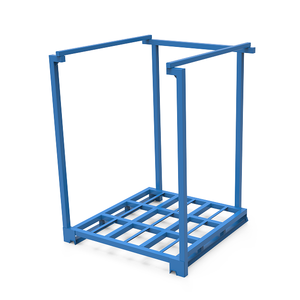
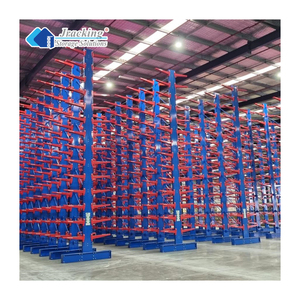
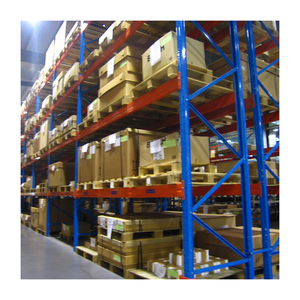
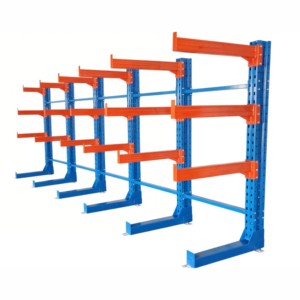
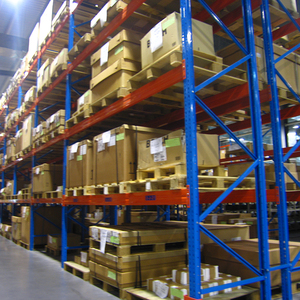
As a premier China warehouse pallet shelving systems manufacturer and direct factory, our engineering framework merges advanced metallurgy with certified structural statics. Industrial pallet racking is not merely static shelving; it is an active, load-bearing skeletal structure subjected to cyclic dynamic loads, forklift impact shears, harmonic vibration, and regional seismic accelerations.
Every racking upright frame, load-bearing horizontal beam, and baseplate assembly manufactured in our automated plant is calculated utilizing certified prime structural steel (Grade Q235B and high-yield Q355B / ASTM A1011 Equivalent). The microstructural composition of our steel coils undergoes rigorous spectrometer testing for carbon equivalent (CEV) values to guarantee exceptional weldability under ISO 3834-2 robotic robotic inert gas (MIG/MAG) procedures.
Cold roll-formed with up to 14 continuous roll-forming stands. Multi-ribbed profiles enhance torsion resistance and cross-sectional modulus, ensuring upright columns resist local buckling under extreme vertical loads exceeding 24,000 kg.
Beams feature interlocking 3 to 5-claw cast or cold-stamped end connectors with automatic spring-loaded safety locks. Standard deflection tolerances are engineered strictly to ≤ L/200 under safe working load (SWL), with optional ≤ L/250 for automated picking.
Every beam, post, and frame brace is laser-etched with traceable batch IDs, structural designations, and production timestamps. Direct alignment with EN 1090-1 execution classes (EXC2) allows complete auditability from raw steel coil to installed bay.
Choosing the optimum industrial storage configuration demands balancing inventory rotation (FIFO vs. LIFO), floor footprint efficiency, SKU density, and forklift aisle clearances.
| Racking Typology | Inventory Rotation | Floor Utilization | Pallet Accessibility | Clear Aisle Width Required | Primary Application Suitability |
|---|---|---|---|---|---|
| Selective Pallet Racking | FIFO / LIFO | 40% – 50% | 100% Immediate Direct Access | 3.0m – 3.6m (Counterbalanced / Reach) | High SKU counts, general 3PL, FMCG distribution |
| Very Narrow Aisle (VNA) | FIFO / LIFO | 65% – 75% | 100% Immediate Direct Access | 1.6m – 1.9m (Turret / Man-Up Truck) | High-bay warehouses, premium land areas, retail hubs |
| Drive-In / Drive-Through | LIFO (Drive-In) / FIFO | 70% – 80% | Per Lane / Batch Access | Forklift drives inside racking channels | Cold storage, homogeneous seasonal inventory |
| Push-Back Cart Racking | LIFO | 60% – 70% | Lane Front Dynamic Access | Standard Forklift Aisle (2.8m – 3.2m) | 2 to 6 deep pallet staging, cross-dock buffers |
| Pallet Flow (Gravity Roller) | Strict FIFO | 75% – 85% | Lane End Picking Face | Separate loading and retrieval aisles | Perishable food, pharmaceuticals, fast-turnover hubs |
| Radio Pallet Shuttle | FIFO or LIFO | 85% – 90% | Lane Deep Automated Access | Transfer aisle only; shuttle travels in lane | Deep-channel freezer storage (-25°C), beverage hubs |
| Heavy-Duty Cantilever | Selective | Variable | 100% Frontal Long Access | Wide or Guided Side-Loader Aisles | Steel pipes, timber beams, sheet packs, aluminum bars |
Procurement heads and logistics facility planners face structural shifts in global supply chain economics, carbon taxation, and automated fulfillment paradigms.
Traditional racking procurement prioritized standard forklift truck clearances. Modern RFQs now require millimeter-level baseplate shimming, flush-to-floor guide rails, and specialized floor-level tunnel clearances designed specifically for Autonomous Mobile Robots (AMRs) and automated tuggers.
With cross-border carbon border adjustment mechanisms (CBAM) entering enforcement, international buyers actively audit mill certifications for recycled scrap content and electric arc furnace (EAF) smelting. ISO 14064 carbon footprint verification has become an essential prerequisite for large tenders.
Global logistics hubs situated along the Pacific Rim or southern European seismic belts demand localized finite element calculations (FEA) compliant with IBC 2024, ASCE 7-22, and Eurocode 8. Off-the-shelf static shelving has been completely replaced by site-engineered dynamic moment frames.
High industrial land costs have accelerated the shift toward clad-rack (rack-supported) structures. By utilizing the pallet racking uprights directly to support the warehouse roof and insulated cladding, buyers compress construction schedules by 30% and eliminate redundant structural building columns.
The pallet shelving manufacturing sector in China is undergoing a rapid transition from conventional metal fabrication to ultra-precision structural engineering. As automated storage and retrieval systems (AS/RS) reach vertical elevations exceeding 30 to 45 meters, structural tolerances can no longer tolerate cumulative errors of even 1 millimeter.
Next-generation roll-forming units integrate continuous laser monitoring to gauge post-perforation pitch, diagonal squareness, and upright straightness in real-time. Automated servo-punches ensure hook connector engagement holes maintain precise pitch intervals (±0.1mm tolerance), preventing stress concentrations.
Rapid expansion of cold chain logistics and temperature-controlled pharmaceutical storage requires specialized steel grades formulated with low impact transition temperatures. Steels treated with micro-alloyed titanium and vanadium prevent brittle fracture phenomena inside blast freezers operating continuously at -25°C to -35°C.
Advanced distribution centers are pioneering the deployment of integrated piezoelectric strain gauges and fiber-optic sensors embedded into critical column basements. By feeding real-time deflection and impact shock data into the warehouse Digital Twin, facility operators preempt catastrophic collapses caused by forklift impacts.
From automated robotic manufacturing in our 35,000 m² production complex to dedicated R&D structural test laboratories, we deliver verifiable reliability backed by a 5-Year Structural Warranty.
Equipped with 22 high-speed continuous cold roll-forming lines, automated laser tube cutters, robotic arm welding cells, and two automatic electrostatic thermoset powder coating lines with dual-stage conversion washing.
In partnership with prestigious engineering universities, our in-house lab executes destructive stub-column compression tests, beam end connector shear tests, and seismic cyclic push-over simulations to refine calculation models.
Complete project management from preliminary AutoCAD / BIM design and local PE-stamped structural calculations to global containerized sea export, on-site installation supervision, and load-capacity certification.
In-depth technical answers addressing international building codes, steel grade specifications, container loading logistics, and seismic engineering compliance.
Whether you are expanding an existing distribution center or developing a high-bay automated logistics facility, our technical engineering team provides preliminary CAD layout drawings, structural load calculations, and competitive direct-factory quotations within 24 to 48 hours.