Industry Engineering White Paper & Global Sourcing Guide
Top China Warehouse Pallet Racking System Supplier & Exporters
Engineered steel storage architectures, ISO/CE/RMI-compliant roll-forming manufacturing, and global turnkey logistics infrastructures across 60+ countries.
Enterprise Product Recommendations
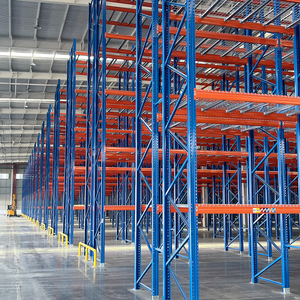
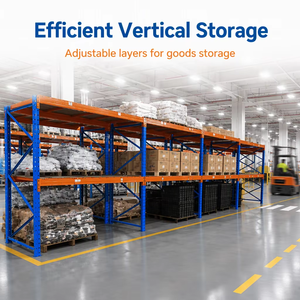
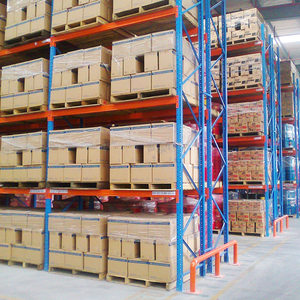
Heavy-Duty Storage Systems for High-Throughput Facilities
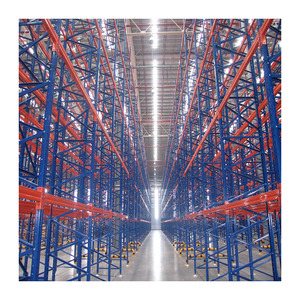
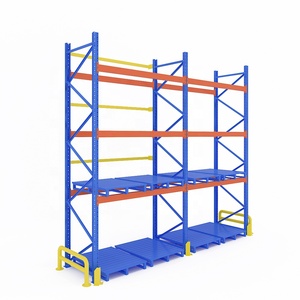
Engineered for extreme structural integrity, high seismic resistance, and tight deflection tolerances. Fully compatible with standard GMA 48"x40", EUR 1200x800mm, and custom pallet dimensions.
Strategic Sourcing & Procurement Trends in China Pallet Racking (2025–2030)
How international procurement directors, supply chain VPs, and logistics engineers navigate evolving metallurgy prices, ESG parameters, and automated manufacturing compliance.
1. Total Cost of Ownership (TCO) vs. Initial CapEx
Global warehouse operators are pivoting away from low-cost baseline bids toward Lifetime Durability Indexing. Cheap racking lines with inconsistent coil thickness lead to localized buckling and costly rack repairs. Sophisticated procurement now models the 15-year TCO, accounting for paint finish resilience against corrosive battery acid, column base plate deformation rates, and post-installation deflection margins.
Auditing and insurance underwriters now demand verifiable material provenance. Top Chinese exporters have deployed "Traceability 4.0", where every structural upright and load beam is laser-stamped with mill heat lot numbers, raw coil batch IDs, and roll-forming line telemetry. This end-to-end digital paper trail expedites local municipal building permits, professional engineer (PE) sign-offs, and compliance inspections.
Compliance: Direct integration of Mill Test Certificates (EN 10204 3.1) with production batches.
3. Green Warehousing & Low-Carbon Steel Metallurgy
With the implementation of the EU Carbon Border Adjustment Mechanism (CBAM) and corporate ESG mandates across North America, carbon accounting has entered the procurement scorecard. Leading Chinese suppliers are adopting ISO 14064 verified carbon auditing, electric-arc furnace (EAF) low-emission scrap-recycled steel options, and non-VOC electrostatic powder curing methods that slash Scope 3 upstream emissions.
ESG Standard: ISO 14064 third-party verified emissions lifecycle per metric ton of rack steel.
4. Knock-Down Modular Design & CBM Optimization
Fluctuating ocean freight spot rates have elevated container pack-out density into a critical engineering challenge. Cutting-edge pallet rack suppliers calculate component nesting to maximize cubic meter (CBM) payload in 40ft High Cube containers. Knock-down bolted upright frames, interlocking nested teardrop beams, and stackable modular accessories yield up to 26–28 metric tons of steel per shipping container.
Logistics Efficiency: Cuts ocean freight cost per pallet position by up to 34% across trans-ocean voyages.
While final assembly and regional distribution occur closer to consumer markets, tier-1 3PLs and warehouse general contractors rely on China’s scaled steel cold-forming infrastructure for structural sub-assemblies. Tier-1 Chinese manufacturers now support hybrid bonded-warehouse replenishment hubs across the Americas and Europe, ensuring 72-hour component replacement for damaged beams or upright frame uprights.
Service Model: Blended sea freight bulk replenishment combined with regional rapid-response stock.
6. Strict Regional Building Code Compliance Pre-Engineering
No pallet racking project can be installed without passing stringent regional fire, seismic, and occupational health reviews. Modern procurement requires structural engineering dossiers pre-verified against ANSI MH16.1 (USA), National Building Code of Canada (NBCC), Australian AS 4084, and European EN 15512 standards. Chinese exporters with professional in-house structural departments provide certified calculation packages before shipment.
Regulatory Safety: Fully certified FEA finite element analysis reports stamped for project building permits.
Structural Innovations
Technological & Engineering Advancements in Racking Systems
The convergence of industrial automation, artificial intelligence in logistics, and high-precision metallurgical roll-forming is redefining industrial steel racks.
AS/RS & AMR Robotic Precision Engineering
Autonomous Guided Vehicles (AGVs), Autonomous Mobile Robots (AMRs), and high-speed stacker cranes run on millimeter tolerances. Beam deflection can no longer rely on coarse manual limits; robotic automated warehouses demand structural tolerances within ±1.5mm across entire 30-meter high bays according to FEM 9.831 standards.
Deflection Limit: Engineered down to L/300 or lower to prevent optical sensor tripping by automated shuttles.
Nonlinear Dynamic Seismic Engineering
Modern racking installations are categorized as complex civil structures. Using dynamic modal analysis and pushover simulation, Chinese research laboratories model ground motion spectral accelerations. Systems feature ductile baseplate assemblies that absorb lateral kinetic energy, protecting critical warehouse inventory and personnel.
Seismic Modeling: Calibrated using dynamic shake table data and multi-directional FEA load simulations.
Sub-Zero Cryogenic Cold Chain Metallurgy
Standard carbon structural steel undergoes brittle transition at freezing temperatures. In freezer facilities running at -25°C to -30°C, ordinary steels risk sudden fracture under load. Advanced cold-chain racking incorporates modified alloying elements with guaranteed Charpy V-notch impact toughness values at sub-zero operating environments.
Freezer Grade: High-resilience alloys with certified impact energy down to -30°C prevent ductile-to-brittle failure.
Rack-Supported Clad Buildings (Building-as-Rack)
Eliminating standard building columns, civil walls, and structural trusses entirely, clad-rack warehouses utilize the heavy-duty racking framework itself to support the building’s external roof and wall cladding. This architecture cuts civil construction schedules by 40% while unlocking warehouse heights exceeding 40 meters.
Vertical Optimization: Drastically cuts footprint while maximizing pallet storage density per cubic meter.
Direct from China's leading manufacturing centers: where automated cold roll-forming lines, automated laser profiling, and academic R&D partnerships converge.
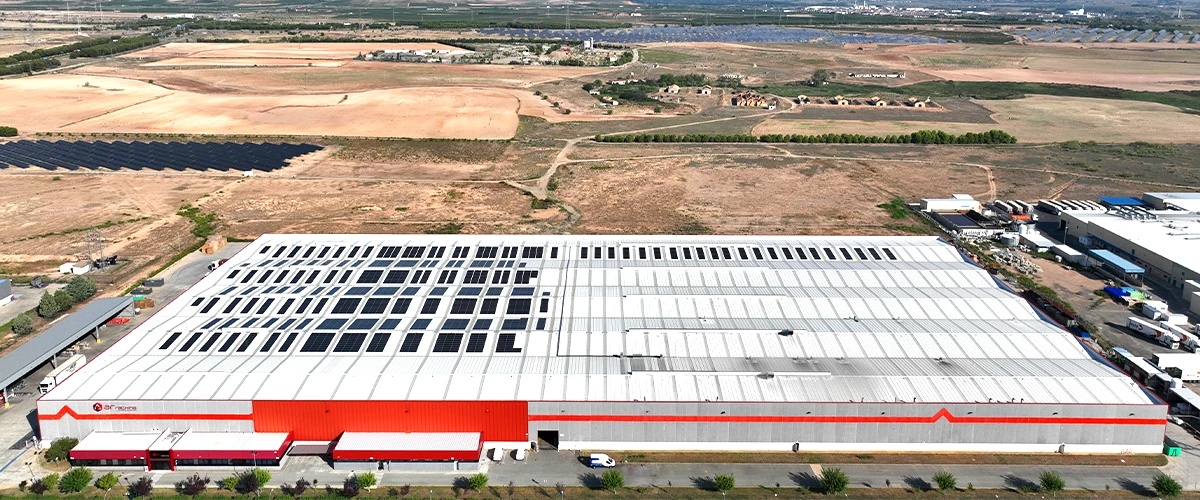
35,000 m² Advanced Production Hub with 100,000t Output
Our intelligent production facilities feature modern continuous cold roll-forming lines, automated punching units, and robotic welding stations. By eliminating manual fabrication deviations, every batch of upright posts, step beams, and shelf panels delivers millimeter-perfect consistency.
Continuous Roll-Forming Lines: Multi-station roll tooling maintains continuous dimensional accuracy across continuous profiles up to 14 meters.
High-Precision Laser Hole Punching: CNC-guided punch clusters ensure zero hole deviation, facilitating rapid site installation without binding or binding friction.
Automated Powder Coating Line: Multi-stage chemical pre-treatment and electrostatic epoxy deposition deliver scratch-resistant, impact-resistant 80µm protective coatings.
Applied R&D: Academic Testing Lab & Finite Element Classrooms
Engineering excellence is proven through empirical physical testing. Partnering with top engineering universities, our dedicated R&D laboratories execute continuous cyclic loading, beam-connector moment testing, and destructive stub-column compression to validate cold-formed design calculations.
Empirical Component Testing: Cyclic connector tests verify rotational stiffness and shear capacity to maintain calculated safety factors.
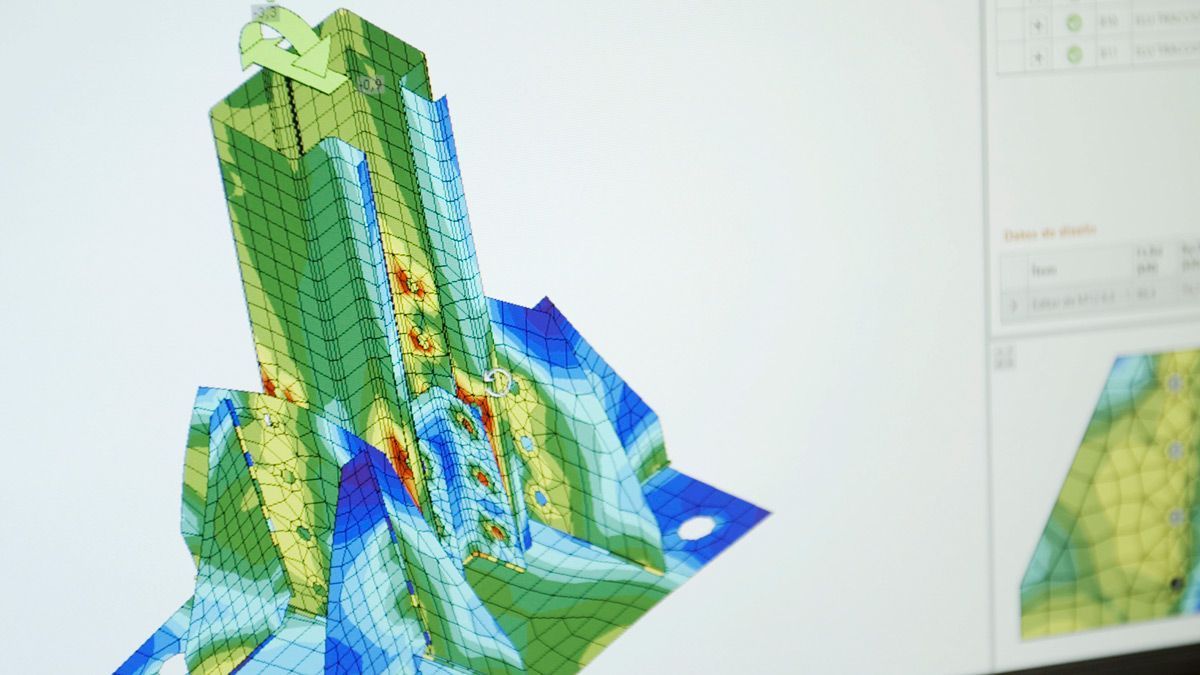
Finite Element Analysis (FEA): Advanced software tools calculate stress concentrations, second-order effects, and global structural buckling modes under extreme seismic loads.
Full Traceability 4.0: Laser-etched QR codes on critical parts allow immediate retrieval of steel mill heats, coating dates, and QA inspection logs on site.
Detailed technical answers to critical engineering, permitting, steel metallurgy, and overseas shipping questions raised by global supply chain procurement leaders.
What steel grades are used, and how do Chinese steel standards correlate with ASTM and EN grades?
We primarily engineer structural cold-formed profiles using hot-rolled low-alloy coils in standard grades Q235B and Q355B. Metallurgically, Chinese GB/T Q235B possesses a nominal yield strength of 235 MPa, corresponding directly to European EN 10025 S235JR and American ASTM A36. Chinese Q355B offers a minimum yield strength of 355 MPa, correlating directly with European S355JR and North American ASTM A572 Grade 50. Every coil delivery is accompanied by mill test reports (MTR) according to EN 10204 Type 3.1, detailing chemical carbon equivalents, tensile strengths, and yield points.
Can you provide PE (Professional Engineer) stamped structural calculation packages for local building permits?
Yes. For projects in the United States, Canada, Australia, and the European Union, our technical design department collaborates directly with locally certified registered Professional Engineers (PE / SE) and EurIng chartered engineers. We furnish full finite element calculation sets detailing dead loads, live pallet loads, seismic spectra (Ss, S1), baseplate shear forces, and concrete anchor pull-out calculations according to ACI 318 Chapter 17. The final calculation package and architectural layout drawings can be officially stamped for municipality permit submission.
What surface treatment options exist for harsh, humid, or sub-zero operating environments?
For standard ambient distribution warehouses, we utilize an automated multi-stage phosphate wash followed by thermo-cured electrostatic epoxy-polyester powder coating (60–80 microns thickness) compliant with ISO 12944 C2 atmospheric classifications. For high-humidity facilities, outdoor operations, or fertilizer/chemical warehousing, we supply full Hot-Dip Galvanizing (HDG) according to ISO 1461 / ASTM A123, yielding a 70–100 micron zinc layer providing multi-decade sacrificial anodic protection against corrosive pitting.
What are the strict installation and deflection tolerances required when integrating AS/RS or AMRs?
Automated Storage and Retrieval Systems (AS/RS) require strict adherence to FEM 9.831 / FEM 9.832 and EN 15620 (Classes 100 to 400) standards. Unlike standard selective racking where beam vertical deflection is permissible up to L/200, automated robotic systems require vertical deflections limited to L/300 or L/400 to prevent optical sensor occlusion and shuttle carriage hang-ups. Plumbness tolerances for upright columns in AS/RS high bays must remain within 1:1000 under full operational live payload conditions.
How do you protect pallet rack components from deformation and salt corrosion during ocean transit?
Ocean transit presents significant salt spray and vibration friction challenges. Upright frames are either shipped pre-assembled with customized timber dunnage and heavy-duty steel strapping or shipped knock-down (KD) to optimize container cubing. Beams are bundled with protective corrugated paper interleafing between powder-coated surfaces and wrapped in non-hygroscopic polyethylene film. Bundles feature heavy-gauge steel lifting channels underneath, allowing forklifts to offload containers in under 45 minutes without scraping structural coatings.
What warranty coverage, load capacity labeling, and post-installation support do you provide?
Every industrial racking system manufactured is covered by a standard 5-year structural quality warranty covering weld failures, material defects, and delamination. Each system is accompanied by ANSI/OSHA-compliant aluminum load capacity plaques indicating uniform distributed load (UDL) capacities per pair of beams, maximum bay loading limits, and date of commission. We provide comprehensive installation manuals, CAD anchor layouts, and digital assembly instructions for local general contracting teams.
Start Your Turnkey Engineering Proposal
Accelerate Your Warehouse Capacity with Verified Structural Reliability
Whether designing a 40-meter rack-supported automated distribution center or outfitting a fast-turnaround 3PL logistics hub, our senior structural engineers provide customized layout optimization, seismic FEA calculations, and direct-from-factory pricing within 24 hours.