1. Executive Industry Insight: Sourcing Industrial Shelving from China
The global industrial storage landscape is undergoing a structural paradigm shift. As supply chains demand faster throughput, higher volumetric density, and seamless integration with automated Material Handling Equipment (MHE), procuring top-tier industrial shelving and pallet racking systems has evolved from simple bulk hardware purchasing into a rigorous engineering qualification process. China remains the undeniable global epicenter for heavy-duty steel rack manufacturing, producing over 70% of the world’s cold-rolled structural steel racking units.
However, selecting the right partner among thousands of Chinese factories requires a sophisticated understanding of metallurgical standards, structural engineering compliance, surface coating chemistry, and manufacturing automation. Leading OEM/ODM manufacturers distinguish themselves not merely by price per kilogram, but by verified compliance with international design codes—including FEM 10.2.02 (European Racking Federation), RMI (Rack Manufacturers Institute - USA), and AS4084-2012 (Australian Standard for Steel Storage Racking).
High-Grade Steel Standard
Utilization of certified Q235B and high-yield strength Q355B cold-rolled steel profiles guarantees structural stability under dynamic loading and seismic stresses.
Traceability 4.0 Systems
Every upright frame, beam, and connector is laser-etched with batch tracking codes to enable lifetime quality auditing and maintenance verification.
End-to-End Automation
100% automated continuous cold-roll forming, robotic continuous welding, and multi-stage automated electrostatic powder coating lines.
2. Technical Deep-Dive: Expanded Product Portfolio
Selecting the appropriate racking topography depends on specific operational metrics: SKU diversity, inventory rotation model (FIFO vs. LIFO), floor load-bearing capacity, forklift mast clear heights, and environmental exposure (e.g., ambient warehouse vs. -24°C deep freeze storage). Below is an extended analysis of specialized industrial storage solutions offered by leading Chinese OEM suppliers.
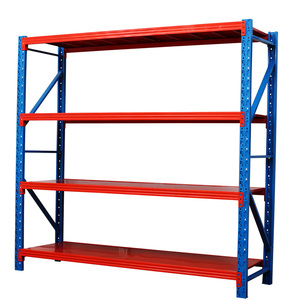
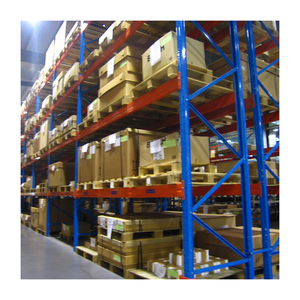
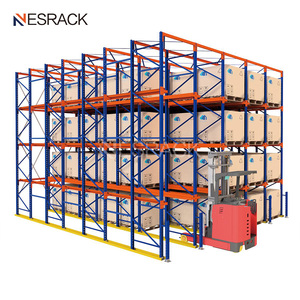
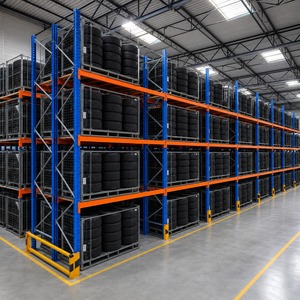
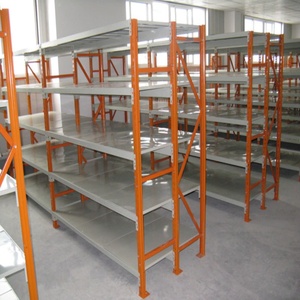
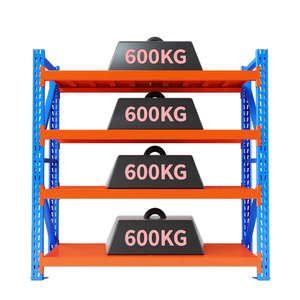
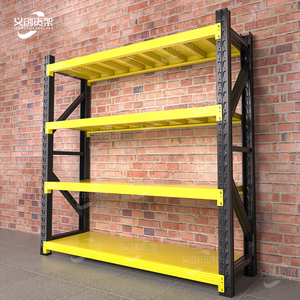
Structural Specifications & Performance Comparison
To assist procurement managers in choosing the right framework, the table below synthesizes key operational specs across core system classifications:
| Racking Category | Load Capacity (Per Layer / Level) | Access Strategy | Space Utilization Efficiency | Optimal Application Scenario |
|---|---|---|---|---|
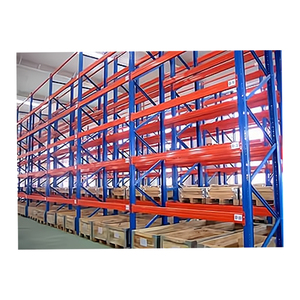
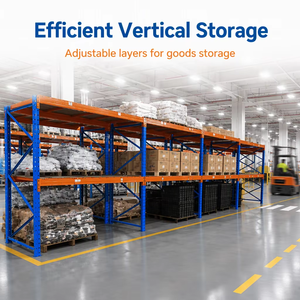
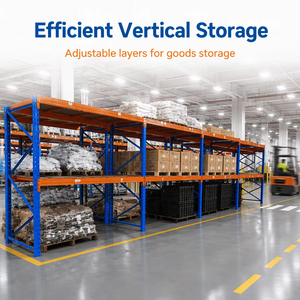
| Selective Pallet Racking | 1,000 kg – 4,500 kg | 100% Direct Access (FIFO) | 40% – 50% Floor Density | High SKU count, FMCG, 3PL Warehouses |
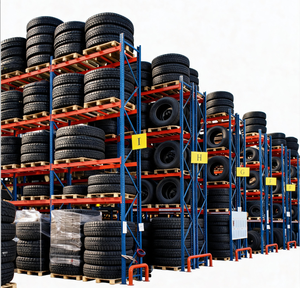
| Drive-In / Drive-Thru Racking | 500 kg – 2,000 kg / pallet | LIFO (Drive-In) / FIFO (Drive-Thru) | 75% – 85% Floor Density | Homogeneous bulk goods, Cold storage |
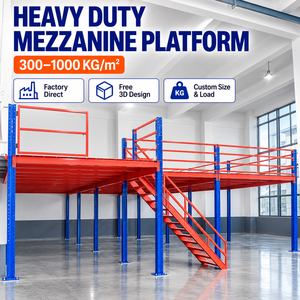
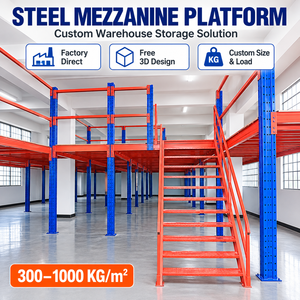
| Mezzanine Floor Platforms | 300 kg – 1,000 kg / m² | Multi-tier Manual / Conveyor Access | Doubles / Triples Floor Area | E-commerce order picking, spare parts |
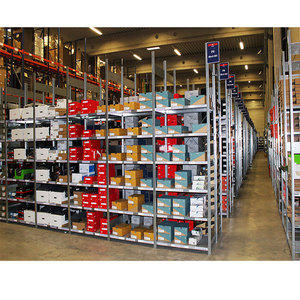
| Multi-Level Light/Medium Shelving | 100 kg – 800 kg / shelf | Direct Manual Access | 60% Vertical Density | Archive storage, pharmaceutical cartons |
| Pallet Shuttle Systems | Up to 1,500 kg / shuttle | Automated FIFO / LIFO | 85% – 90% Floor Density | High-throughput distribution hubs |
3. Factory Engineering Advantages & Quality Rigor
As a premier Chinese industrial shelving manufacturer, our facility operates at the intersection of raw material excellence and cutting-edge manufacturing technology. Our state-of-the-art production complex spans over 35,000 m², housing 24 continuous cold-roll forming lines, automated laser tube cutters, and robotic welding cells certified under ISO 3834-2.
Academic Research & Advanced Structural Simulation
To eliminate risk in structural design, our engineering team collaborates directly with prestigious institutions. We operate the AR Lab in partnership with Mondragon University, alongside a dedicated Research & Simulation Classroom at the University of the Basque Country (Bilbao School of Engineering). Through Finite Element Analysis (FEA), every custom beam connector, column baseplate, and bracing frame is simulated under static, dynamic, and seismic forces long before raw steel enters the rolling mill.
Comprehensive Certifications
ISO 9001 (Quality), ISO 14001 (Environment), ISO 45001 (Safety), ISO 50001 (Energy), ISO 3834-2 (Welding), and EN 1090-1 CE Marking.
Optimized Total Cost of Ownership
Direct factory pricing eliminates intermediary markups while delivering structural lifespans exceeding 20+ years under intensive operational usage.
Rapid Deployment Lead Times
Annual steel converting capacity exceeding 100,000 tons ensures short production cycles and guaranteed ocean freight container staging.
4. Future Procurement Trends in Industrial Shelving (2026–2030)
Global supply chain leaders cannot purchase industrial storage hardware based on historical requirements alone. The rapid integration of robotics, micro-fulfillment centers, and stringent carbon metrics is reshaping how industrial shelving systems are specified, manufactured, and installed. Buyers should plan for four dominant trends shaping the next decade:
1. Automated Storage & Retrieval Systems (AS/RS) and AMR Readiness
Conventional static racking is increasingly giving way to automation-ready steel structures. Future-proof facilities require structural tolerances measured in millimeters rather than centimeters. Rack-supported warehouses—where the racking structure itself supports the roof and outer wall cladding—are rapidly replacing traditional civil construction. Furthermore, rack designs must now accommodate Autonomous Mobile Robots (AMRs), Automated Guided Vehicles (AGVs), and high-speed pallet shuttles.
2. Decarbonization and ISO 14064 Carbon Footprint Verification
ESG mandates in Europe and North America now require enterprise procurement departments to quantify Scope 3 embedded emissions. Modern Chinese manufacturers lead this transition by adopting green steel processing, closed-loop energy management (ISO 50001), and verified organizational carbon footprint accounting under ISO 14064. Procuring low-carbon, recyclable steel storage rack components helps global corporations fulfill environmental compliance targets.
3. Cold-Chain Resilience and Low-Temperature Metallurgy
The exponential growth of fresh food e-commerce and biological pharmaceuticals has created overwhelming demand for deep-freeze storage solutions (-24°C to -30°C). Standard carbon steel suffers from cold shortness (brittleness) at freezing temperatures. The future of industrial shelving relies heavily on high-resilience structural steel formulations enhanced with specialized powder coatings or hot-dip galvanizing to prevent micro-cracking and corrosion.
4. Smart Racking Sensors & Structural Health Monitoring (SHM)
IoT-enabled displacement sensors, impact detectors, and strain gauges are beginning to be integrated directly into upright columns. These smart sensors stream real-time structural health data into Warehouse Management Systems (WMS), warning facility managers of forklift impacts, beam deflections, or overload conditions before catastrophic structural failures occur.
5. Frequently Asked Questions (FAQ) for B2B Sourcing Managers
Navigating international procurement requires clarity on technical standards, logistics, and quality assurance. Below are critical answers addressing key concerns when importing industrial shelving from China:
Ready to Optimize Your Warehouse Capacity?
Consult with our senior structural engineers today. Receive a custom CAD warehouse layout, detailed load-bearing calculations, and a direct factory quotation within 24 hours.
Get Catalog