Core Industrial Racking Systems: Heavy-Duty Product Index
Direct from our 35,000 m² automated manufacturing facility, every system is engineered to satisfy ANSI MH16.1, EN 15512, and AS 4084-2023 design standards with complete batch chemical and mechanical certs.
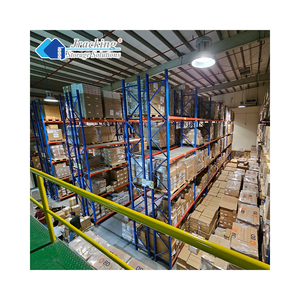
- Design Spec: EN 15512 / FEM 10.2.02
- Load Capacity: Up to 4,500 kg / Level
- Steel Metallurgy: S355JR / Q355B Hot-Rolled
- Direct Access: 100% Individual Pallet
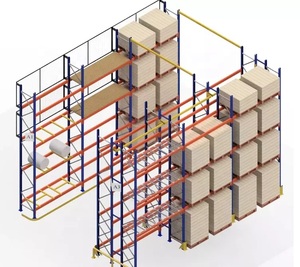
- Compliance: AS 4084-2023 Structural
- Pitch Interval: 76.2mm (3-Inch) Pitch
- Protection: Safety Yellow End Guards
- Finish: Epoxy Powder Coat 80µm
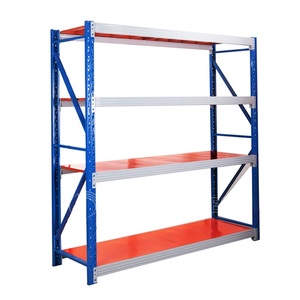
- Assembly: 100% Interlocking Boltless
- Shelf Rating: 300 kg – 1,000 kg / Shelf
- Deck Inset: Wire Mesh / Galvanized Steel
- Flexibility: 50mm Vertical Pitch Shift
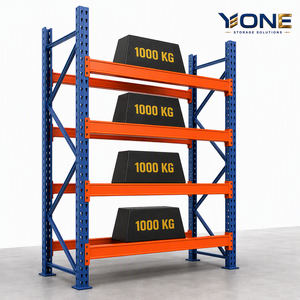
- Structural Safety: Drop-Pin Beam Connectors
- Protection: Upright Column Armor Base
- Deflection Ratio: Strict < L/200 Under Load
- Integrity: Anti-Dislodgement Tested
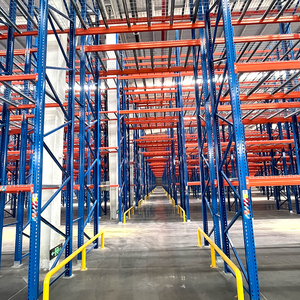
- Factory Certification: EN 1090-1 Structural CE
- Pallet Footprint: 1200 x 800 / 1200 x 1000mm
- Weld Integrity: ISO 3834-2 Robotic Verified
- Coating: Electrostatic Thermo-Set
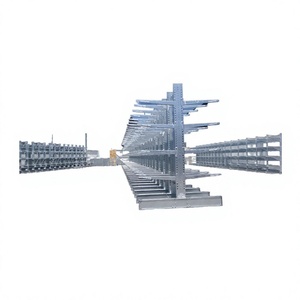
- Configuration: Single / Double Sided Mast
- Intended Loads: Pipes, Timber, Steel Barrels
- Arm Capacity: Up to 1,500 kg per Arm
- Pivot System: Impact Articulated Arm Con
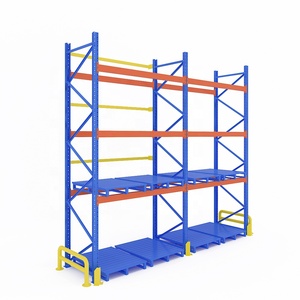
- Flue Space Safety: NFPA 13 Fire Compliance
- Stop Barrier: Tubular Impact Resistant Beam
- Over-Push Guard: Integrated 75mm - 100mm Gap
- Fastening: Grade 8.8 High-Tensile Bolts
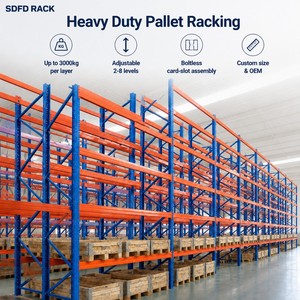
- Safe Working Load: 3,000 kg Rated Tier Load
- Box Beam Profile: Twin-C Interlocking Profile
- Column Depth: Up to 120mm x 2.5mm Gauge
- Anchor Factor: M12 Seismic Chemical Studs
Evaluating the World's Top 10 Industrial Shelving & Racking Exporters
In modern industrial procurement, evaluating racking and shelving manufacturers requires assessing structural simulation rigor, automated cold-roll tolerances, finite element analysis (FEA), and certified chemical compliance rather than merely comparing price per metric ton.
Industrial warehousing operations in North America, Western Europe, and Australasia are encountering an unprecedented operational shift. The intersection of skyrocketing industrial land lease rates, the rapid ascent of automated material handling systems (AMRs, AS/RS stacker cranes, and pallet shuttles), and stricter seismic and environmental building regulations has altered what supply chain executives demand from an industrial shelving exporter. Procuring storage equipment is no longer an isolated transactional purchase; it is a long-term capital engineering investment where structural deflection, weld integrity under cyclic fatigue, and metallurgical resilience determine warehouse continuity.
When engineering directors audit global industrial shelving exporters and wholesalers, tier-one manufacturers distinguish themselves through rigorous, verifiable production standards. The global market recognizes ten elite manufacturing centers capable of supporting multi-million-dollar distribution centers with thousands of high-bay pallet positions. These top-tier exporters operate automated roll-forming lines integrated with real-time laser measurement sensors that eliminate dimensional drift across 15-meter upright profiles. Furthermore, tier-one manufacturers do not outsource engineering: they employ structural engineers registered in the United States (PE licenses), Europe (EurIng credentials), and Australia (CPEng status) to guarantee that racking footprints adhere strictly to regional statutory mandates such as RMI ANSI MH16.1, EN 15512, and AS 4084-2023.
Core Engineering Benchmarks of Tier-One Racking Exporters
The distinction between economy metal fabricators and certified structural racking exporters lies in their quality control lifecycle. Leading exporters, including our manufacturing operations, deploy complete product traceability from raw coil unwinding to finished powder coat baking. Utilizing high-strength micro-alloyed steels—specifically Q355B, S355JR, or structural grade 50—ensures that beam and column sections achieve maximum yield strength while preserving ductility under earthquake and dynamic fork truck impact loading.
Laser-Guided Cold Roll-Forming
Advanced roll-forming mills utilizing 24 to 30 sequential tooling stations gradually shape steel profiles without introducing residual micro-stresses that trigger structural torsion.
- ±0.5mm profile tolerance across 12m
- In-line robotic punching precision
- Zero micro-fracture punch dies
Certified Robotic Welding
Automated MIG welding cells ensure total penetration of beam connectors and column baseplates, verified under ISO 3834-2 welding quality management frameworks.
- Continuous acoustic arc monitoring
- Ultrasonic weld non-destructive testing
- 5-claw high-moment connection clips
Full-Scale Academic Laboratory R&D
Collaborative structural laboratories—such as our AR Lab run with Mondragon University—physically test components to failure to validate non-linear numerical calculation models.
- Cyclic stub-column compression tests
- Beam-connector bending stiffness tests
- Earthquake shake-table validation
When selecting a top exporter or wholesale supplier, enterprise buyers must cross-examine the supplier's engineering documentation package. A complete submission must include finite element analysis (FEA) models showing worst-case seismic moment frames, calculation packets indicating soil-structure interaction via floor anchor embedment depth, and detailed bill of materials specifying zinc plating thickness or thermo-cured polyester powder coat hardness (minimum 2H pencil hardness standard).
High-Density Industrial Storage Configurations Compared
Selecting the optimal structural framework directly impacts building footprint utilization, handling velocity, and operational capital expenditure. Review our engineering comparison of primary industrial storage systems.
| Racking Architecture | Direct Selectivity | Space Utilization | Material Flow Strategy | Deflection Limit Target | Typical Logistics Applications |
|---|---|---|---|---|---|
| Selective Pallet Racking | 100% (Instant) | Standard (40-50%) | FIFO / LIFO Dynamic | 1/200 Beam Span | FMCG, High-SKU 3PL, Retail E-commerce |
| Very Narrow Aisle (VNA) | 100% (Instant) | High (60-70%) | FIFO / LIFO Dynamic | 1/300 Ultra-Rigid | High-bay warehouses, Pharmaceutical, Automotive parts |
| Double Deep Racking | 50% (Two-Deep) | Medium-High (55-65%) | LIFO Priority | 1/200 Beam Span | Cold storage, Bulk raw ingredients, Multi-batch bottling |
| Drive-In / Drive-Through | Low (Lane Access) | Very High (70-80%) | LIFO (Drive-In) / FIFO | Specific Portal Frame | Seasonal produce, Cold freezers, Chemical bulk stores |
| Semi-Automated Pallet Shuttle | Batch Lane Select | Maximum (80-88%) | Flexible FIFO or LIFO | Millimeter-precision rail | High-throughput refrigerated logistics, Meat packaging, Beverage |
| Automated AS/RS Stacker Crane | 100% Robotic | Extreme (>90%) | WMS Algorithm Controlled | FEM 9.831 Precision | 24/7 Dark distribution centers, Global distribution hubs |
Emerging Trends in Industrial Shelving Procurement (2025–2030)
Global supply chains are modernizing their facilities. Procurement leaders must align their capital expenditure with these four transformative technical trends.
1. Convergence of Steel Structures with Robotics (AS/RS & AMRs)
Traditional static racking designs are being superseded by automation-ready structures. Autonomous Mobile Robots (AMRs) and automated guided vehicles (AGVs) demand strict ground-floor baseplate clearances, flush floor track installations, and millimeter-level upright straightness. If a column experiences more than 3mm of cumulative deflection along a 10-meter reach, robotic optical guidance systems flag spatial anomalies and halt picking cycles. Exporters must now build to robotics-grade tolerances.
2. Scope 3 Decarbonization & Green Steel Mandates
Institutional enterprise buyers and Fortune 500 multinationals now evaluate suppliers on their carbon footprint under ISO 14064. Sourcing racking produced in electric arc furnaces (EAF) utilizing high scrap ratios over traditional coal-fired basic oxygen furnaces dramatically reduces Scope 3 embodied carbon. Our verified organizational carbon audit and ISO 50001 energy monitoring ensure every metric ton of fabricated storage rack meets the ESG targets required by forward-looking infrastructure funds.
3. Stringent Dynamic & Multi-Axial Seismic Engineering
Seismic events present acute collapse hazards for high-density facilities. Global procurement teams are mandating compliance with updated codes including ASCE 7-22, IBC 2024, and Eurocode 8. Upright frame designs now incorporate oversized heavy-gauge baseplates, multiple chemical anchor bolt arrays per post, and finite element modeling of non-linear torsional buckling. Racking must be engineered to dissipate seismic ground accelerations without beam hook dislodgement.
4. Cold Chain & Cryogenic Steel Metallurgy
The explosive expansion of pharmaceuticals, biologic storage, and frozen food e-commerce requires rack structures operating continuously at temperatures down to -24°C (-11°F) or even -30°C. Conventional structural carbon steel suffers severe ductile-to-brittle transitions at sub-zero temperatures, making it prone to sudden micro-fissuring upon accidental lift truck impact. Leading exporters utilize Charpy V-notch tested steel alloys formulated with specific grain refiners to resist low-temperature embrittlement.
5. Digital Twin Racking & IoT Structural Telemetry
Next-generation installations are bridging physical steel with digital warehouse management systems (WMS). By integrating piezoelectric impact sensors on critical aisle end-guards and strain gauge telemetry on high-bay cross beams, facility directors receive instantaneous alerts when a forklift impact exceeds threshold limits or when asymmetric loading exceeds safe working load (SWL) safety envelopes, preventing catastrophic structural failure.
6. Turnkey Single-Source EPC Delivery Models
Segmented supply chains—where one entity designs, another fabricates in Asia, and an independent local crew installs—frequently encounter delays and finger-pointing during commissioning. Enterprise clients increasingly prefer fully integrated Engineering, Procurement, and Construction (EPC) turnkey suppliers who provide single-point accountability: from initial layout CAD and structural calculations to installation oversight, load testing, and ongoing inspections.
Why Tier-One Logistics Integrators Partner with Us
Combining industrial-scale production with university-partnered research to deliver verified, high-performance structural steel storage installations worldwide.
AR Racking Industrial Storage Solutions Co., Ltd. operates as a globally recognized manufacturer and turnkey engineering contractor for industrial pallet racking, automated AS/RS structures, and heavy-duty picking shelving. Backed by decades of continuous manufacturing excellence and more than 42,000 completed warehouse projects across 60+ countries, our engineering centers calculate every system around actual load profiles—whether accommodating standardized 48″ × 40″ North American GMA pallets, European EUR/EPAL pools, or bespoke industrial dies.
Our fully automated production center spans over 35,000 m² (over 376,000 sq ft) with an annual processing capacity exceeding 100,000 metric tons. More than 90% of our fabricated output is exported worldwide to major hubs in the United States, Canada, Europe, and Latin America. We operate our own proprietary AR Lab in strategic partnership with Mondragon University, alongside our dedicated Research & Simulation Classroom at the University of the Basque Country (Bilbao School of Engineering). This scientific backing allows us to subject cold-formed profiles, hook connectors, and welded assemblies to cyclic fatigue, inelastic buckling tests, and simulated seismic loads before moving to serial roll-forming.
Certified Quality Management Systems governing every phase from coil slitting to automated profiling.
Comprehensive Environmental Management ensuring low-emission manufacturing and waste minimization.
Rigorous Occupational Health and Safety systems protecting our workforce across all operational facilities.
Certified Energy Management driving carbon efficiency in steel manufacturing and factory logistics.
Comprehensive Quality Requirements for fusion welding of metallic materials and robotic assemblies.
Mandatory structural execution class certification for self-supporting and rack-supported warehouse buildings.
Third-party audited organizational greenhouse gas measurement and verified corporate carbon footprint reduction.
Industrial Racking & Shelving Procurement: Technical Questions Answered
Straightforward, engineering-backed answers to the structural, metallurgical, and safety questions warehouse directors and procurement specialists ask most.
What are the maximum vertical deflection limits allowed for industrial pallet rack beams?
How do you calculate rack designs for North American 48″ × 40″ GMA pallets versus Euro-pallets?
What are the metallurgical differences between Q235B and Q355B structural steel grades?
What constitutes a "rack-supported warehouse" and how does it compare to conventional construction?
How do fire safety standards (such as NFPA 13) govern transverse and longitudinal flue spaces?
What routine inspection and maintenance schedule is mandated for industrial steel racking?
Ready to Design or Expand Your Logistics Facility?
Connect with our technical engineering team for certified structural layout calculations, finite element simulation models, and wholesale container pricing tailored to your regional building codes and site conditions.