Featured Heavy-Duty Warehouse Storage & Racking Systems
Engineered to withstand rigorous seismic, dynamic, and thermal operating environments. Custom-designed for high load factors, strict deflection tolerances, and integrated automation readiness.
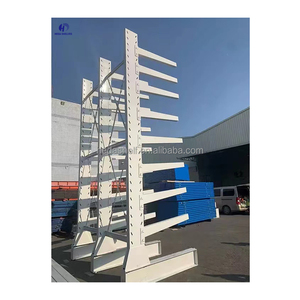
Factory Price Cantilever Material Rack Heavy Duty Cantilever Racks Warehouse Cantilever Racking for Rebar Storage
Engineered for non-palletized long products, steel beams, structural tubing, and timber. Modular arm adjustability eliminates front-column handling obstructions.
- Profile Material: IPE / High-Tensile Steel
- Load Rating: Up to 1,500 kg per Arm
- Column Height: Custom up to 12 Meters
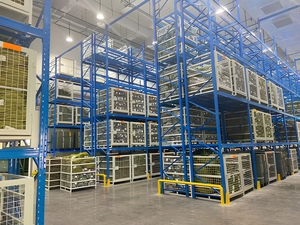
Manufacturer Customized Adjustable Layers Corrosion Protection Powder Coated Heavy Duty Warehouse Pallet Rack Racking System
Versatile selective pallet framework coated with epoxy-polyester electrostatic powder. Guaranteed resistance against mechanical abrasion and aggressive ambient moisture.
- Beam Adjustability: 50mm / 75mm Pitch
- Surface Finish: Corrosion Powder Coat
- Bay Capacity: Up to 24,000 kg
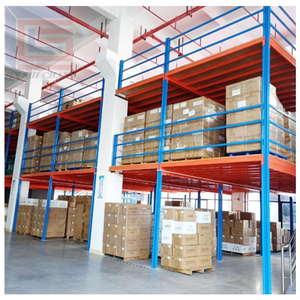
Heavy Duty Mezzanine Racking System Custom Industrial Storage Shelves and Platform
Multi-tier structural platform converting vertical headroom into active multi-level pick modules or automated sortation floors without physical building expansion.
- Floor Decking: Steel Grating / B-Deck
- Live Load Rating: 300 – 1,200 kg/m²
- Safety Standard: OSHA / IBC Compliant
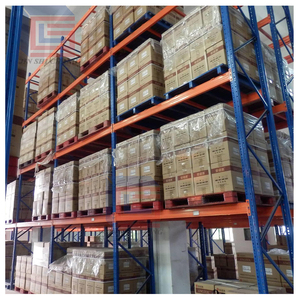
Industrial Heavy Duty Steel Pallet Rack Warehouse Shelving System for Storage, Distribution Center and Factory Use
High-bay selective racking designed for GMA 48"x40" and Euro pallets. Provides 100% SKU accessibility, rapid crane/truck staging, and continuous cycle counting.
- Upright Section: Omega Cold-Formed Steel
- Beam Levels: 2 to 8 Configurable Tiers
- Accessibility: 100% Direct Selective Access
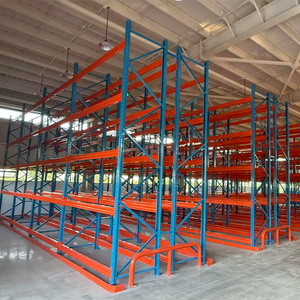
Engineering Design Pallet Rack System with Wire Deck Option
Structural steel system configured with welded wire waterfall mesh decks. Enhances transverse flue air circulation, light diffusion, and complies with NFPA 13 sprinkler codes.
- Decking Finish: Galvanized / Powder Coated
- Wire Gauge: 4 to 6 Gauge Heavy Wire
- Safety Feature: Anti-Drop Flue Compliance
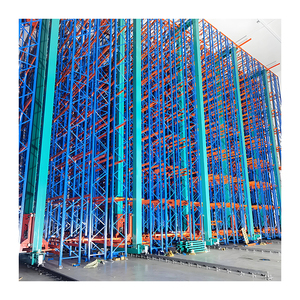
High-Density Pallet Shuttle Racking System Automatic Steel Storage Frame 3000kg Load Capacity Heavy Duty Warehouse
Semi-automated deep-lane dynamic storage. Autonomous radio-controlled shuttles transport pallets within ultra-deep channels, slashing forklift lane-entry times by 75%.
- System Payload: Up to 3,000 kg / Pallet
- Inventory Flow: FIFO / LIFO Switchable
- Lane Depth: Up to 40 Pallets Deep
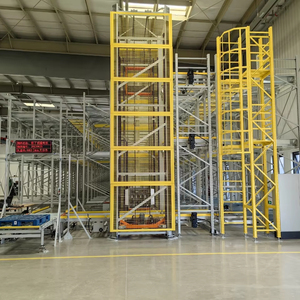
Advanced Intelligent Library Selective Pallet Rack with Efficient Conveying System High Efficiency Stacking Racks & Shelves
Integrated intralogistics framework coupling high-precision selective uprights with automated roller conveyors and AS/RS staging interfaces for high-throughput buffering.
- Integration: AS/RS & Continuous Conveyors
- Tolerance: Millimetric Deflection Standards
- Target Sector: FMCG & High-Throughput Hubs
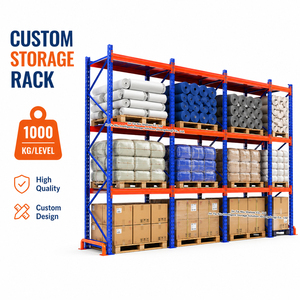
1000KG Warehouse Heavy Duty Pallet Rack Adjustable Storage Racking System Factory Direct
Standardized industrial warehouse rack offering fast modular deployment, optimized structural weight, and guaranteed certified load carrying capacity up to 1000kg UDL per beam level.
- Beam Capacity: 1,000 kg Uniform Distributed
- Locking Mechanism: Spring Safety Pin Locking
- Certification: ISO 9001 / EN 15512 Built
Top 10 Industrial Pallet Racking Systems Manufacturers & Global Suppliers
An authoritative engineering assessment of the primary tier-1 manufacturing groups driving structural innovation, automated high-bay AS/RS integration, and international regulatory compliance.
Industrial pallet racking infrastructure represents the foundational structural skeleton of contemporary distribution centers, cold-chain hubs, and automated fulfillment hubs. When assessing global manufacturing partners, procurement decision-makers must weigh beyond raw steel weight; structural engineering accuracy, finite element modeling, weld integrity, and strict automated crane deflection tolerances dictate long-term facility safety. Below is the multi-point technical comparison of the world's premier industrial racking fabricators.
| Manufacturer / Brand | HQ Region | Primary Engineering Specialization | Manufacturing Profile | Core Compliance & Codes | Key Competitive Edge |
|---|---|---|---|---|---|
|
Top Pick
AR Racking
|
Spain / EU | AS/RS Clad Buildings, Pallet Shuttle, Selective & Sub-Zero Cold Storage | 35,000+ m² automated plant; >100k ton rolling capacity; Traceability 4.0 | EN 15512, RMI (ANSI MH16.1), ISO 9001/14001, EN 1090-1 CE, ISO 3834-2 | University R&D structural labs, 5-year warranty, turn-key automation tolerance precision |
| SSI Schaefer | Germany | Turnkey automated logistics, high-bay clad racking, modular bins | Extensive multi-continental rolling & robotic fabrication hubs | FEM 10.2.02, EN 15512, ISO 9001, DIN standards | End-to-end proprietary automation, WMS software, and automated stacker cranes |
| Daifuku Co., Ltd. | Japan | High-throughput AS/RS, cleanroom automated storage, unit load handling | Massive global manufacturing network focused on robotics | JIS, ISO 9001, ANSI/RMI compliant regional units | Dominant market position in semiconductor and heavy industrial automated storage |
| Dematic (KION Group) | USA / Germany | Automated unit-load AS/RS, multishuttle, high-bay integration | Global fabrication facilities coupled with mechatronics production | RMI ANSI MH16.1, FEM, ISO 9001, OSHA | Flawless integration of software, AGVs, AMRs, and high-tolerance vertical steel racks |
| Interlake Mecalux | Spain / USA | Selective teardrop, high-density push-back, drive-in, shuttle systems | Widespread manufacturing footprint across the Americas and Europe | RMI, AISI, EN 15512, ISO 9001 | Rapid roll-formed teardrop delivery in North America with extensive distributor network |
| Stow Group (Movu) | Belgium | Standard pallet racking, Movu robotic 2D/3D shuttle systems, cantilever | Modern automated production facilities across Central & Eastern Europe | EN 15512, FEM, ISO 9001, ISO 14001 | Strong European density, aggressive development of plug-and-play warehouse robotics |
| Jungheinrich AG | Germany | Narrow aisle (VNA) racking systems, mobile racks, automated guided vehicles | Integrated European rack fabrication and industrial truck factories | FEM, EN 15512, ISO 9001 | Harmonized coordination between narrow-aisle turret trucks and guided rack profiles |
| Dexion (Constructor Group) | Norway / UK | P90 selective racking, carton flow, multi-tier shelving, heavy cantilever | Multiple specialized production plants throughout Western & Eastern Europe | EN 15512, SEMA Code of Practice, ISO 9001 | Historical design legacy in British and Nordic industrial engineering and SEMA protocols |
| Frazier Industrial | USA | Structural hot-rolled steel channel pallet racking, heavy-impact storage | Extensive North American structural steel fabrication plants | RMI ANSI MH16.1, AISC, AWS Certified | Superior structural C-channel durability against high-velocity forklift impact abuse |
| Ridg-U-Rak, Inc. | USA | Roll-formed slotted and teardrop pallet racking, seismic base isolation | Substantial American manufacturing volume specialized in cold-formed profiles | RMI ANSI MH16.1, AISI, ISO 9001 | Patented seismic engineering designs and extensive base-isolation systems for high-risk zones |
Future Strategic Sourcing & Procurement Trends (2025–2030)
How macroeconomic volatility, carbon verification, modular design, and total lifecycle accountability are reshaping industrial storage procurement.
Total Cost of Ownership (TCO) vs. Initial CapEx
Procurement teams are shifting away from evaluating racking purely on steel price per ton. Modern models prioritize Total Cost of Ownership over a 15–20 year horizon, incorporating assembly speed, structural rigidity, maintenance downtime, and beam-connection fatigue durability.
- Cold-formed high-strength steel grades optimize weight while maintaining structural safety factors.
- Robotic laser punching guarantees pinpoint beam slotting, preventing costly field re-drilling and erection delays.
ESG Auditing & Scope 3 Embodied Carbon
Environmental declarations are becoming strict gating criteria in institutional supply chains. Tier-1 enterprise tenders now mandate third-party audited carbon footprints covering raw coil extraction, electric arc furnace (EAF) processing, and zero-waste automated manufacturing.
- Verification under ISO 14064 Greenhouse Gas Accounting is now standard for global RFQs.
- Adoption of 100% recyclable powder-coat polymers and certified energy management systems (ISO 50001).
Modular Automation Retrofit Readiness
Given the rapid acceleration of warehouse robotics, facilities installed today must accommodate tomorrow’s automation. Forward-thinking buyers demand manual selective systems engineered with the upright stiffness and tolerance profiles needed to transition into 2D shuttle or AMR operations.
- Pre-engineered floor anchors and laser-calibrated guide-rail connections simplify automated transitions.
- Dual-purpose beam configurations facilitate both manual pallet placing and conveyor/shuttle integration.
Engineering Trends & Next-Generation Structural Innovations
Examining the intersection of advanced structural mechanics, cold-chain thermodynamics, and millimeter-level robotic integration tolerances.
Rack-Supported Clad Buildings (Autoportante)
In clad-rack warehouse architecture, the industrial racking structure functions as the primary load-bearing framework supporting the exterior walls and roof cladding. This engineering breakthrough bypasses traditional concrete column constraints, enabling vertical storage up to 45+ meters while significantly cutting civil engineering project timelines.
- Eliminates dedicated building support columns to maximize floor area utilization.
- Engineered to absorb dynamic wind shear, snow accumulation, and regional seismic acceleration under International Building Code (IBC) guidelines.
Sub-Zero Cold Storage Mechanics (-24°C to -30°C)
Refrigerated and frozen distribution centers demand specialized metallurgy. Standard mild steels suffer ductile-to-brittle transitions at cryogenic temperatures, elevating crack-propagation risks under dynamic forklift impact. Modern engineering deploys micro-alloyed, high-resilience structural steels that maintain impact toughness well below freezing.
- High-density systems (Mobile Racking, Pallet Shuttle) condense thermal volume, lowering ongoing refrigeration power consumption by up to 40%.
- Multi-pass hot-dip galvanization and advanced zinc coatings prevent dew-point condensation rust and corrosion.
Why Global Logistics Leaders Partner with AR Racking
Headquartered in Europe with deep operations throughout North America and across 60+ countries, AR Racking Industrial Storage Solutions Co., Ltd. provides turnkey engineering, manufacturing, and installation accountability. With a 35,000+ m² fully automated production center boasting over 100,000 tons of annual capacity, our systems deliver the structural integrity global operations rely on.
In partnership with academic institutions—including the AR Lab at Mondragon University and the Research & Simulation Classroom at the University of the Basque Country (Bilbao School of Engineering)—our engineers conduct full-scale physical destructive testing, finite element analysis (FEA), and seismic simulation to optimize profile performance.
Traceability 4.0 & Manufacturing Precision
Every upright, beam, and bracer produced by AR Racking carries laser-etched identification codes. This end-to-end component traceability documents the steel coil origin, chemical heat numbers, rolling line calibration, and operator shifts for audit-ready preventive maintenance.
Industrial Pallet Racking Procurement FAQ
Direct, engineering-backed answers addressing load specifications, seismic codes, fire safety guidelines, and structural life-expectancy standards.
How do North American RMI (ANSI MH16.1) and European EN 15512 standards compare in structural load calculation?
While both specifications establish strict guidelines for cold-formed structural steel racking, their limit-state calculation methodologies and safety factor distributions differ in fundamental engineering mechanics:
ANSI MH16.1 (RMI): Predominantly utilized throughout the United States and Canada, RMI relies heavily on the North American Specification for the Design of Cold-Formed Steel Structural Members (AISI S100). It employs either Load and Resistance Factor Design (LRFD) or Allowable Strength Design (ASD), setting specific load combination multipliers for seismic ground acceleration (governed by ASCE 7), live load placement, and forklift impact allowances.
EN 15512: The harmonized European standard specifies limit-state design principles evaluating ultimate limit states (ULS) and serviceability limit states (SLS) under partial safety factors (γM). It requires advanced nonlinear analysis incorporating structural imperfections (frame out-of-plumbness and beam connection looseness) directly into global second-order frame simulations.
Tier-1 manufacturers such as AR Racking maintain dedicated engineering teams capable of dual-certifying calculations to both RMI and EN 15512, ensuring regional building permits and Engineer of Record (EOR) seals are secured smoothly.
What are the maximum permissible beam deflection limits for manual selective vs. automated AS/RS systems?
Allowable deflection under rated uniform distributed load (UDL) is one of the most critical structural criteria in warehouse rack design:
Manual Selective Racking: Under standard ANSI MH16.1 and EN 15512 guidelines, beam vertical deflection must not exceed L/180 (where L is clear beam length between column faces). For example, a 96-inch (2,438 mm) pair of selective beams carrying 5,000 lbs is permitted a maximum midpoint deflection of 0.533 inches (13.5 mm). This threshold prevents operator vertigo during loading and eliminates beam dislodgement risks.
Automated AS/RS & Shuttle Systems: Automated stacker cranes and autonomous shuttles use precision laser optics and photo-electric sensors that demand significantly tighter tolerances. Deflection limits for AS/RS beam pairs are frequently restricted to L/300, L/400, or even L/500, typically capped at 3 mm to 5 mm absolute maximum. Excessive deflection causes automated shuttle carriages to jam, leads to optical sensor misalignment, and can halt high-bay operations.
What structural finishes and steel treatments are required for -24°C sub-zero cold storage facilities?
Cold storage and freezer warehouses introduce two distinct structural threats: low-temperature steel embrittlement and surface corrosion from continuous condensation cycles. Sourcing teams must verify:
Metallurgical Toughness: High-resilience structural steel grades (such as S355JR or specialized cold-forming grades complying with EN 10025-2 with Charpy V-notch impact testing certified at -20°C and -40°C) prevent brittle catastrophic failures under dynamic forklift shock.
Coating Selection: Hot-dip galvanization (HDG) per ASTM A123 or EN ISO 1461 is ideal for drive-in and mobile racking components exposed to frequent ambient defrosting and humidity. For static freezer storage, specialized multi-stage epoxy-polyester powder formulations cured at high baking temperatures provide high adhesion and prevent microscopic flaking under sustained thermal contraction.
What is the functional structural distinction between a rack-supported building and a conventional warehouse?
In a conventional warehouse, a general contractor first erects an independent concrete or structural steel building shell (foundations, perimeter columns, roof trusses, insulated cladding). Pallet racking is subsequently anchored to the concrete floor slab as interior shelving equipment. The racking contributes nothing to building envelope stability.
In a rack-supported warehouse (Autoportante), the high-density racking framework is designed from the ground up as the primary civil superstructure. The upright frames directly carry the roof purlins, side wall girts, and insulated envelope panels. Wind drag forces, seismic lateral drift, and external snow weights are transferred through the racking framework directly into massive concrete foundation pads. This approach eliminates internal building columns, cuts civil structural steel consumption by 20–30%, and enables building heights exceeding 40 meters.
How do fire sprinkler codes (NFPA 13) dictate rack flue spaces and wire mesh decking specifications?
Under NFPA 13 (Standard for the Installation of Sprinkler Systems), high-piled pallet storage racking must maintain unobstructed vertical ventilation avenues to allow early overhead sprinkler water penetration down to the origin of the fire, while venting heat upward to activate ceiling-level thermal heads:
Transverse Flue Space: A clear vertical space of at least 3 to 6 inches (76 to 152 mm) between pallets along the rack face.
Longitudinal Flue Space: A continuous clear vertical opening of at least 6 inches (152 mm) between back-to-back rack rows. Back-to-back row spacers and pallet backstops are installed to maintain this critical separation.
Wire Mesh Decking: Where wire decks are deployed, NFPA 13 requires a minimum of 70% open surface area across the deck mesh pattern. Solid plywood or sheet-metal decking acts as an umbrella, shielding combustion below from overhead sprinkler discharge and forcing expensive early-suppression fast-response (ESFR) in-rack sprinkler retrofits.
What engineering documentation should procurement insist on receiving prior to system sign-off?
To satisfy municipal safety inspectors, insurance underwriter audits, and corporate risk frameworks, enterprise buyers should require a comprehensive technical documentation handover package:
1. PE/SE Stamped Engineering Calculations: Structural calculation submittals signed and sealed by a registered Professional Engineer (PE) or Structural Engineer (SE) licensed in the local facility jurisdiction, validating compliance with local seismic and slab capacity criteria.
2. Mill Test Reports (MTR): Certified chemical and physical mechanical test reports for raw steel coils, confirming tensile yield strength, elongation, and Charpy impact values.
3. Certified Load Application Plaques (LARC): Durable aluminum load capacity plaques mounted prominently on the end frames of every rack aisle, clearly detailing maximum permissible unit load per tier, bay load limits, and configured beam spacing heights.
4. Manufacturer Warranty Documentation: A written structural warranty (such as AR Racking’s 5-Year Comprehensive Warranty) covering design defects, weld failures, and manufacturing faults.
Ready to Engineer Your High-Density Intralogistics Facility?
Whether you are planning a high-bay automated AS/RS clad building, retrofitting a sub-zero cold chain center, or seeking fully certified selective pallet racking, AR Racking's technical team delivers project-specific structural simulations, competitive manufacturing lead times, and global turnkey installation.
Contact Us