Specialized OEM/ODM Push Back & Warehouse Racking Lines
Select from our heavy-duty structural platforms, automated carriers, and high-density material handling carts built under ISO 9001 quality supervision.
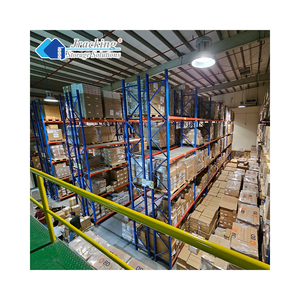
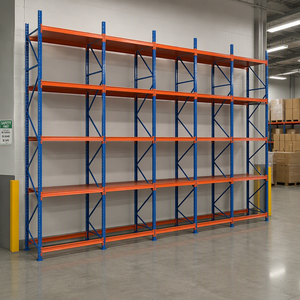
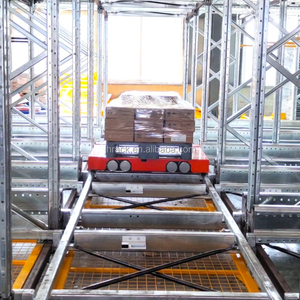
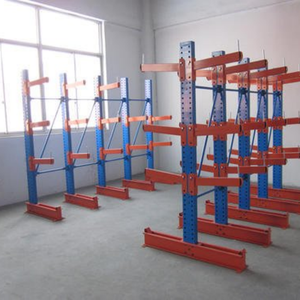
Push Back Racking Architecture: Kinematics & Structural Mechanics
A comprehensive engineering review of multi-lane nesting cart systems, structural deflection tolerances, and cold chain performance for logistics systems integrators.
Telescoping Nested Cart Dynamics
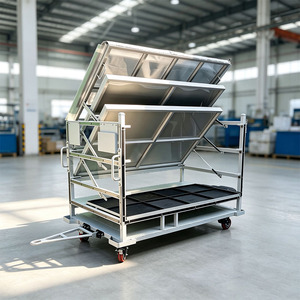
Push back racking harnesses gravity and inclined steel tracking (typically configured at a precise 2% to 3% pitch). Pallets sit on individual nested steel carts that roll on heavy-duty flanged steel wheels. When the first pallet is pushed back by a standard counterbalance or reach truck, the secondary cart is exposed. This eliminates drive-in structural collisions and limits lift truck mast penetration to the aisle face only, saving valuable cycle times.
Structural Steel Grade Integrity
Our OEM push back systems utilize high-yield structural steels such as Q235B, Q355B, and certified European S355JR. Upright frames undergo multi-stage continuous roll forming with precisely spaced diamond or teardrop punching. Beams feature fully welded tubular and step profiles that deliver rigid deflection limits under L/200 load standards, ensuring cart wheels never catch or bind during loading transitions.
Seismic Engineering & Global Compliance
Designed around ANSI MH16.1 specifications (RMI standard) for North American operations and EN 15512/EN 15620 for EMEA markets. Using finite element simulation software developed in collaboration with leading technical universities, our frames are calculated for site-specific spectral acceleration (Ss, S1 values) and high-density industrial applications where soil category, anchor shear, and baseplate dynamics intersect.
System Density & Operational Efficiency Evaluation
Evaluate push back storage architectures against alternative warehouse pallet systems to match your operational throughput and SKU velocity requirements.
| Storage Racking System | Inventory Access Profile | Lane Depth Limits | Volume Utilization | Forklift Mast Travel | Selectivity Rating |
|---|---|---|---|---|---|
| Push Back Racking (Nested Cart) | LIFO (Per Lane) | 2 to 6 Pallets Deep | 75% – 85% Maximum | Aisle Surface Only | Medium-High (1 SKU per lane) |
| Selective Pallet Racking | FIFO / LIFO Direct | 1 Pallet Deep | 40% – 50% Conventional | Direct Pallet Entry | 100% Immediate |
| Drive-In / Drive-Thru | LIFO / FIFO Bulk | Up to 10+ Deep | 65% – 75% High | Full Channel Entry | Low (High risk of upright impact) |
| Pallet Flow (Gravity Roller) | Strict FIFO | 2 to 20+ Pallets Deep | 80% – 90% Ultra High | Dedicated Charge & Discharge | Medium (High installation cost) |
| Autonomous Pallet Shuttle | FIFO / LIFO Automated | Up to 40+ Deep | 85% – 92% Dynamic | No Mast Channel Travel | High Automation Compatibility |
Future Sourcing Trends for Push Back Racking Systems
The convergence of omnichannel distribution, cold chain real estate costs, and automated handling machinery is shifting industrial procurement methodologies.
1. Cold Storage Footprint Compression
With cubic meter cooling expenses soaring across North American and European cold chain networks, temperature-controlled facilities operating at -24°C (-11°F) to -30°C increasingly replace selective racks with 4-to-6 deep push back tracks. Cold-form high-resilience structural steel and low-temperature bearing greases prevent operational lockups, lowering electrical HVAC overhead per pallet position.
2. AGV & AMR Integration with Dynamic Lanes
Push back arrays are evolving from manual forklift interfaces into staging buffers for autonomous reach trucks and Automated Guided Vehicles (AGVs). This transition demands tighter manufacturing tolerances on nested cart return speeds, precision laser positioning stops at the pick face, and zero rack-bed lateral tilt.
3. Full Supply Chain Traceability (Industry 4.0)
Global project owners and engineering consultants now mandate verifiable traceability for every structural weld, cold-formed section, and cart assembly. Under ISO 3834-2 welding quality and Traceability 4.0 barcoding, every upright frame and dynamic nested rail tracks directly back to its original steel melt sheet, easing multi-year regulatory inspections.
Advanced Manufacturing Facility & Engineering Edge
Supported by a 35,000+ m² automated industrial complex and world-class testing partnerships, we deliver certified steel structures worldwide.
100,000-Ton Fully Automated Manufacturing Base
Our intelligent factory spans over 35,000 square meters (over 376,000 square feet) equipped with robotic continuous roll forming lines, automated laser-guided punching machines, and CNC robotic welding cells. Maintaining an annual output exceeding 100,000 metric tons, we balance high-volume standard component rollouts with tailored OEM/ODM modifications for export worldwide.
Applied University R&D and Computational Testing
Continuous research and development remains the core of our structural engineering. Our dedicated testing laboratories, operated in direct collaboration with Mondragon University and the Bilbao School of Engineering (University of the Basque Country), execute physical stress, cyclic endurance, and material fatigue assessments under real-world seismic simulations before site construction begins.
Comprehensive Global Certifications & ISO Standards
Every dynamic push back rack and static heavy-duty system is produced under verified quality and safety frameworks. We hold accredited certifications across ISO 9001 (Quality), ISO 14001 (Environment), ISO 45001 (Safety), ISO 50001 (Energy Management), ISO 3834-2 (Welding Standards), EN 1090-1 CE Marking, and audited ISO 14064 greenhouse gas measurement protocols.
Frequently Asked Questions: Sourcing & Designing Push Back Racks
Detailed technical responses addressing load unit profiles, clearance configurations, maintenance routines, and customized structural manufacturing.
How does push back racking compare to drive-in racking for high-density applications?
Push back racking provides significantly higher picking throughput and safety than drive-in systems. While drive-in requires lift trucks to enter the storage matrix—increasing frame impact hazards and operational cycle times—push back racking restricts forklift access entirely to the front aisle. Pallets are loaded and retrieved from a single dynamic face, cutting cycle times by up to 40% and virtually eliminating beam impact damage.
Can push back racks accommodate different pallet sizes within the same lane?
Our OEM/ODM engineering teams configure nested carts to match diverse load units, including the standard North American 48″ × 40″ GMA, European 800 × 1200 mm, and ISO 1100 × 1100 mm pallets. By engineering multi-support transverse cart profiles or heavy-duty wire/welded steel inserts, cart nesting platforms safely carry undersized, plastic, or slightly damaged pallets without sagging or jamming the wheel guide rails.
What is the maximum practical lane depth for push back cart systems?
Push back cart systems are most commonly deployed in 2, 3, 4, 5, and 6-deep pallet configurations. While 2-deep to 4-deep systems operate effortlessly with standard counterbalanced forklifts, 5-deep and 6-deep setups require careful calculation of the push force needed to roll multiple laden carts back up the incline. For depths beyond 6 pallets, we typically advise deploying our Semi-Automated 4-Way Pallet Shuttle Systems.
How do you address seismic design codes in North America and seismically active zones?
Every installation is verified by licensed structural engineers according to local building codes (such as IBC, CBC, and NBCC in North America) and RMI (ANSI MH16.1) standards. Frame column sizes, steel thicknesses, baseplate anchors, and floor anchor embedment depths are calculated specifically for the site's spectral ground acceleration values, ensuring structural resilience during seismic events.
What routine maintenance is required for dynamic push back wheel and track assemblies?
Due to our sealed-bearing wheel designs and heavy-duty structural steel channel tracks, push back systems require minimal maintenance. Annual preventative inspections focus on clearing debris from guide channels, verifying that safety stop clips at the discharge face remain intact, and checking that wheels spin smoothly without irregular wear. Unlike roller systems, nested carts lack complex brake friction components, maximizing working life.
Can push back racking operate efficiently in deep-freeze logistics facilities?
Yes. Push back racking is one of the most reliable high-density choices for sub-zero temperature warehouses (down to -30°C / -22°F). Our dynamic carts feature specialized low-temperature sealed bearings, cold-ductile structural steels that resist embrittlement, and hot-dip galvanized or high-adhesion powder coating finishes to prevent condensation corrosion during thermal transitions.
Transform Your Warehouse Volumetric Storage Capacity
Request an OEM/ODM engineering consultation. Provide your warehouse layout blueprints, pallet load profiles, and target throughput specifications for a customized structural proposal.
Contact Us