Production Line Architecture
Featured Warehouse Storage & Pallet Racking Systems
High-rigidity cold-rolled structural steel profiles, customized load matrices, and robotic powder-coated finishing engineered for maximum cubic volumetric efficiency.
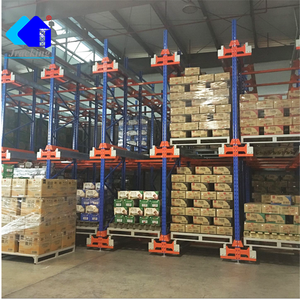
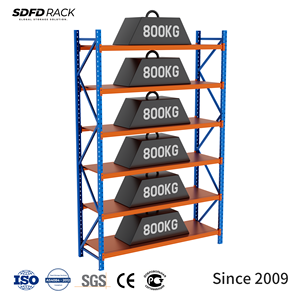
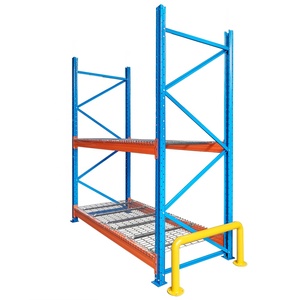
Industrial Beam Decking
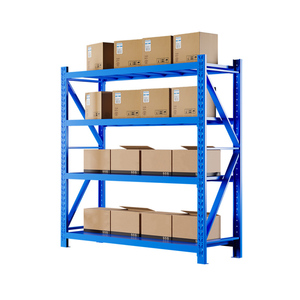
2500kg Layer Load Warehouse Storage Pallet Shelving Rack with Wire Mesh Decking
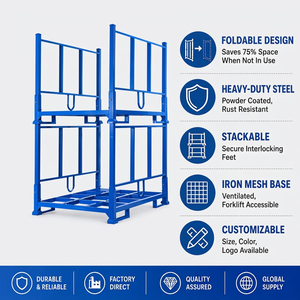
60+
Countries Exported
42,000+
Global Projects Handover
100,000t
Annual Steel Output
5-Year
Structural Quality Warranty
Technical Engineering Whitepaper
Industrial Storage Architecture: Load Capacities, Steel Grade Integrity & Seismic Deflection
Modern supply chain operations require intralogistics structures designed beyond basic static weight limits. When sizing heavy-duty warehouse racking, mechanical engineers must account for complex dynamic impact loads, beam deflection thresholds, seismic floor accelerations, and integration tolerances for automated handling systems (AS/RS). Our high-grade carbon steel structures are certified under ISO 9001, ISO 14001, ISO 45001, ISO 3834-2, and EN 1090-1 execution standards to guarantee flawless long-term reliability.
Structural Steel Metallurgy & Q235B/Q355B Hot-Rolled Coils
Structural reliability starts at raw material formulation. We utilize premium hot-rolled and cold-formed coil steels, primarily high-tensile Q235B, Q355B, and EN 10025 grade S355JR. These profiles deliver ultimate tensile strengths up to 510 MPa, ensuring that beam connectors and column profiles withstand severe cycle stresses and accidental fork truck impacts without catastrophic brittle fractures.
Finite Element Analysis (FEA) & Deflection Strictness
Every bespoke OEM racking run undergoes comprehensive Finite Element Analysis (FEA) to verify stress distribution across structural nodes. In line with strict international guidelines (ANSI MH16.1 & EN 15512), horizontal load-bearing beams are calibrated to a maximum deflection limit of L/200 under total permissible design payload, maintaining complete mechanical clearance during continuous reach-truck and shuttle operations.
Surface Treatment, Traceability & Dynamic Seismic Proofing
Pre-treatment degreasing, zinc-phosphate conversion, and automated electrostatic thermosetting epoxy-polyester powder coating (60–90 microns) resist abrasive industrial environments and sub-zero humidity. Traceability 4.0 ensures each upright frame, load beam, and baseplate carries laser-etched heat numbers corresponding to factory mill test certificates (MTC) and geotechnical seismic compliance records.
Engineering Specification Matrix: Core Racking Architecture
| Racking System Type | Typical Payload / Level | Pallet Accessibility | Warehouse Footprint Utilization | Optimal Logistics Scenarios |
|---|---|---|---|---|
| Selective Pallet Racking | 500 kg – 4,000 kg | 100% Immediate Direct Access | 35% – 45% Floor Volume | FMCG, 3PL Warehouses, High-SKU Distribution |
| Automatic Radio Shuttle | 1,000 kg – 2,000 kg | Semi-Automated (Channel Access) | 75% – 85% Dense Volume | Cold Storage Facilities (-25°C), Beverage, Food Buffering |
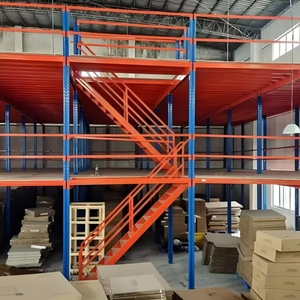
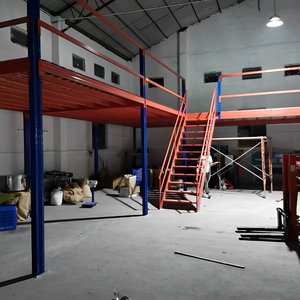
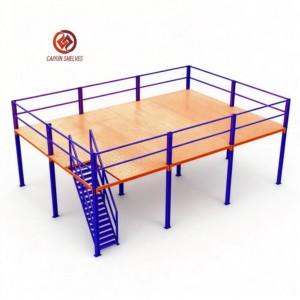
| Heavy Duty Mezzanine Floor | 300 kg – 1,500 kg / m² | 100% Floor Access (Manual / Cart) | Doubles / Triples Clear Height | E-commerce Picking, Spare Parts, Assembly Lofts |
| Drive-In / Drive-Through | 800 kg – 1,500 kg | First-In, Last-Out (FILO/FIFO) | 65% – 75% High Density | Bulk Raw Materials, Non-perishable Homogeneous Stock |
| Automated AS/RS High-Bay | 500 kg – 3,000 kg | 100% Fully Automated Crane Run | 85% – 95% Vertical Height Utilization | Lights-Out Warehouses, 24/7 Mega Logistics Hubs |
Intralogistics 2026-2030 Evolution
Product Development Trends & Next-Gen Sourcing Dynamics
How intelligent warehousing, environmental carbon metrics, and collaborative mobile robots (AMRs) are fundamentally altering warehouse racking procurement criteria.
1. Structural Compatibility with Autonomous Mobile Robots (AMRs)
Conventional racking was engineered solely around counterbalance forklifts and narrow-aisle turret trucks. Procurement is now rapidly tilting towards structures with optimized bottom clearance, high-tolerance guide rails, and customized base anchorages capable of hosting collaborative AMRs and automated robotic stackers without operational jamming or sensor blind-spots.
2. Carbon Footprint Auditing & Low-Carbon Structural Steels
Global corporations demand strict Scope 1, 2, and 3 emission audits under ISO 14064 standards. The future of racking manufacturing depends on energy-efficient roll-forming lines powered by renewable sources and the adoption of low-emission scrap-recycled electric arc furnace (EAF) steel coils, enabling wholesale buyers to achieve carbon-neutral facility verifications.
3. Modular Mezzanine Conversion & Flexible Footprint Velocity
As industrial land costs climb across North America and Europe, enterprise warehouses avoid new brick-and-mortar builds by deploying demountable, multi-tier industrial mezzanine platforms. Systems can be converted, expanded upward, or relocated with 100% reusable bolted structural profiles, drastically shrinking capital expenditure depreciation cycles.
Direct Factory OEM / ODM Competency
Why Global Tier-1 Distributors Rely On Our Factory
Eliminating intermediate markups through vertically integrated steel processing, in-house applied mechanics laboratories, and international project execution.
35,000 m² Intelligent Facility
Equipped with fully automated continuous roll-forming lines, automated laser-guided punching machines, and robotic plasma welding cells delivering over 100,000 metric tons of steel storage equipment per annum.
Academic R&D Simulation
Collaborative research classrooms run alongside structural university laboratories perform full-scale destructive bend, buckling, and joint-rigidity testing, providing signed structural design calculations per local building codes.
Certified Compliance Guarantee
Full manufacturing lifecycle audited to ISO 9001 (Quality), ISO 14001 (Environment), ISO 45001 (Occupational Safety), ISO 50001 (Energy Management), and ISO 3834-2 welding quality with certified EN 1090-1 CE marks.
Global Export & Turnkey Supply
Exporting over 90% of structural capacity across 60+ countries worldwide with tailored container bundling, export anti-scratch packaging, detailed 3D installation CAD/BIM models, and site supervisory support.
B2B Sourcing Knowledge Base
Frequently Asked Questions by Industrial Sourcing Teams
Clear, engineering-backed explanations addressing common questions on specifications, customization, seismic compliance, and international shipping.
Q1 Can your factory customize uprights and beam connectors to match existing warehouse systems?
Yes. As an OEM manufacturer, we engineer custom tooling to replicate teardrop styles, slotted angle pitch types (50mm, 75mm, 76.2mm / 3-inch pitch), and specialty connector claw configurations. We supply structural calculation sheets verifying cross-compatibility and load ratings.
Q2 How are seismic zones factored into the structural design of pallet racking?
Our engineering division calculates baseplate footprints, dynamic anchor bolt counts, cross-aisle bracing patterns, and heavy-duty frame column gauges in compliance with local structural seismic guidelines (such as US IBC/RMI ANSI MH16.1 or Eurocode 8), accounting for regional ground acceleration parameters.
Q3 What are the standard lead times for high-volume 40ft HQ container orders?
Standard automated roll-forming and epoxy finishing for full container load (FCL) orders typically ranges from 20 to 30 working days from drawing sign-off. High-volume continuous production agreements support rolling shipments with staged batching for multi-acre distribution centers.
Q4 What anti-corrosion finishes are supplied for sub-zero freezer and outdoor yards?
For standard temperature facilities, we utilize electrostatic epoxy-polyester powder coating (60–90μm). For sub-zero cold rooms (-25°C) or outdoor/chemical settings, we supply hot-dip galvanized steel components conforming to ISO 1461, ensuring decades of rust-free service without peeling.
Q5 How does your manufacturing center maintain manufacturing tolerances for AS/RS projects?
Automated stacker cranes and radio shuttles demand millimeter-level tolerances. We enforce cold roll-forming tolerances within ±0.5mm across frame heights and laser-guided punching alignments to eliminate racking sway and mechanical binding during dynamic retrieval cycles.
Q6 What certifications and testing documents are delivered with wholesale shipments?
Every commercial wholesale delivery includes Mill Test Certificates (EN 10204 Type 3.1), mechanical yield strength reports, third-party salt-spray corrosion tests, powder coating adhesion cross-cut reports, and full container loading inspection protocols with packing manifests.
Accelerate Your Intralogistics Efficiency With Direct Factory Pricing
Whether you require standard selective pallet racks, multi-tier industrial mezzanine platforms, or high-density automated shuttle architectures, our senior structural engineers are standing by to prepare detailed 2D/3D CAD layouts and comprehensive cost calculations.