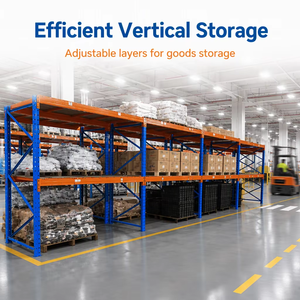
+60
Global Export Markets
+42,000
Projects Installed Worldwide
+100,000t
Annual Steel Output (Metric Tons)
+90%
International Export Ratio
Engineered Portfolio
High-Performance Industrial Racking Systems
Manufactured using certified structural Q235B/Q355B steel, laser-punched continuous profiles, and automated multi-stage robotic welding lines.
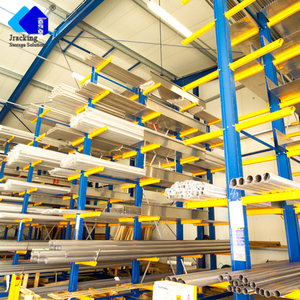
Jracking Q235B Steel Heavy-Duty Cantilever Rack for Long Profiles & Automotive
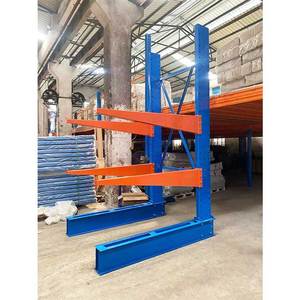
Industrial Structural Hanging Cantilever Racking System for Bulky Goods
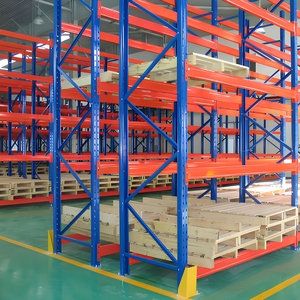
High-Density Double Deep Pallet Racking Reach-Truck Space Saver System
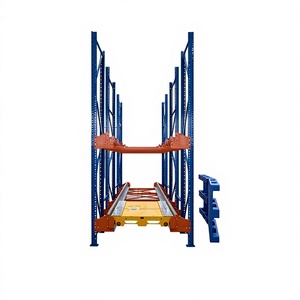
Heavy-Duty Multi-Level Warehouse Radio Shuttle Automated Storage Racking
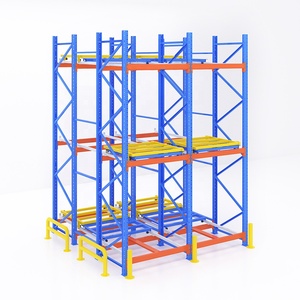
Dynamic Gravity Pallet Live Flow Rack & Push-Back High Density Storage
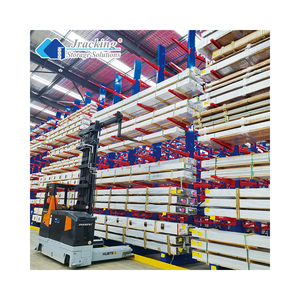
High-Capacity Heavy-Duty Warehouse Long Arm Cantilever Racking for Timber
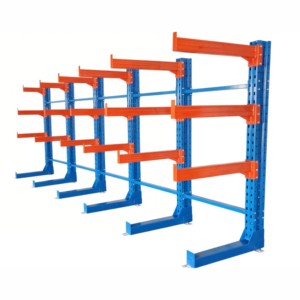
CE Certified Anti-Rust Outdoor/Indoor Corrosion Resistant Cantilever Shelving
Enterprise Manufacturing Competence
Direct OEM/ODM Fabrication Backed by Applied R&D and Traceability 4.0
In high-density intralogistics, a structural failure represents not only catastrophic product loss but severe life-safety liabilities. As custom OEM storage racking manufacturers and global exporters operating over 35,000 m² of modern robotic manufacturing facilities, our engineering framework moves beyond generic catalogue designs to application-specific finite element modeling.
Every column profile, box beam, base plate, and cantilever arm is fabricated under certified ISO 9001, ISO 14001, and EN 1090-1 factory production control regimes. Through applied collaboration with the AR Lab (Mondragon University) and our Research & Simulation Classroom (Bilbao School of Engineering), our systems undergo rigorous physical destructive testing, cyclical load evaluations, and dynamic seismic validation to mirror real-world warehouse conditions in the USA, Canada, Europe, and Latin America.
Our digital infrastructure leverages Traceability 4.0: laser-assisted marking indelibly logs steel heat numbers, roll-forming batches, and automated welding lines across every upright and connector. This provides EPC contractors, system integrators, and third-party logistics (3PL) conglomerates complete verifiable transparency for tier-1 compliance and preventive maintenance audits.
Structural Integrity & Cold Steels
Fabricated exclusively from high-yield structural steel grades Q235B and Q355B (equivalent to ASTM A36 and A572 Gr 50). Custom low-temperature metallurgy options withstand persistent deep-freeze environments down to -24°C (-11°F) without ductile-to-brittle embrittlement.
AS/RS Precision Tolerances
Stacker cranes, autonomous mobile robots (AMRs), and four-way shuttle carriers demand sub-millimeter manufacturing tolerances. Our fully automated roll-forming and laser-slotted punch lines enforce strict perpendicularity and minimal deflection limits under continuous dynamic cycles.
Seismic Compliance & Certifications
Every OEM/ODM solution is custom engineered to regional building requirements—including US RMI (Rack Manufacturers Institute) specifications, IBC codes, and European EN 15512/EN 15620 guidelines. Backed by an industry-leading 5-year quality warranty.
Engineering Matrix
Storage System Technical Specification Guide
Shortlist optimal structural configurations according to throughput dynamics, floor space utilization, and equipment compatibilities.
| Racking Architecture | Pallet Accessibility | Volumetric Density | Inventory Logic | Material Handling Unit | Standard Lead Time |
|---|---|---|---|---|---|
| Selective Pallet Racking | 100% Immediate | Standard (Baseline) | FIFO / LIFO | Counterbalance, Reach Truck | 3–4 Weeks |
| Double Deep Racking | 50% Direct Access | Medium-High (+30%) | FILO / LIFO | Deep-Reach Pantograph Truck | 4–5 Weeks |
| Multi-Level Radio Shuttle | By Channel / Lane | Extremely High (+75%) | FIFO / LIFO Flexible | Automated Radio Shuttle + Forklift | 5–6 Weeks |
| Push-Back Cart Racking | By Lane (2–6 Deep) | High Density (+50%) | LIFO | Standard Counterbalance Truck | 4–5 Weeks |
| Heavy-Duty Cantilever | 100% Unobstructed Front | Variable / Bulky Profile | Universal | Side Loader, Multi-Directional Truck | 3–5 Weeks |
| Pallet Live Flow (Gravity) | Dedicated In/Out Faces | High Density (+60%) | Strict FIFO | Brake Rollers, Speed Controllers | 5–6 Weeks |
Industry Whitepaper
Future Procurement Trends in Industrial Storage Racking
Strategic technological, geopolitical, and ecological shifts impacting global warehousing investments through 2030.
1. High-Bay Rack-Supported Enclosures (Clad-Rack)
Escalating industrial land costs and construction timelines have driven massive adoption of rack-supported buildings. By utilizing the steel racking uprights as the primary load-bearing structural framework for wall cladding and roof panels, enterprises reduce civil construction CAPEX by up to 25% while maximizing cubic height beyond 40 meters.
2. Hybrid Automation & AMR-Compliant Geometries
Modern distribution hubs are phasing out pure manual pallet storage in favor of hybrid zones integrating autonomous mobile robots (AMRs), automated guided vehicles (AGVs), and automated layer pickers. Future procurement mandates racking with high beam-level tolerances, precise sensor retrofits, and zero floor anchor deflection.
3. Decarbonized Steel & Scope 3 Traceability
Global supply chain tenders increasingly evaluate cradle-to-gate carbon metrics. Driven by ISO 14064 greenhouse gas reporting and ISO 50001 energy standards, Tier-1 OEM manufacturers utilizing green electric-arc-furnace (EAF) steel and zero-solvent electrostatic powder coating hold substantial compliance advantages in North American and European imports.
Procurement Knowledge Base
Frequently Asked Technical Questions
Comprehensive engineering guidance for warehouse developers, EPC procurement teams, and supply chain executives.
What are the key technical parameters required for custom OEM pallet racking design?
+
To generate verified structural static calculations and CAD layouts, we require: (1) Pallet footprint dimensions including overhang (Width × Depth × Height) and gross unit weight (typically up to 1,500 kg / 3,300 lbs); (2) Clear warehouse internal height to obstructions, column grids, and floor levelness (per DIN 18202 or ASTM E1155 F-numbers); (3) Forklift model, maximum lift mast height, and minimum turning radius (Aisle Width Ast); (4) Local seismic acceleration parameters (Ss, S1, Site Class per IBC/ASCE 7 or Eurocode 8); and (5) Environmental operating temperatures (ambient versus cold store / freezer down to -24°C).
How do you guarantee rack safety and structural resistance in high-risk seismic zones?
+
Every seismic racking solution undergoes customized dynamic finite-element response spectrum analysis. We calculate ductility factors, beam-to-column connector moment rotational stiffness, and anchor bolt base shear resistance in direct accordance with ANSI MH16.1 (RMI) or EN 16681 standards. Uprights feature enlarged base plates, heavy-duty floor anchor embedments, and engineered horizontal and vertical diagonal back-bracing systems to absorb lateral ground acceleration safely without structural collapse.
What is the structural difference between Cold-Rolled and Hot-Rolled Cantilever Racking?
+
Cold-rolled cantilever racks are fabricated from roll-formed sheet steel (Q235B), making them cost-effective for light to medium-heavy duty profiles (up to 800 kg per arm). Hot-rolled cantilever racks utilize structural I-beams (IPE or HEA structural profiles), providing immense torsional rigidity and load capacities exceeding 2,000 kg per arm. Hot-rolled systems offer superior impact durability in punishing outdoor lumber, structural piping, and automotive recycling yards subject to heavy forklift collisions.
How does your OEM/ODM manufacturing facility control protective coating quality and corrosion resistance?
+
Our manufacturing center utilizes automated continuous multi-stage pre-treatment tunnels—including degreasing, iron phosphating, and demineralized rinsing—followed by automated electrostatic powder coating cured at 200°C (minimum dry film thickness of 60–80 microns). For extreme indoor cold rooms, humid coastal environments, or external installations, we provide hot-dip galvanization conforming to ISO 1461, ensuring lasting anti-corrosion protection over decades of aggressive operation.
What quality assurances, warranties, and export documentation accompany ocean freight orders?
+
Every overseas container shipment is protected with high-strength steel strapping, heavy-gauge poly-wrap, and engineered timber blocking to prevent transport deformation. Orders include full Mill Test Certificates (EN 10204 Type 3.1), structural loading certificates, third-party welding compliance (ISO 3834-2 / EN 1090-1 CE), verified assembly drawings, load rating warning signage, and an enterprise 5-year structural quality warranty.
Accelerate Your Warehouse Capacity with Verified OEM Racking Engineering
Consult with our structural engineering team today. Send load profiles, architectural floorplans, or RFP specifications to receive an engineered layout review, capacity calculation, and FOB/CIF quotation.