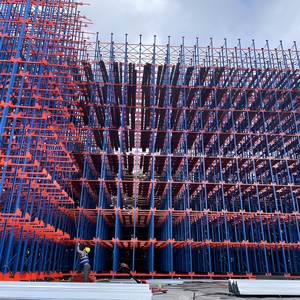
+100,000t
Annual Steel Processing Capacity
42,000+
Global Turnkey Projects Deployed
35,000m²
Automated Production Footprint
90%
Export Deployment to Tier-1 Logistics Hubs
Manufactured Product Lineup
High-Density Storage & Heavy-Duty Structural Systems
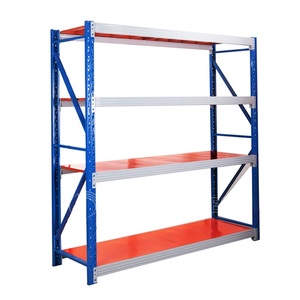
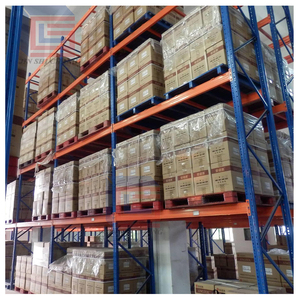
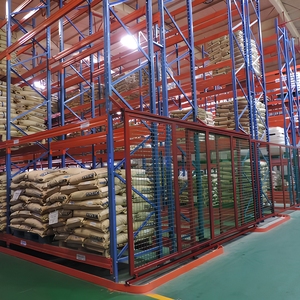
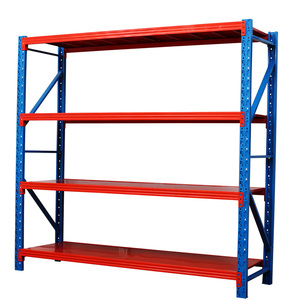
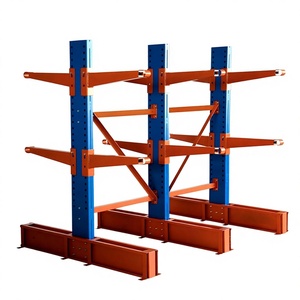
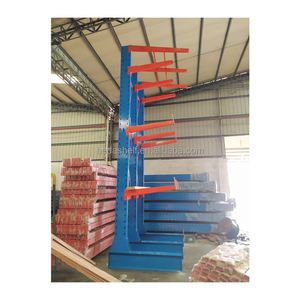
Precision-formed cold-rolled steel solutions designed under ISO 9001 and EN 1090-1 execution standards for distribution centers, manufacturing nodes, and cold storage facilities.
Technical Whitepaper & Specification Directive
Engineering Evaluation: Cold-Rolled Structural Racking Systems
Modern intralogistics supply chains operate within tight operating margins where storage infrastructure performance dictates total order turnaround latency and worker safety. Pallet racking procurement has evolved beyond standard commodity steel purchasing into complex civil and structural engineering integration. In automated distribution facilities and high-bay distribution hubs, rack frames serve as structural components capable of withstanding dynamic live load cycles, wind shear forces (in rack-supported clad buildings), and seismic accelerations conforming to RMI (Rack Manufacturers Institute) and EN 15512 calculation standards.
Our OEM manufacturing lines employ premium structural steels, primarily S355 and Q355B structural grades, calibrated for yield strength and fracture toughness under cold storage environments down to -24°C (-11°F). The micro-alloyed metallurgical composition prevents brittle transition failures commonly experienced in lower-tier commercial steels under severe cyclic operational stress.
Upright frame configurations rely on optimized roll-formed omega profiles featuring multi-bend geometry. These multi-stage longitudinal ribs increase the section modulus, mitigating torsional buckling and localized column squashing under asymmetric pallet placement. Beams utilize heavy-gauge continuous automated seam-welded connectors configured with interlocking 3-to-5 connector pins that establish high semi-rigid joint moment-connection values, directly improving systemic horizontal drift resistance across tall building eaves.
Surface finishing incorporates automated pre-treatment baths featuring zinc-iron phosphating, followed by electrostatic powder deposition cured at 200°C. This treatment guarantees superior adhesion, edge protection over sheared punching zones, and corrosion resistance exceeding 500 hours under ASTM B117 salt spray testing.
"Structural engineering precision in pallet racking manufacturing must operate within millimeter tolerances. When interfacing high-throughput automated shuttles or turret trucks, a structural deflection variance of merely 1.5mm across beam levels can interrupt laser sensor positioning, prompting automated safety halts and costly facility downtime."
| Structural Parameter | Selective Heavy-Duty System | VNA (Very Narrow Aisle) System | AS/RS & Shuttle-Supported Matrix |
|---|---|---|---|
| Primary Steel Grade | Certified S355JR / Q355B Hot-Rolled Strip | S355MC High-Yield Cold-Formed Strip | Custom Calibrated S420MH High-Elasticity Alloy |
| Max Column Load (Bay Load) | Up to 24,000 kg (52,900 lbs) | Up to 32,000 kg (70,500 lbs) | Exceeding 45,000 kg Engineered Limit |
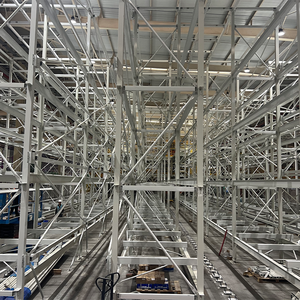
| Beam Deflection Limit | 1/200th of Clear Span (L/200) | Strict 1/300th to 1/400th Span Ratio | Tight Integrator Limit: 1/500th Span (L/500) |
| Vertical Plumbness Tolerance | 1:500 Structural Standard | 1:750 Laser Alignment Criteria | Millimeter-Level Tolerances (EN 519-2 Class 100) |
| Finish Coating Profile | Electrostatic Epoxy-Polyester (60-80µm) | Impact-Modified Powder Coat (80-100µm) | Continuous Hot-Dip Galvanizing or Clean-Room Coat |
Market Intelligence
Future Sourcing & Industrial Engineering Evolution
Strategic analysis of shifting procurement practices, regulatory safety paradigms, and physical automation integration driving warehouse asset lifecycles over the next decade.
Convergence with Mobile Robotics (AMR/AGV)
Traditional static racking layouts are transforming into automated ground-level staging nodes. Warehouses are deploying hybrid layouts with selective upper bays supported by autonomous guided vehicles operating on ground corridors. This requires structural base-plate modifications, higher floor anchors, and integrated guide-wire channels to handle high-frequency robotic transit vibration.
Seismic Engineering & Clad Warehouses
Escalating industrial land costs globally favor vertical density above 30 meters. Procurement projects are pivoting toward rack-supported buildings (clad-rack structures), where the racking framework directly supports roof trusses and exterior wall envelope panels. This design eliminates traditional concrete frame construction time while accommodating strict site-specific seismic accelerations.
Traceability 4.0 & Decarbonization Mandates
Enterprise procurement divisions now require Environmental Product Declarations (EPD) and verified carbon footprints under ISO 14064. Upright channels and beams feature laser-etched matrix coding providing complete batch metallurgy traceability, coil provenance, and yield stress metrics, simplifying annual safety audits and secondary structural recertifications.
Direct Factory Foundation
Enterprise Reliability & Manufacturing Rigor
Drawing on an industrial legacy encompassing over 42,000 successfully commissioned projects in 60+ countries, our manufacturing base operates as a reliable single-source OEM/ODM partner for major warehouse operators, integrators, and distributors.
Certified Production Facility
Our 35,000 m² state-of-the-art facility operates automated roll-forming lines, laser punching centers, and robotic welding cells operating under ISO 9001, ISO 14001, ISO 45001, and ISO 50001 international certifications.
Academic Structural Testing
R&D is driven by continuous testing labs run in partnership with Mondragon University and dedicated Research Classrooms at the University of the Basque Country, validating component performance via finite-element simulation.
Comprehensive 5-Year Warranty
All delivered components carry a 5-year structural quality warranty. We ensure strict compliance with North American building codes (AISC/RMI), European standards (EN 15512/EN 1090-1), and local seismic criteria.
Buyer Advisory
Procurement Questions & Technical Clarifications
Authoritative answers covering engineering considerations, load capacity configurations, seismic site calculations, and OEM fabrication turnaround metrics.
What technical parameters are required to calculate structural capacity for an OEM pallet rack quote?
To provide precise structural calculations, we review the exact clear warehouse floor dimensions and clear eave height; slab loading capacity (slab thickness, rebar grade, compressive strength f'c); pallet specifications including width, depth, overall height, and uniform load weight (standard 48"×40" GMA, 1200×800 Euro, or custom platforms); forklift handling parameters (aisle width clearances, mast staging heights, reach capabilities); and facility-specific geographic seismic accelerations and design categories (Ss, S1).
How do roll-formed pallet racks compare against structural channel steel systems?
Roll-formed racking uses high-tensile cold-rolled steel coils, delivering high strength-to-weight performance, cost efficiency, and flexibility via boltless adjustable connection teardrop/slot patterns on 50mm or 75mm pitches. Structural steel racking uses hot-rolled structural steel channels (C-channels) assembled with heavy-gauge bolts. Structural channel systems provide higher impact resistance in high-turnover logistics environments with heavy reach-truck impact zones, but require higher steel weight, higher material investment, and longer assembly timeframes.
Can your production lines manufacture custom upright profiles and proprietary hole punch geometries?
Yes. Operating specialized OEM and ODM lines, our roll-forming stations feature quick-change automated tooling dies capable of producing North American teardrop profiles, European diamond punch systems, standard hook connectors, and custom proprietary geometries. We supply private-label wholesalers, system integrators, and industrial regional distributors with tailored steel gauges, column depths (80mm to 140mm profile width), and customized powder-coat color schemes.
What quality and welding certifications validate your factory floor?
Our manufacturing plants operate under certified ISO 9001 quality management, ISO 14001 environmental management, ISO 45001 workplace safety, and ISO 50001 energy systems. For metallic fusion and structural integrity, we maintain ISO 3834-2 comprehensive welding quality credentials and EN 1090-1 execution for CE-marked structural components. Materials undergo regular laboratory Charpy V-notch impact tests, coupon tensile testing, and automated non-destructive weld integrity verification.
What are standard lead times and export logistics arrangements for international procurement?
Standard volume orders typically average 3 to 5 weeks for manufacturing execution, subject to total bay volume and custom tooling requirements. All shipments are packaged for ocean freight: uprights are packed with steel strapping and structural timber dunnage to avoid friction and corrosion; beams are bundled with composite edge protectors. Complete export documentation covers Bills of Lading, mill test certificates (MTRs), fumigation credentials, and certified load-bearing performance sheets.