Precision-Engineered Heavy Duty Pallet Shelving Systems
Manufactured on robotic roll-forming lines with traceable structural steel. Explore our flagship certified warehouse racking systems below or connect with our engineering team for customized load diagrams.
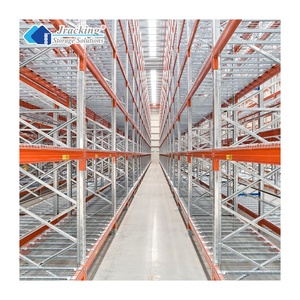
Jracking Industrial Warehouse Adjustable Pallet Racks CE AU Standard
- Standard: AS4084 / CE Certified
- Pitch Adjustment: 50mm / 75mm / 76.2mm
- Unit Load Limit: 1,000 – 4,500 kg / level
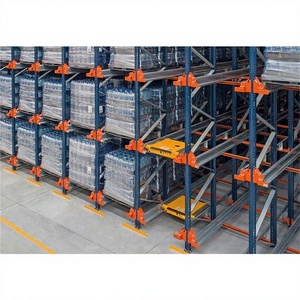
Heda Four-Way Radio Shuttle Intelligent Pallet Rack ASRS System
- Automation: Four-Way Shuttle / PLC
- Lane Depth: Up to 40+ Pallet Positions
- Space Efficiency: +80% Storage Density
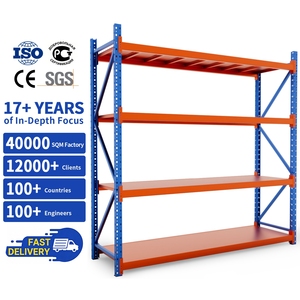
Custom 4-Layer Adjustable Industrial Heavy Duty Selective Racking
- Finish: Epoxy Powder Coating (80-120μm)
- Steel Grade: Q235B / Q355B Cold Rolled
- Accessibility: 100% Direct Selective Access
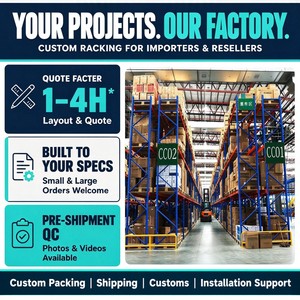
Warehouse Selective Pallet Shelving Heavy Duty Storage Design
- Beam Section: Box Beam / Step Beam
- Safety Factor: 1.5 – 1.65 Structural Margin
- Pallet Fit: GMA 48x40, Euro 1200x800
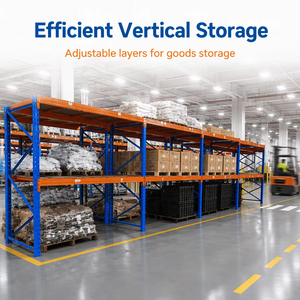
OEM ODM Adjustable Industrial Warehouse Heavy Duty Selective Racks
- Customization: Color, Dimension, Profile OEM
- Upright Profile: Omega / Teardrop / Diamond
- Connector: 3 / 4 / 5-Claw Mechanical Lock
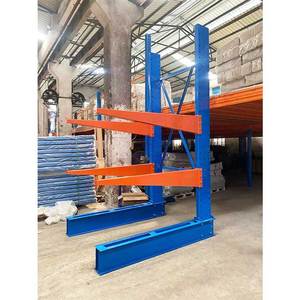
Heavy Duty Industrial Cantilever Shelving for Long Bulky Storage
- Application: Timber, Pipes, Coils, Bar Stock
- Arm Capacity: 500 – 1,800 kg per Arm
- Design: Single / Double Sided Columns
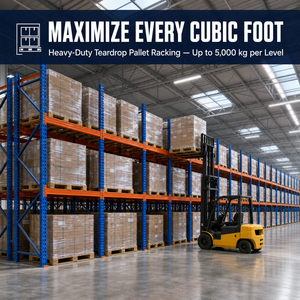
Large Scale E-Commerce Warehouse Pallet Racking High Load System
- Building Clear: Optimized up to 24+ Meters
- Aisle Width: VNA / Standard Reach Truck
- Throughput: High-Frequency Pallet Cycling
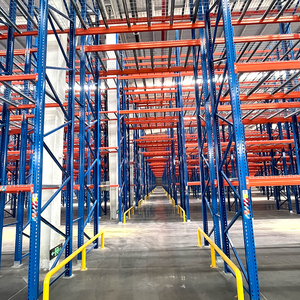
Jracking Heavy Duty EURO Standard Steel Pallet Racking CE Certified
- Standard: FEM 10.2.02 / EN 15512 Code
- Safety System: Auto Safety Pins & Base Plates
- Environment: Dry Warehouse & -30°C Cold Room
Engineering Standards, Metallurgy & Global Sourcing Economics
Understanding the balance between Chinese structural manufacturing agility and rigorous international structural compliance (RMI MH16.1, EN 15512, AS 4084).
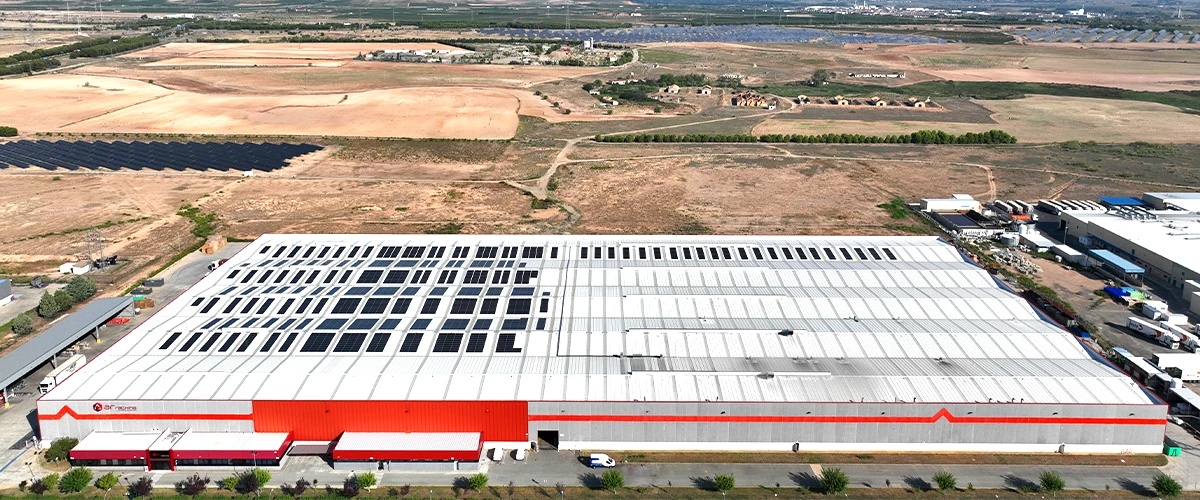
The Shift Toward Direct Tier-1 Racking Manufacturers
For international supply chain executives, 3PL logistics directors, and general contractors, sourcing industrial pallet racking directly from premier Chinese manufacturers has transitioned from a pure cost-reduction measure to a strategic capability advantage. With China producing over 55% of global high-grade structural steel, top-tier domestic manufacturers leverage raw material integration, automated continuous roll-forming lines, and in-line robotic welding to provide load capacities that conform rigidly to Western engineering mandates.
Unlike regional distributors who repackage standardized profiles with steep margin markups, our manufacturing engineering directly calculates the specific moments, Euler buckling limits, and second moments of area for every custom bay profile. We employ Q235B and high-yield Q355B structural steel (equivalent to ASTM A36 and S355JR), ensuring the yield strength of upright columns exceeds 355 N/mm².
- Calculated Deflection Integrity: All horizontal beams are engineered to maintain a deflection limit below L/200 under maximum uniformly distributed load (UDL).
- Certified Traceability 4.0: Every upright frame and beam carries permanent laser-etched heat numbers traceable back to certified mill test reports (EN 10204 3.1).
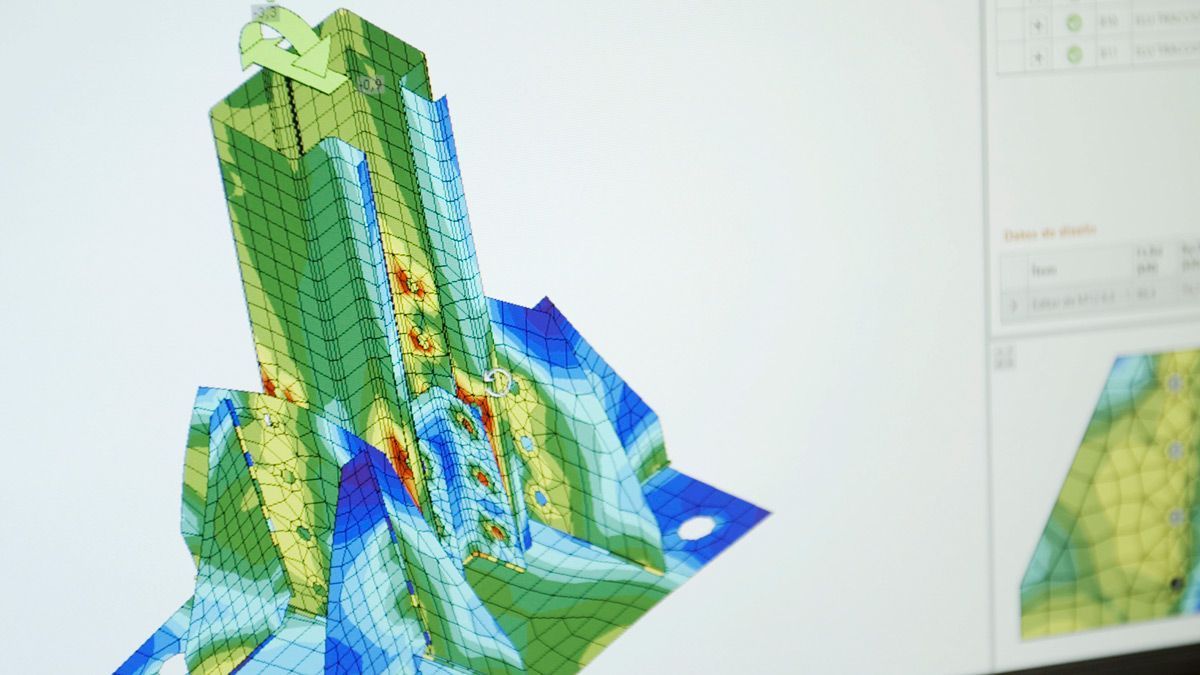
Advanced R&D Testing Lab & Finite Element Simulation
Static storage safety is non-negotiable. Our engineering center operates in joint structural research partnership with university testing labs (such as Mondragon University and the Basque Country University Engineering School), evaluating stub column crushing strength, beam-end connector lozenging stiffness, and baseplate floor anchor shear resistance.
Through nonlinear Finite Element Analysis (FEA), our structural engineers simulate multi-variable load profiles including seismic ground acceleration (PGA up to 0.4g), forklift impact moments at lower leg sections, and extreme temperature cycling. This rigorous validation enables our high-bay automated warehouse structures to maintain millimeter-accurate rail alignments for stacker cranes and 4-way shuttles.
- Physical Test Bench Validation: Upright section cyclic loading and torsional tests performed to FEM 10.2.02 and ANSI MH16.1 specifications.
- Seismic Tieback Optimization: Customized portal ties, top-tie bracing, and seismic base isolators customized to local building codes (IBC/Eurocode 8).
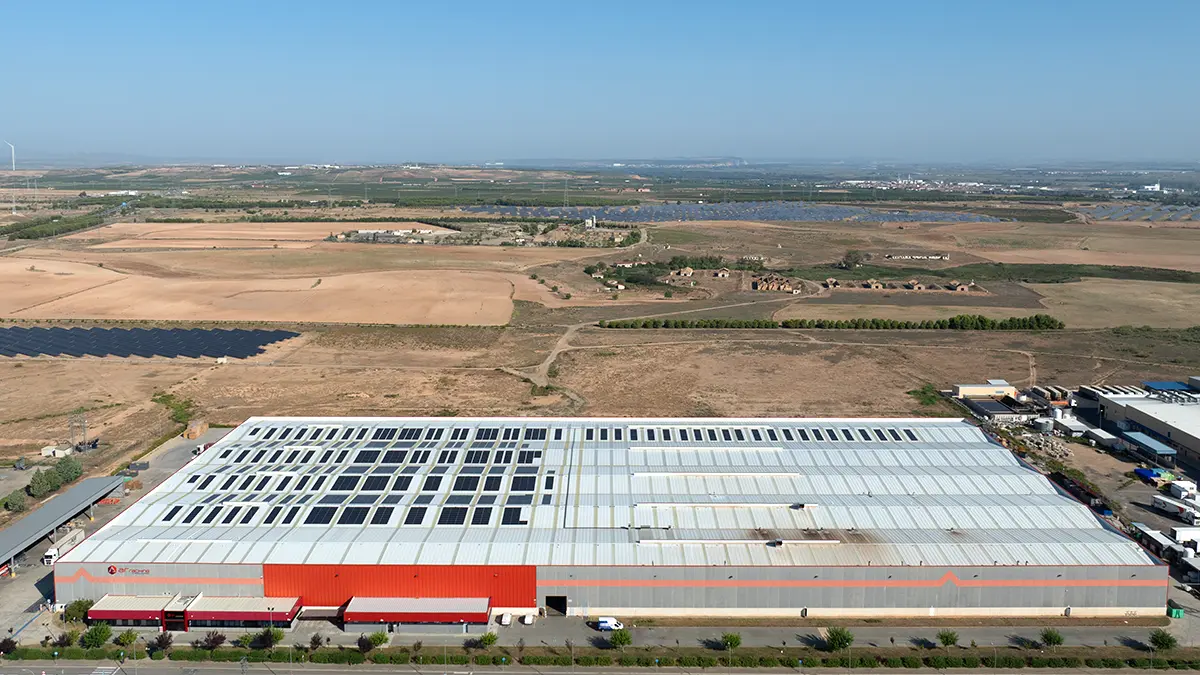
Robotic Production Precision: Uprights, Beams & Surface Treatment
Structural reliability in high-bay pallet racking hinges upon hole-pitch consistency and uncompromised seam welding. In our automated production facilities, roll-forming lines feature continuous in-line servo hydraulic punching, maintaining column hole-pitch tolerances within ±0.2mm over an 18-meter continuous single-piece upright section.
Beams utilize dual-C interlocking interlocking box profiles or heavy step-beam profiles, automatically welded using 6-axis ABB robotic laser-guided welding arms. To combat industrial warehouse humidity and harsh cold-chain condensation, all components undergo an 8-stage automatic surface pre-treatment (including hot-alkali degreasing, nano-ceramic zirconium conversion, and deionized rinses), followed by electrostatic thermoset epoxy polyester powder coating cured at 200°C for superior abrasion resistance.
- ISO 3834-2 Certified Robotic Welds: Complete penetration welding on beam end connector claws, eliminating structural fatigue under dynamic loading.
- Corrosion Resistance Standards: 500+ hours neutral salt spray testing (ASTM B117) with hot-dip galvanized (HDG) options achieving 80μm+ zinc thickness for sub-zero freezers.
Comparative Technical Specifications by System Topology
A side-by-side engineering evaluation of density, direct selectivity, equipment compatibility, and structural cost efficiency for enterprise logistics facilities.
| Racking Topology | Direct Selectivity | Floor Space Utilization | Inventory Rotation | Handling Equipment | Primary Industrial Use Case |
|---|---|---|---|---|---|
| Standard Selective Rack | 100% (Instant) | 35% – 45% | FIFO / LIFO Flexible | Counterbalance / Reach Truck | High SKU variety, 3PL general warehouses, fast turn FMCG |
| Very Narrow Aisle (VNA) | 100% (Instant) | 55% – 65% | FIFO / LIFO Flexible | Turret Truck / Man-Up Aisle Stacker | High-bay facilities (up to 18m), pharmaceuticals, e-commerce |
| Double Deep Racking | 50% Direct | 50% – 60% | LIFO Priority | Pantograph Double-Reach Truck | Medium SKU counts, manufacturing raw materials, buffer zones |
| Drive-In / Drive-Through | Per Lane Only | 65% – 75% | LIFO (Drive-In) / FIFO | Standard Counterbalance Forklift | Cold storage, beverage batch distribution, low SKU volume |
| Pallet Flow (Gravity Roller) | 100% Lane Front | 70% – 80% | Strict FIFO (Gravity Incline) | Standard Reach / Counterbalance | Perishable food, pharmaceuticals, expiration date-critical items |
| Push-Back (Cart / Roller) | Per Lane Front | 60% – 70% | LIFO (2-6 Pallets Deep) | Standard Forklift | Mid-density cold rooms, staging docks, cross-docking hubs |
| 4-Way Radio Shuttle ASRS | Automatic Lane Call | 80% – 90% | Programmable FIFO / LIFO | Automated Shuttle + Vertical Lift | High-density cold stores (-25°C), dark warehouses, omnichannel fulfillment |
| Clad-Rack High-Bay (AS/RS) | Automated Stacker Crane | 90% – 95% | WMS Managed Fully Auto | Continuous High-Speed Crane Rails | Mega distribution centers (up to 45m height), land-constrained sites |
Future Procurement & Technological Trends in Pallet Racking
Key technological breakthroughs and supply-chain shifts driving modern warehouse storage infrastructure over the next decade.
1. Convergence of Static Racks with AMR & Robotic Automation
Modern distribution centers are rapidly phasing out pure manual forklift operation in favor of Autonomous Mobile Robots (AMRs) and automated shuttle carriers. Next-generation pallet racking requires tighter mill tolerances (±1.0mm upright verticality), reinforced bottom guide channels, and integrated laser reflector mounts to facilitate sub-second robotic docking without mechanical jamming.
2. High-Strength Ultra-Thin Structural Steels (High-Yield Micro-alloys)
Procurement teams are prioritizing high-strength micro-alloyed steels (such as Q355B and Q460B) over conventional bulky mild steels. By utilizing advanced cold roll-forming with longitudinal stiffening ribs on upright flanges, racking structures reduce total steel weight by 12–18% while enhancing load capacity, significantly reducing shipping container freight charges per pallet position.
3. Digital Twin Modeling & Embedded Structural Health Monitoring (SHM)
Enterprise operators are mandating IoT sensor integration within structural storage frames. Embedded strain gauges, vibration sensors, and tiltmeters deployed on lower upright columns transmit live data to cloud platforms, alerting facility managers of dangerous beam deflections, baseplate displacement, or post-collision structural fatigue in real time.
4. Low-Carbon Green Steel & Scope 3 Footprint Certification
Global corporations (such as Amazon, Nestlé, and Inditex) now require documented Life Cycle Assessments (LCA) and ISO 14064 verified carbon footprints for imported steel infrastructure. Sourcing from Chinese manufacturers utilizing electric arc furnaces (EAF) and closed-loop water treatment yields substantial Scope 3 greenhouse gas reductions in supply chain audits.
5. Clad-Rack (Rack-Supported Buildings) over Conventional Builds
Skyrocketing industrial land costs have accelerated the shift toward rack-supported clad buildings, where the steel racking itself forms the primary structural framework supporting the roof and exterior insulated sandwich panels. This construction methodology eliminates separate building structural columns, cuts civil lead times by up to 35%, and achieves clear heights up to 45 meters.
6. TCO Procurement Models vs. Fragmented Bidding
Forward-thinking supply chain buyers are moving away from piecemeal spot purchases toward complete turnkey EPC storage contracts (Engineering, Procurement, and Construction). Engaging a single accountable manufacturer for design calculation, automated fabrication, freight containerization, and site commissioning guarantees structural alignment and eliminates contractor finger-pointing.
Internationally Certified Quality, Welding & Environmental Systems
Our manufacturing operations hold full third-party certifications across structural steel fabrication, structural welding, environmental controls, and workplace safety.
ISO 9001
Quality Management
ISO 14001
Environmental Control
ISO 45001
Health & Safety
ISO 50001
Energy Management
ISO 3834-2
Welding Quality
EN 1090-1
CE Structural Steel
ISO 14064
Carbon Footprint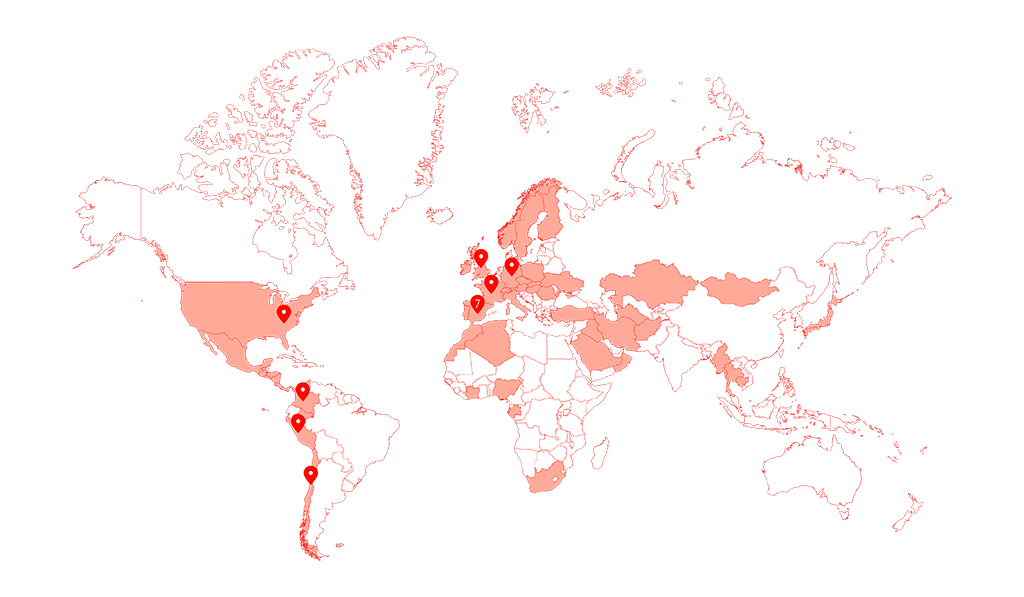
Worldwide Project Delivery & Localized Engineering Coordination
With an export footprint spanning North America, Europe, Australia, Latin America, and Southeast Asia, our project managers coordinate smoothly with your local Engineer of Record (EOR). Every structural calculation report includes comprehensive seismic modeling in adherence to IBC 2024, NFPA 13 in-rack fire sprinkler clearances, and regional slab load-bearing capacities.
We maintain 14 international sales branches and over 70 authorized distribution and installation partners across the globe, providing on-site supervision, mechanical assembly, laser-guided verticality checks, and mandatory periodic safety audits backed by our standard 5-Year Structural Quality Warranty.







Frequently Asked Industrial Sourcing Questions
Authoritative technical guidance compiled by our structural engineering and international shipping logistics department.
Get Catalog1. How does Chinese high-yield steel (Q235B vs. Q355B) compare to ASTM or European structural steel standards?
2. What specific deflection criteria are used to prevent beam sagging under continuous full load?
3. How do you engineer pallet racks for seismic zones (e.g., California, Chile, Japan, New Zealand)?
4. How are pallet racks packaged to prevent transit abrasion and ocean container corrosion?
5. Can your pallet racking structures operate reliably in -30°C cold storage and blast freezers?
6. What is the typical production lead time and container stuffing capacity for a 10,000-pallet position project?
Ready to Optimize Your Industrial Storage Layout?
Submit your warehouse CAD architectural drawing, pallet specifications, and target handling throughput. Our technical engineering division will generate a comprehensive structural proposal, including 3D bay loading diagrams, seismic calculation reports, and factory-direct pricing within 24 hours.
- Custom CAD Layout Drawings
- RMI / EN 15512 Calculation Sheets
- Factory-Direct Wholesale Pricing
- Global Installation Supervision