Engineered Heavy-Duty Industrial Racking & Storage Systems
Explore precision-fabricated structural pallet racks, heavy-duty cantilever systems, and modular industrial shelving. Designed in strict compliance with FEM, RMI, and AS 4084 standards for high-throughput global logistics centers.
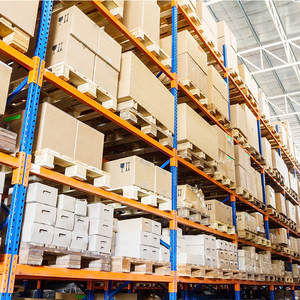
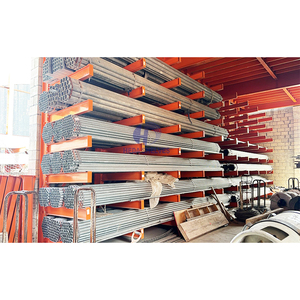
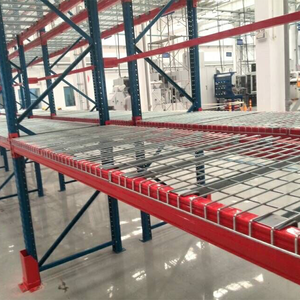
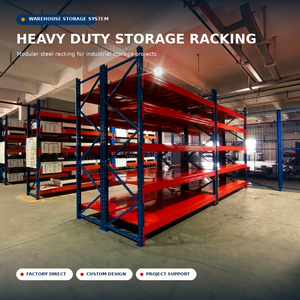
Inside China's Tier-1 Industrial Racking Manufacturing Infrastructure
Why leading multinational 3PL operators, retail conglomerates, and automation integrators source structural steel racking systems directly from China's premier certified factories.
Advanced Roll-Forming Lines & Automated Fabrication
A benchmark industrial racking factory in China operates across more than 35,000 m² (over 376,000 sq. ft.) of specialized production floors, maintaining over 100,000 metric tons of annual steel throughput. Rather than traditional manual pressing, cutting-edge Chinese facilities employ continuous high-speed multi-station cold roll-forming lines.
Continuous CNC roll forming prevents micro-fracturing along the bends of high-tensile steel uprights. Integrated in-line punch presses punch teardrop, diamond, or omega slotted holes at precise millimeter intervals, maintaining vertical cumulative punch pitch tolerances within ±0.5 mm over a 12-meter upright column.
Structural Simulation & University Research Partnerships
Top-tier racking manufacturers separate themselves from generic metal fabricators through applied structural R&D. Leading Chinese facilities operate collaborative research laboratories and simulation centers in conjunction with prestigious engineering institutions, such as Mondragon University and the Bilbao School of Engineering (University of the Basque Country).
Through Finite Element Analysis (FEA) and physical cyclic load testing, engineers simulate complex operational states:
- Non-linear beam-end connector moment-rotation characteristics (semi-rigid joint behavior).
- Second-order structural stability analysis (P-Delta and P-delta global sway evaluations).
- Torsional-flexural buckling behavior of thin-walled cold-formed open sections under live load eccentricities.
This academic-backed engineering rigor ensures that racking layouts submitted to North American, European, and Australasian engineering authorities receive prompt, uncompromised structural sign-off.
Prime Certified Steel Metallurgy
Integrity starts at the blast furnace. Premium Chinese manufacturers partner directly with top-tier state-owned mills like Baosteel and Shougang to source certified Q235B, Q345B, and Q355B structural carbon steel coils.
Unlike secondary mills using scrap-metal billets with volatile carbon equivalents, prime coils feature verified silicon, phosphorus, and sulfur limits, ensuring superior weldability and uniform tensile strength across every production batch.
Automated Robotic Welding Cells
Beam-end connector plates must endure extreme cyclic shear and torsional moments. Advanced factories utilize multi-axis OTC and FANUC robotic welding workcells with certified gas-metal arc welding (GMAW/MIG) technology.
Certified under ISO 3834-2, automated welding ensures complete joint penetration, zero weld spatter, and eliminated undercut defects, avoiding the catastrophic failure risks inherent in manual workshop welds.
Industrial Pre-Treatment & Powder Coating
Corrosion mitigation directly impacts system longevity. Automated finishing lines utilize multi-stage chemical pre-treatment: automated alkaline degreasing, nano-ceramic silane conversion, and double deionized water rinses.
Thermosetting epoxy-polyester electrostatic powder coating is cured in automated continuous convection tunnels at 200°C, producing an abrasion-resistant, impact-absorbing film (60–90 μm thickness) with ASTM B117 salt spray ratings exceeding 500 hours.
Structural Steel Grade Equivalency & Mechanical Performance
Understanding Chinese steel metallurgy standards compared to international building code equivalents for racking design.
| Chinese Standard (GB/T) | US Equivalent (ASTM) | European Standard (EN) | Minimum Yield Strength (ReH / fy) | Tensile Strength (Rm) | Typical Racking Application |
|---|---|---|---|---|---|
| Q235B (GB/T 700) | ASTM A36 / A1011 SS Gr 36 | EN 10025-2 S235JR | ≥ 235 MPa (34 ksi) | 370 – 500 MPa | Standard box beams, horizontal/diagonal frame bracing, wire decking channels |
| Q345B (GB/T 1591) | ASTM A572 Gr 50 | EN 10025-2 S355JR | ≥ 345 MPa (50 ksi) | 470 – 630 MPa | Heavy-duty upright frames, cantilever column masts, drive-in support arms |
| Q355B (GB/T 1591) | ASTM A1018 HSLAS Gr 50 | EN 10025-2 S355J2 | ≥ 355 MPa (51.5 ksi) | 470 – 630 MPa | High-bay AS/RS clad rack uprights, automated shuttle guide rails, seismic baseplates |
| DX51D+Z (Pre-Galvanized) | ASTM A653 CS Type B | EN 10346 DX51D+Z275 | ≥ 240 MPa | 270 – 500 MPa | Cold-storage picking shelves, outdoor roll-formed panels, pallet flow roller frames |
| Q355NH (Weathering Steel) | ASTM A588 Gr A | EN 10025-5 S355J2W | ≥ 355 MPa | 490 – 630 MPa | Outdoor heavy cantilever structures, corrosive marine warehouse perimeters |
Future Procurement Trends in Industrial Racking (2025–2030)
How global supply chain disruptions, industrial land scarcity, and environmental policies are transforming enterprise racking procurement.
1. Direct-to-Factory AS/RS Integration
General contractors and 3PLs are bypassing high-margin regional middlemen to procure structural rack matrices directly from Tier-1 Chinese factories. AS/RS stacker cranes, autonomous mobile robots (AMRs), and four-way shuttles require millimeter-level installation tolerances (often under ±2 mm across a 30m vertical height).
Global buyers now specify integrated digital BIM (Building Information Modeling) exports, pre-machined mounting brackets, and factory-drilled guide rail holes directly on roll-formed profiles before ocean shipment.
2. Green Steel & Scope-3 Carbon Accounting
International environmental regulations—such as the European Carbon Border Adjustment Mechanism (CBAM) and corporate ESG mandates—are turning carbon reporting into a mandatory procurement condition.
Chinese vanguard manufacturers have secured certified ISO 14064 Greenhouse Gas footprint verifications and ISO 50001 energy management systems. They utilize scrap-electric arc furnace (EAF) steel sourcing, solar-powered powder coating cure lines, and zero-effluent pre-treatment chemistry to dramatically cut Scope-3 embodied emissions.
3. Full Engineering Turnkey Partnerships
Procurement teams are consolidating supply chains. Instead of hiring separate structural calculation engineers, profile manufacturers, freight forwarders, and site installation teams, buyers are opting for turnkey contracts directly with Chinese engineering factories.
This includes turnkey stamped structural calculations by licensed local Professional Engineers (PE) in the United States, Australia, or Canada, sea-worthy bundling with custom steel skid packaging, and on-site supervisor dispatch.
Key Architectural Trends Shaping Racking Technology
The mechanical and structural advancements converting static steel warehouses into dynamic, intelligent storage assets.
Dynamic High-Bay Clad-Rack (Rack-Supported) Buildings
Faced with skyrocketing industrial land and construction costs, modern logistics facilities are eliminating conventional steel portal frames. In a rack-supported warehouse, the high-density pallet racking matrix serves as the primary structural frame of the entire building, supporting side-wall sandwich panels, roof purlins, roof membranes, and HVAC installations.
Reaching heights up to 45 meters, these structures drastically reduce civil engineering costs, shorten completion schedules by 30–40%, and achieve the highest volumetric storage efficiency achievable per square meter of footprint.
Low-Temperature Cryogenic Storage for Cold-Chain Expansion
With rapid expansion in temperature-controlled pharmaceutical storage and deep-frozen food logistics, racking structures must withstand temperatures down to -25°C to -30°C (-13°F to -22°F) without exhibiting brittle catastrophic fracture.
Chinese factories engineer these systems using specialized micro-alloyed fine-grain steels with verified Charpy V-notch impact toughness values at sub-zero temperatures. Combined with semi-automated 2D/4D pallet shuttles and mobile power-driven base carriages, clear-span cold storage volume is optimized, cutting refrigeration power loss per pallet position by up to 50%.
Enterprise Advantages: Engineering, Quality, and Global Delivery
Built upon decades of manufacturing mastery, our factory group integrates industrial capability, academic R&D rigor, and flawless international compliance.
5-Year Warranty
All delivered industrial pallet racking systems include a full 5-year structural quality warranty backed by full material tracing and proof-load testing verification.
Automated Output
Over 100,000 tons of annual capacity across continuous cold-forming and robotic welding lines ensures predictable, rapid lead times even during peak raw-material cycles.
Global Engineering Standards
Structural calculations engineered to conform to American RMI MH16.1, European EN 15512 / FEM 10.2.02, and Australian AS 4084-2023 design provisions.
42,000+ Completed Projects
Trusted across 60+ countries by industry leaders such as Amazon, Nestlé, Inditex, Decathlon, Carrefour, Puma, and Iron Mountain.
Comprehensive Global Certifications & Factory Standards
Independent factory quality, structural safety, environmental, and metallurgical management certifications verified by international testing agencies.
 ISO 9001
Quality Management
 ISO 14001
Environmental Control
 ISO 45001
Health & Safety
 ISO 50001
Energy Efficiency
 ISO 3834-2
Welding Mastery
 EN 1090-1
CE Structural Marking
 ISO 14064
Carbon Footprint
Frequently Asked Questions (FAQ) for Global Buyers
Direct technical answers addressing structural calculations, seismic compliance, steel traceability, surface treatments, and containerization logistics.
1. How does the factory engineer racking systems to comply with regional seismic building codes (US ASCE 7/IBC, Eurocode 8, or AS 1170.4)? +
2. What is the difference between cold roll-formed upright sections and structural hot-rolled steel channels? +
3. What deflection limits (stiffness criteria) are enforced for horizontal load beams under live capacity? +
4. When should a warehouse specify hot-dip galvanizing over thermoset electrostatic powder coating? +
5. How does the factory package and bundle steel profiles to prevent in-transit maritime corrosion and physical damage? +
6. What load unit information is required to receive an engineered layout drawing and official quotation? +
Ready to Engineer or Expand Your Next Industrial Storage Facility?
Connect directly with our engineering team for customized layout simulations, seismic structural calculations, or a comprehensive factory-direct product catalog with FOB/CIF container pricing.