High-Performance Pallet Racking & Heavy-Duty Systems
Manufactured from ultra-resilient structural certified cold-formed steels, calculated to EN 15512 standards and verified for rigorous industrial workflows.
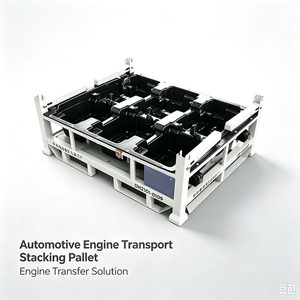
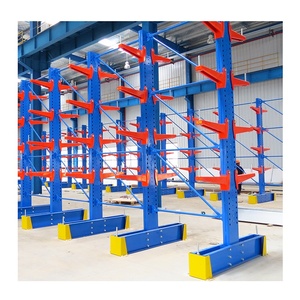
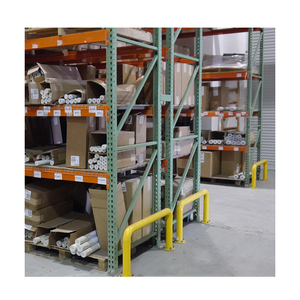
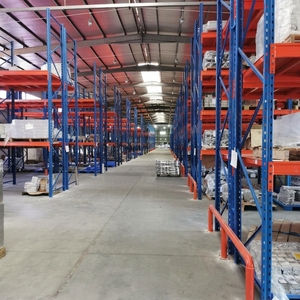
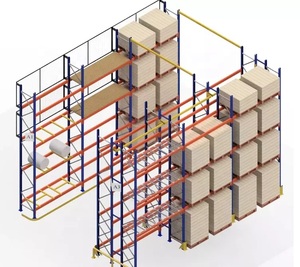
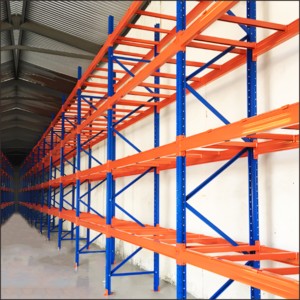
Precision Structural Engineering & Global Compliance Integrity
Industrial pallet racking is not static steel shelving; it is an active structural mechanism bearing hundreds of metric tons of dynamic live loads. Our manufacturing framework guarantees absolute traceability and finite element design fidelity.
Automated Robotic Production & Traceability 4.0
Spanning over 35,000 m² of smart plant infrastructure, our robotic profiling lines feature continuous laser-guided punching and robotic welding cells. Every individual beam and upright column receives an indelible laser barcode marking for end-to-end metallurgical traceability from raw coil casting to field erection.
- High-yield European certified steel coils (S350GD, S420MC)
- Automated electrostatic epoxy-polyester powder polymer coating
- Real-time continuous ultrasonic weld penetration testing
Applied Academic R&D & Mondragon Simulation Lab
Through our dedicated AR Lab at Mondragon University and our Advanced Structural Simulation Classroom at the University of the Basque Country (Bilbao School of Engineering), we conduct full-scale physical destruction testing, cyclic seismic displacement studies, and complex non-linear finite element modeling (FEM).
- Limit State Design under European Norm EN 15512:2020
- Empirical connection stiffness testing (moment-rotation curves)
- Seismic spectra optimization for high ground acceleration zones
Turnkey Engineering & Global Integration
From initial geotechnical slab analysis and anchor bolt pull-out calculations to final laser-calibrated handover, our engineers eliminate structural interfaces. We manufacture solutions tailored to automated AS/RS stacker cranes, autonomous mobile robots (AMR), and cold-store operations running down to -24°C (-11°F).
- Coordination with client EOR (Engineer of Record) for building codes
- 5-year comprehensive structural warranty standard
- Strict deflection constraints exceeding L/200 serviceability limits
Independent Certification Suite & Regulatory Compliance
Under the Construction Products Regulation (EU 305/2011), structural warehouse components must satisfy strict mechanical resistance standards. Our manufacturing facilities are audited and certified across all major international accreditation bodies.

EN 1090-1 (CE Marking)
Factory Production Control (FPC) certified for CE marking on structural steel components and clad rack-supported buildings.
ISO 9001:2015
International standard for quality management systems ensuring continuous design optimization and strict manufacturing tolerance.
ISO 3834-2
Comprehensive quality requirements for fusion welding of metallic materials, validating structural weld joint integrity under load.
ISO 14001:2015
Environmental management standard guiding non-toxic pre-treatment, water recycling, and sustainable production processes.
ISO 45001:2018
Occupational health and safety management assuring safe operational protocols across heavy manufacturing and on-site assembly.
ISO 50001:2018
Systemic energy efficiency management driving low kilowatt-per-ton cold rolling and environmentally efficient thermal curing.
ISO 14064 Carbon Verification
Third-party audited greenhouse gas emissions verification for transparent Scope 1, 2, and 3 decarbonization compliance.
Structural Pallet Racking Comparative Engineering Matrix
Selecting the optimal intralogistics topology requires evaluating SKU selectivity against spatial volumetric density, dynamic deflection criteria, and handling equipment capabilities.
| Storage Topology | Direct Selectivity | Volumetric Density | Floor Space Footprint | Inventory Rotation | Governing Engineering Standard |
|---|---|---|---|---|---|
| Standard Selective Racking | 100% Immediate | Baseline (Standard) | Wide Aisle (3.0m - 3.8m) | FIFO / LIFO Flexible | EN 15512 / RMI MH16.1 |
| Very Narrow Aisle (VNA) | 100% Immediate | High (+45% vs Selective) | Narrow Aisle (1.6m - 1.9m) | FIFO / LIFO Flexible | EN 15620 Class 300 |
| Double Deep Racking | 50% Direct (Per Bay) | Medium-High (+30%) | Reduced Aisle Count | LIFO Priority | EN 15512 / AS 4084 |
| Drive-In / Drive-Through | Lane Dependent (<15%) | Very High (+70%) | Continuous Block Bay | LIFO (Drive-In) / FIFO | EN 15512 / FEM 10.2.07 |
| Radio Pallet Shuttle | Lane Dependent (<20%) | Maximum Non-Automated | Deep Lanes (Up to 40m) | FIFO / LIFO Programmed | EN 15512 / Machinery Dir. |
| Automated AS/RS Crane System | 100% Automated | Maximum Vertical (Up to 45m) | Millimeter Precision Aisle | Algorithmic Dynamic FIFO | EN 15620 Class 100/200 |
| Pallet Flow (Gravity Roller) | Per SKU Lane | High Volumetric | Separate Infeed/Outfeed | Strict Physical FIFO | EN 15512 / EN 15629 |
| Push-Back (Cart/Roller) | Per Channel (2-6 Deep) | High Volumetric | Single Access Aisle | Strict Physical LIFO | EN 15512 Structural |
Note: Structural sizing incorporates local ground seismic parameters (Ss, S1), building soil profile class (A-E), and floor slab concrete strength according to Eurocode 2 / ACI 318.
Future Purchasing & Technological Trends in Warehouse Storage
Global intralogistics is experiencing unprecedented transformation driven by AI-orchestrated material handling, decarbonization regulations, and automated robotic tolerances.
1. Tightening Deflection Limits for AMR & Robotic Automation
Standard manual lift trucks operate safely within conventional European beam deflection allowances of L/200 (length divided by 200). However, the massive adoption of Autonomous Mobile Robots (AMRs), automated guided forklifts (AGVs), and high-bay stacker cranes demands deflection limits as tight as L/400 or L/500 under EN 15620 Class 100/200 specifications.
- Procurement teams must specify robotic interface tolerances at the tender stage.
- Floor slab flatness requirements (DIN 18202 / ASTM E1155 F-min numbers) must directly sync with rack upright baseplate design.
- Elimination of optical beam reflection interference through anti-glare electrostatic powder finishes.
2. Carbon Accounting & Scope 3 Decarbonization Mandates
With the European Union's Carbon Border Adjustment Mechanism (CBAM) and corporate ESG reporting standards (CSRD), steel racking procurement has shifted from simple price-per-kilogram metrics to embodied carbon lifecycle verification. Steel production accounts for the overwhelming majority of a warehouse's upfront capital embodied footprint.
- Third-party verified ISO 14064 carbon footprint declarations have become compulsory in Tier-1 logistics tenders.
- Migration toward Electric Arc Furnace (EAF) recycled scrap steel coils rather than traditional Basic Oxygen Furnace (BOF) blast furnace virgin coils.
- Life Cycle Assessments (LCA) and Environmental Product Declarations (EPDs) required for BREEAM and LEED certified green logistics parks.
3. Cold Chain Surge & Low-Temperature Steel Toughness
The expansion of global pharmaceutical logistics and frozen food processing requires warehouses to operate at -20°C to -30°C. Standard carbon steels undergo ductile-to-brittle transitions at sub-zero temperatures, creating catastrophic micro-fracture risks under dynamic forklift collision or seismic shaking.
- Sub-zero steel procurement mandates Charpy V-notch impact toughness testing at -20°C (minimum 27 Joules).
- High-density Mobile Racking and Rack-Supported Clad Buildings eliminate refrigerated air volume waste, cutting cooling electricity consumption by up to 40%.
- Hot-dip galvanized surface treatments (ISO 1461) to prevent corrosion under frequent thermal condensation cycles.
4. Clad Rack-Supported Warehouses Replacing Traditional Civil Shells
In high-density industrial hubs where land acquisition costs are exorbitant, building a standard concrete shell and inserting pallet racking inside is no longer economically viable. Rack-supported clad warehouses use the racking upright frames themselves to support the roof trusses, exterior wall sandwich panels, and rainwater evacuation systems.
- Reduces project civil delivery timelines by 25% to 35% through single-contractor structural erection.
- Vertical clearance capability extending past 40 meters, maximizing cubic volumetric utilization per square meter of footprint.
- Requires CE Marking under EN 1090-1 Execution Class EXC2 or EXC3, qualifying the racking legally as a primary building structure.
Frequently Asked Questions on Pallet Storage Engineering & Procurement
Direct technical answers from senior structural engineers to resolve compliance, sizing, and load capacity inquiries during project specification.
What is the legal difference between CE-certified racking and standard industrial steel shelving?
How do your engineers calculate seismic resistance for earthquake-prone export territories?
Can your storage systems handle non-standard pallet configurations such as North American 48"x40" GMA or Australian 1165x1165mm pallets?
What is the minimum concrete slab specification required before installing heavy-duty high-bay pallet racking?
How is corrosion resistance ensured in high-humidity chemical or sub-zero refrigeration warehouses?
What documentation is delivered with export shipments to satisfy local engineering and safety inspectors?
Accelerate Your Logistics Infrastructure with CE-Certified Racking
Whether planning a greenfield automated high-bay distribution hub or modernizing an existing facility with heavy-duty selective racking, our structural engineering team delivers project-specific structural simulations, competitive export lead times, and end-to-end certification assurance.