High-Efficiency Warehouse Racking Systems
Manufactured on fully automated robotic roll-forming lines using certified European structural coils. Explore our specialized racking and high-density industrial storage configurations.
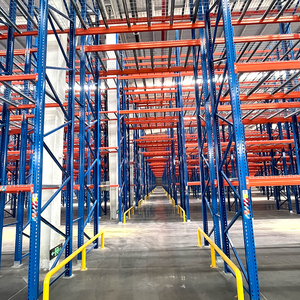
Jracking Heavy Duty EURO Standard Pallet Racking
Certified to EN 15512 standards for heavy-duty industrial storage. Engineered for standard Euro and ISO pallets with high load-bearing upright profiles.
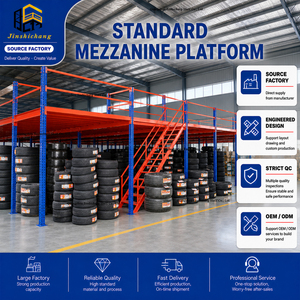
Multi-Level Steel Mezzanine Storage Platform
Structural steel loft platforms engineered to double or triple usable floor surface without civil reconstruction. Full integration with goods lifts and staircases.
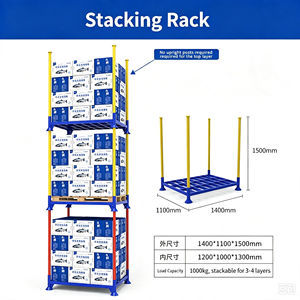
Adjustable Cold-Rolled Stacking Rack
Flexible plug-in post design enabling high-density block stacking in variable layouts. Built with cold-resistant steel grades for aggressive industrial freezers.
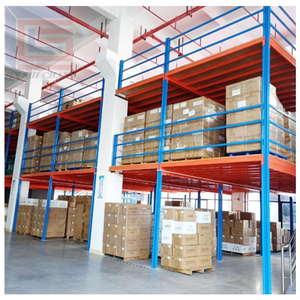
Heavy Duty Racking-Supported Mezzanine
Utilizes pallet uprights as primary load-bearing structural columns to support overhead steel decks, dramatically optimizing volumetric utilization in high-bay sites.
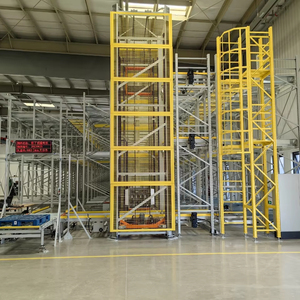
Intelligent Pallet Rack with Conveying System
Precision-manufactured racking integrated with roller bed conveyors and automatic sorters. Engineered to micron-level deflection thresholds for high-speed material handling.
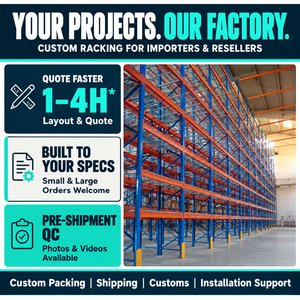
Heavy Duty Upright Frame & Box Beam Racks
Cold-formed, continuous Omega profile uprights coupled with robotically seam-welded box beams. Designed with 50mm and 75mm pitch connectors for maximum adjustability.
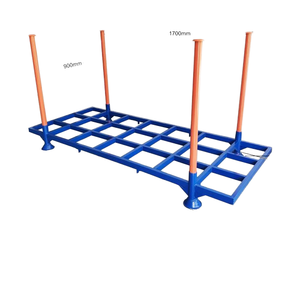
1,000kg Heavy Duty Metal Wire Stacking Cage
Electro-galvanized and powder-coated steel wire containment units for bulk irregular components. Collapsible modular build enables compact empty freight recovery.
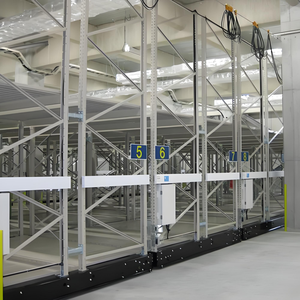
Anti-Freeze Mobile Pallet Racking for Cold Stores
High-density motorized bases engineered with cryogenic lubricants and low-temperature ductile steels. Eliminates unused aisle space in deep freeze environments to -30°C.
Why Tier-1 Contractors Rely On Our Engineering Infrastructure
From university-partnered structural laboratory testing to fully automated robotic roll forming, our manufacturing processes eliminate structural uncertainty and guarantee project compliance.
EN 1090-1 & CE Execution
Certified factory production control conforming to EN 1090-1 up to Execution Class EXC3. Full Declaration of Performance (DoP) documents delivered with each system for seamless regulatory sign-off.
Academic R&D & AR Lab
Continuous dynamic testing in collaboration with Mondragon University and University of the Basque Country. Every connector beam node undergoes cyclic loading, torsional resistance, and deflection evaluation.
Traceability 4.0 Protocol
Laser-etched batch, heat number, and production coordinate on every structural upright and connector. Complete digital tracking streamlines maintenance inspections and simplifies post-handover expansion.
ISO 14064 Carbon Verification
Strict energy efficiency under ISO 50001 coupled with verified product greenhouse gas calculations under ISO 14064. Supporting enterprise ESG criteria and net-zero supply chain commitments.
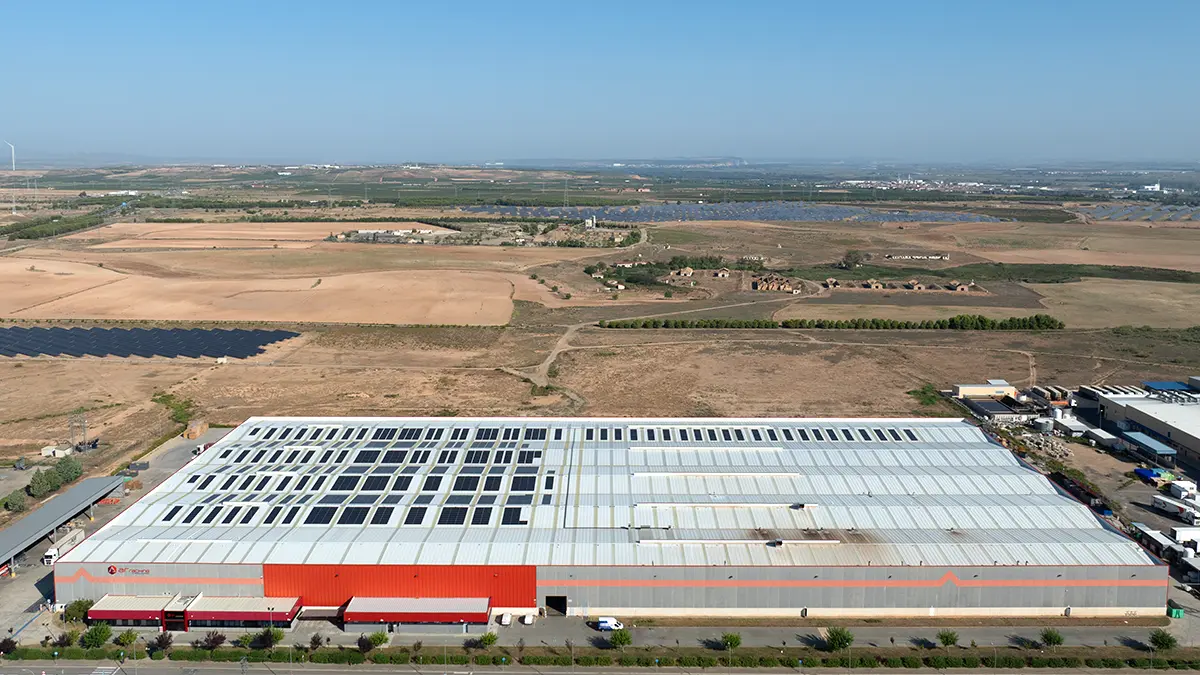
Robotic Continuous Profiling & Micron Tolerances
Standard pallet racking is susceptible to frame twisting and uneven load transfer if roll-forming clearances are inconsistent. Our Bilbao manufacturing center features computer-controlled roll-forming mills that maintain strip curvature within ±0.25mm tolerances across 14-meter continuous upright sections.
- High-yield certified micro-alloyed steel (S350GD, S355JR, S420)
- Automated robotic beam welding ensuring root pass penetration to ISO 3834-2
- Electrostatic thermo-hardening epoxy powder coating for scratch & chemical resistance
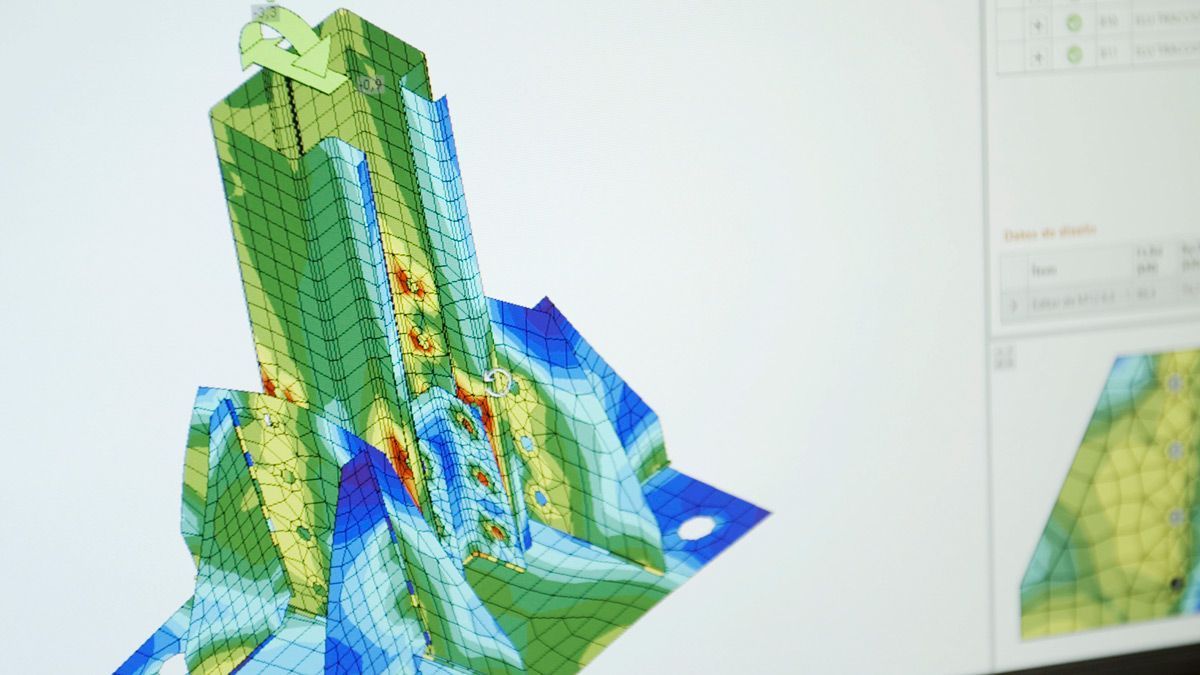
Seismic Performance & Non-Linear FEM Simulation
Earthquake design for high-bay racking systems requires deep analysis of ductility, joint slippage, and P-Delta effects. Our structural engineering department performs finite-element calculations in compliance with Eurocode 8 (EN 1998-1) and US seismic design standards (ASCE 7 / RMI ANSI MH16.1).
- Verification of ground response acceleration curves up to 0.45g
- Column baseplate energy-dissipating anchoring models to mitigate slab cracking
- Deflection limit calibration ensuring strict crane-to-rack clearance (EN 15620)
Engineering Parameters: Industrial Storage Configurations
Compare standard selective, high-density, and automated structural rack architectures to determine appropriate payload, seismic resilience, and warehouse equipment alignment.
| Racking Architecture | Structural Norm | Pallet Accessibility | Max Height | Floor Footprint Use | Automation Compatibility | CE Execution Class |
|---|---|---|---|---|---|---|
| Selective Pallet Racking | EN 15512 / RMI MH16.1 | 100% Direct Access | Up to 15 m | Standard (~40%) | Standard Forklifts / AGVs | EXC2 |
| Very Narrow Aisle (VNA) | EN 15620 / FEM 9.831 | 100% Direct Access | Up to 18 m | High (~65%) | Turret Trucks / Wire-Guided | EXC2 / EXC3 |
| Drive-In / Deep Lane | EN 15512 / EN 15629 | Lane Dependent (LIFO) | Up to 12 m | Very High (~80%) | Counterbalance / Reach | EXC2 |
| Motorized Mobile Racking | EN 15095 / CE Machinery | 100% via Active Aisle | Up to 14 m | Ultra High (~90%) | Semi-Automated PLC / WMS | EXC2 / CE Mark |
| Pallet Shuttle System | EN 15512 / ISO 12100 | Lane Access (FIFO/LIFO) | Up to 24 m | Maximum (~85%) | Radio Shuttles / AMRs | EXC2 |
| Rack-Supported Buildings (AS/RS) | EN 1090-1 / Eurocode 3 | Fully Automated | Up to 45 m | Optimized Maximum | Stacker Cranes / Shuttles | EXC3 |
Future Procurement Trends Transforming Industrial Warehousing
Logistics directors, structural consultants, and procurement managers are navigating a fundamental transformation in warehouse asset specification driven by regionalization, automation, and ESG mandates.
Scope 3 Emissions & Green Steel Procurement
Global corporations face strict corporate sustainability reporting directives (CSRD). Future racking procurement prioritizes suppliers offering third-party verified ISO 14064 carbon metrics, scrap-optimized electric arc furnace (EAF) steel coils, and local recycled material quotas.
TCO Prioritization Over Initial CapEx
The total lifecycle expense of racking is heavily dictated by maintenance cycles, impact resilience, and beam deflection-induced product damage. Procurement models are moving from lowest initial tender price to evaluated 10-year Total Cost of Ownership (TCO).
Retrofit Readiness for Autonomous Fleets (AMR)
Warehouses built today must accommodate autonomous mobile robots (AMRs) and automated guided vehicles (AGVs) tomorrow. Buyers specify tighter ground clearances, flat floor profiles (DIN 18202 / EN 15620), and dual-purpose baseplates designed for future guided guidance rails.
Key Technological Trends in Industrial Racking Systems
Discover how materials science, sensor telemetry, and structural simulation software are transforming conventional static steel shelves into responsive, intelligent logistical structures.
Cryogenic High-Ductility Steels for Sub-Zero Chains
Conventional structural carbon steel undergoes a ductile-to-brittle transition when operating between -20°C and -30°C, increasing the risk of brittle shear fractures under forklift shock loads. Modern racking utilizes high-toughness steel grades with Charpy V-notch impact testing guaranteed down to -40°C.
Clad-Rack (Rack-Supported) Building Systems
In clad-rack facilities, the racking uprights serve simultaneously as the interior storage system and the primary structural framework supporting wall envelopes and roof structures. This design eliminates perimeter concrete columns and roof trusses, optimizing volumetric efficiency and speeding up construction timelines.
Real-Time IoT Strain & Impact Telemetry
Integration of wireless piezoelectric sensors along lower upright leg sections tracks structural impact incidents and live dead-load deflection. Maintenance managers receive instant warnings when beam deflection exceeds L/200 thresholds or when an unreported vehicle impact compromises frame safety.
Global Structural Standards & Quality Management
Compliance is not an afterthought. Every manufacturing batch, weld assembly, and engineering drawing undergoes independent certification to European and international standards.
ISO 9001:2015
Total Quality Management across design, roll-forming, and site installation.
ISO 14001:2015
Certified environmental sustainability and chemical finishing controls.
ISO 45001:2018
Zero-accident health and safety protocols across our automated production plants.
ISO 50001
Energy management standard guaranteeing low kilowatt consumption per ton processed.
ISO 3834-2
Comprehensive quality requirements for robotic fusion welding of metallic materials.

EN 1090-1 (CE Mark)
Execution of steel structures for industrial cladding and load-bearing framing.
ISO 14064-1 Greenhouse Gas
Independently audited corporate and product lifecycle carbon accounting.
Trusted by Global Enterprise Leaders
From e-commerce fulfillment hubs to international food production lines, our structural racking systems power operations for Fortune 500 supply chains.






Industrial Warehouse Racking Procurement FAQ
Direct answers to technical, engineering, and regulatory questions encountered during warehouse expansion and racking replacement projects.
What distinguishes CE certified warehouse racking from standard commercial shelving?
CE certification under EN 1090-1 and the Construction Products Regulation (CPR 305/2011) legally certifies that load-bearing steel structures have been designed to verified structural Eurocodes (EN 1993 for steel structures, EN 15512 for racking) and produced under an audited Factory Production Control (FPC) system. Uncertified commercial shelving often lacks verified material mill test certificates (EN 10204 3.1), non-destructive weld testing, and guaranteed yield strength properties, putting the facility at risk of regulatory non-compliance and catastrophic collapse.
How are beam deflection tolerances calculated according to EN 15512 and FEM guidelines?
Under EN 15512, maximum permissible vertical beam deflection under working load is restricted to L/200 for standard applications, where L represents the clear span distance between upright columns. However, in automated AS/RS installations or systems using narrow-aisle turret trucks, deflection is restricted to L/300 or lower to prevent pallet interference with robotic arms, optical sensor trip-outs, and operational jams.
Can standard selective pallet racking be installed in sub-zero refrigerated facilities?
Standard cold-rolled structural steel should not be deployed in freezers below -10°C without specific metallurgical verification. Low temperatures induce brittleness in basic carbon steels, raising the risk of catastrophic failure under sudden forklift dynamic impacts. For cold storage and freezer operations down to -30°C, we specify killed, micro-alloyed fine-grain steels with verified Charpy V-notch impact toughness (27 Joules minimum at -20°C or -40°C) and hot-dip galvanized or specialized cryogenic epoxy finishes.
What documentation must an industrial racking supplier provide for facility permitting?
Local building officials and insurers require a comprehensive engineering submittal packet. This includes structural design calculations stamped by a qualified structural engineer, static and dynamic analysis models (reflecting building seismic and dead-load criteria), baseplate floor-loading slab reaction calculations, chemical and mechanical material mill certificates (EN 10204 Type 3.1), EN 1090 Declaration of Performance (DoP), and official CE compliance certificates.
How does floor slab flatness affect rack verticality and system tolerance?
Warehouse slab tolerances (governed by DIN 18202 Table 3 or TR34 Free/Defined Movement specs) directly impact upright plumbness. A minor slab depression of 3mm beneath a baseplate amplifies into a 30mm to 50mm horizontal out-of-plumb deviation at a 12-meter upright height. Our installation teams utilize precision laser leveling stations and calibrated steel shim packs to adjust baseplate elevations, ensuring upright alignment adheres to EN 15620 class thresholds before tightening anchor bolts.
What is the typical lifecycle and inspection interval mandated for heavy industrial racking?
Under EN 15635 ("Application and maintenance of storage equipment"), industrial racking requires weekly internal visual inspections by the designated Person Responsible for Storage Equipment Safety (PRSES), combined with an annual expert inspection by a certified independent racking inspector. High-quality CE certified racking manufactured from certified high-yield steel possesses an operational lifespan of 20+ years, supported by our comprehensive 5-year structural quality warranty.