Direct Factory Inventory & Wholesale Engineered Racking
Standardized cold-rolled structural modules and heavy-duty load capacities verified by finite element analysis (FEA) and continuous robotic laser profiling.
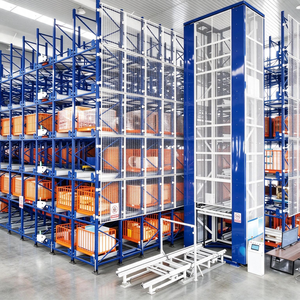
DASTECH Automated Shelving Radio Shuttle 3-Layer Drive-In Pallet Rack
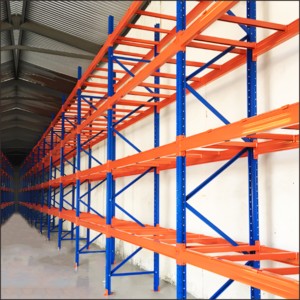
Heavy Duty Store Shop Display Shelving Tiers Steel Warehouse Shelf
Selective Pallet Racking Warehouse Storage System Upright Frame
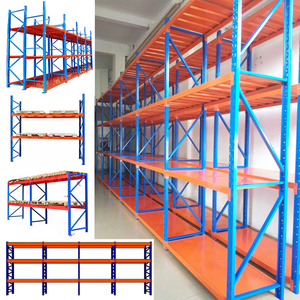
Heavy Duty Warehouse Rack Industrial Cold-Rolled Steel 1600-1900KG
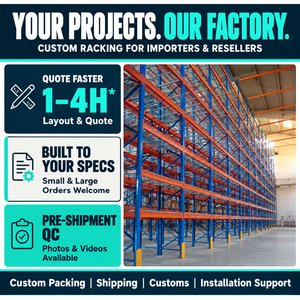
Steel Pallet Racking System Upright Frame & Interlocking Box Beam
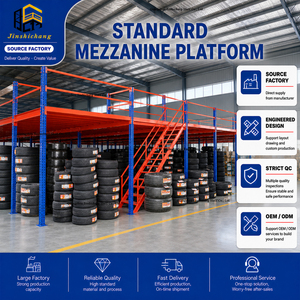
CE Certified Heavy Duty Mezzanine Loft Rack Multi-Level Platform
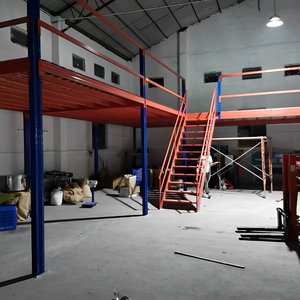
Custom Industrial Mezzanine Platform with Integrated Stairs OEM
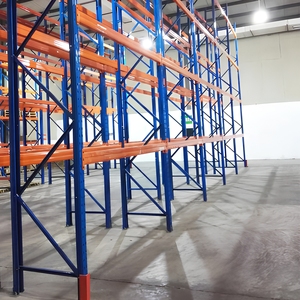
Wholesale Heavy Duty Steel Multi-Level Warehouse Rack 1000-3000kg
CE Certification Demystified: The EN 1090-1 & EN 15512 Mandate
Procuring industrial style shelving and structural warehouse racking requires verification beyond aesthetic coatings. In heavy storage, non-compliant cold-formed steel poses catastrophic failure liabilities.
The Structural Engineering Benchmark for Global Logistics
For industrial distribution hubs, third-party logistics (3PLs), and retail distribution centers, CE marking under the Construction Products Regulation (EU CPR 305/2011) represents documented compliance with European harmonized standard EN 1090-1 (Execution Class EXC2 / EXC3). This certification verifies that every upright frame, beam connector, and load-bearing bracket meets strict metallurgical trace limits, certified weld ductility (ISO 3834-2), and dimensional stability.
Unlike commercial lightweight shelving, our structural industrial racking is designed following EN 15512:2020 limit-state calculations and the latest American RMI (Rack Manufacturers Institute) MH16.1 specifications. Each beam level undergoes rigorous static deflection testing (limited to L/200 deflection under full operational design load) and dynamic impact mitigation audits.
- Certified Steel Chemistry: High-yield Q235B, Q355B, and S355JR structural coils with verified mill test certificates (EN 10204 Type 3.1).
- Seismic Resilient Formations: Uprights configured with high sectional moment of inertia to resist cross-aisle and down-aisle seismic forces (FEM 10.2.08).
- Automated Traceability 4.0: Laser-etched QR identifiers on every upright and beam allow instant tracking of production batch, coil heat, and load rating.
Advanced R&D: Academic Testing & Finite Element Analysis
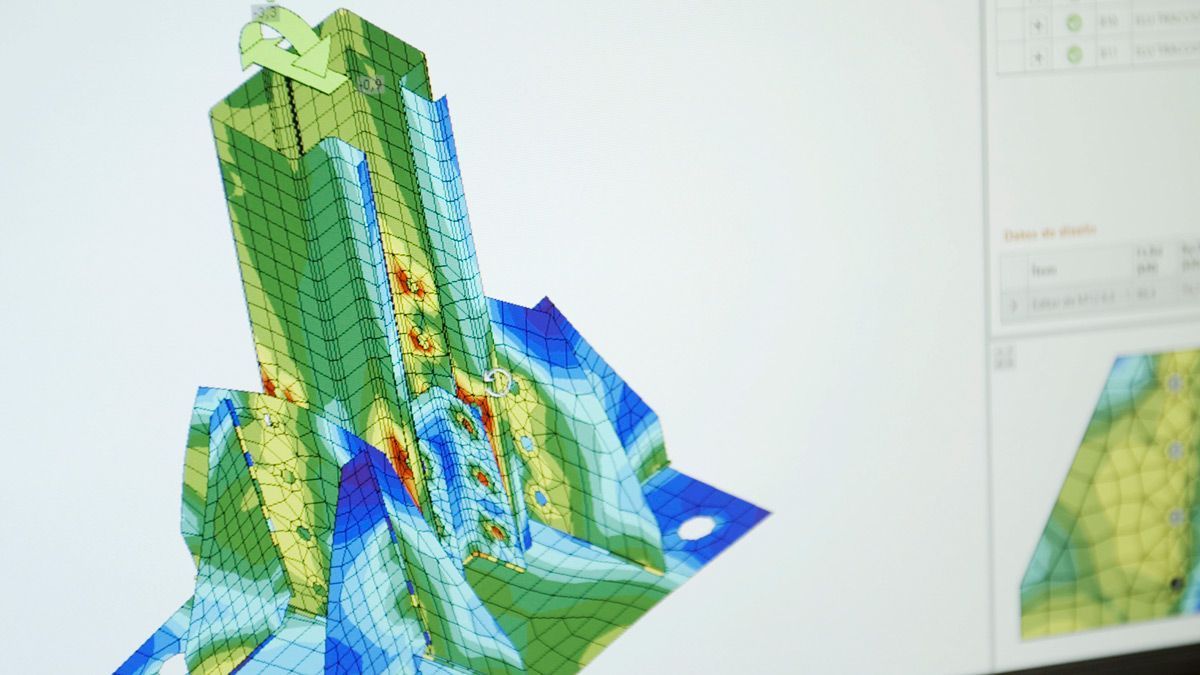
Through our dedicated laboratory partnerships with Mondragon University and our Research & Simulation Classroom at the University of the Basque Country (Bilbao School of Engineering), all steel components undergo exhaustive destructive testing to model non-linear buckling, torsional flexural behavior, and beam-to-column connector moment rotation capacity.
These advanced computer-aided simulation models allow us to optimize steel distribution across custom profiles, decreasing deadweight while boosting dynamic resilience against unintended forklift contact or localized shelf overloads.
- Stub Column Compression Audits: Empirical validation of cold-formed perforated sections against local and distortional buckling modes.
- Moment-Rotation Testing of Beam Connectors: Determining true rotational stiffness (K-factors) for precise portal frame calculations.
Technical Comparison of Industrial Storage Systems
Select the ideal racking architecture based on pallet accessibility, floor space density, seismic risk classification, and material handling fleet compatibility.
| Storage Architecture | Direct Selectivity | Volume Utilization | Inventory Flow | Handling Equipment | CE Design Norm |
|---|---|---|---|---|---|
| Selective Pallet Racking | 100% Immediate | 40% - 55% | FIFO / LIFO | Counterbalance, Reach Trucks | EN 15512 / EXC2 |
| Radio Shuttle Automation | Lane Dependent | 75% - 85% | FIFO or LIFO | Automated Shuttles + Standard Forklifts | EN 15512 / FEM 9.831 |
| Very Narrow Aisle (VNA) | 100% Immediate | 60% - 70% | FIFO / LIFO | Turret Trucks, Man-Up Pickers | EN 15512 / VDMA |
| Multi-Tier Mezzanine Lofts | Piece / Carton Level | Up to 250% Footprint | Dynamic Picking | Vertical Reciprocating Conveyors (VRC) | EN 1090-1 / Eurocode 3 |
| Drive-In Deep Storage | Low (Per SKU Block) | 65% - 75% | Strictly LIFO | Drive-in Counterbalance | EN 15512 / FEM 10.2.07 |
| Dynamic Pallet Flow (Gravity) | High per Lane | 70% - 80% | Strictly FIFO | Standard Forklifts with Brake Rollers | EN 15512 / FEM 10.2.06 |
All solutions are calculated to accommodate 48″ × 40″ GMA pallets, 1200 × 800 mm Euro-pallets, and specialized non-standard loads.
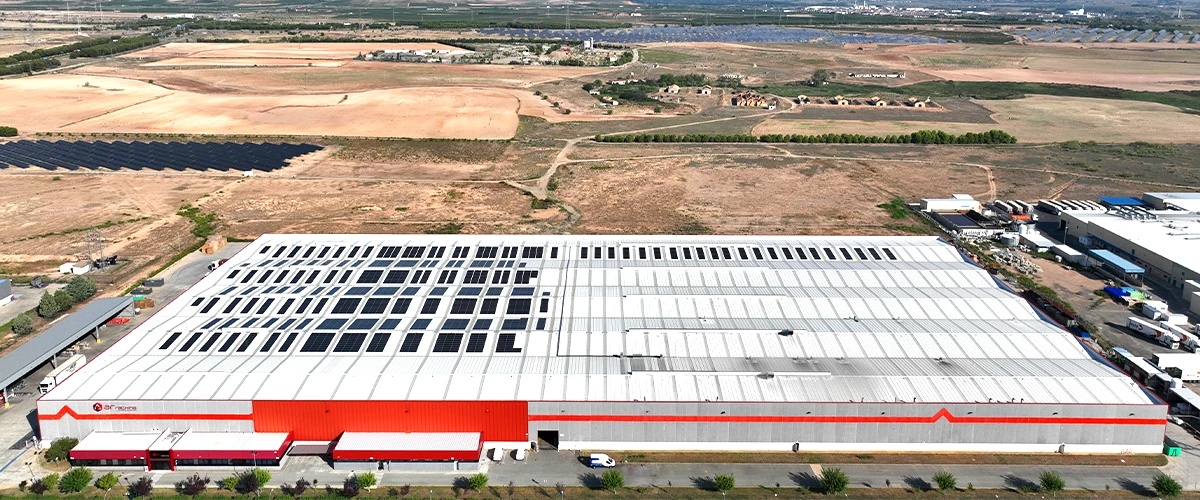
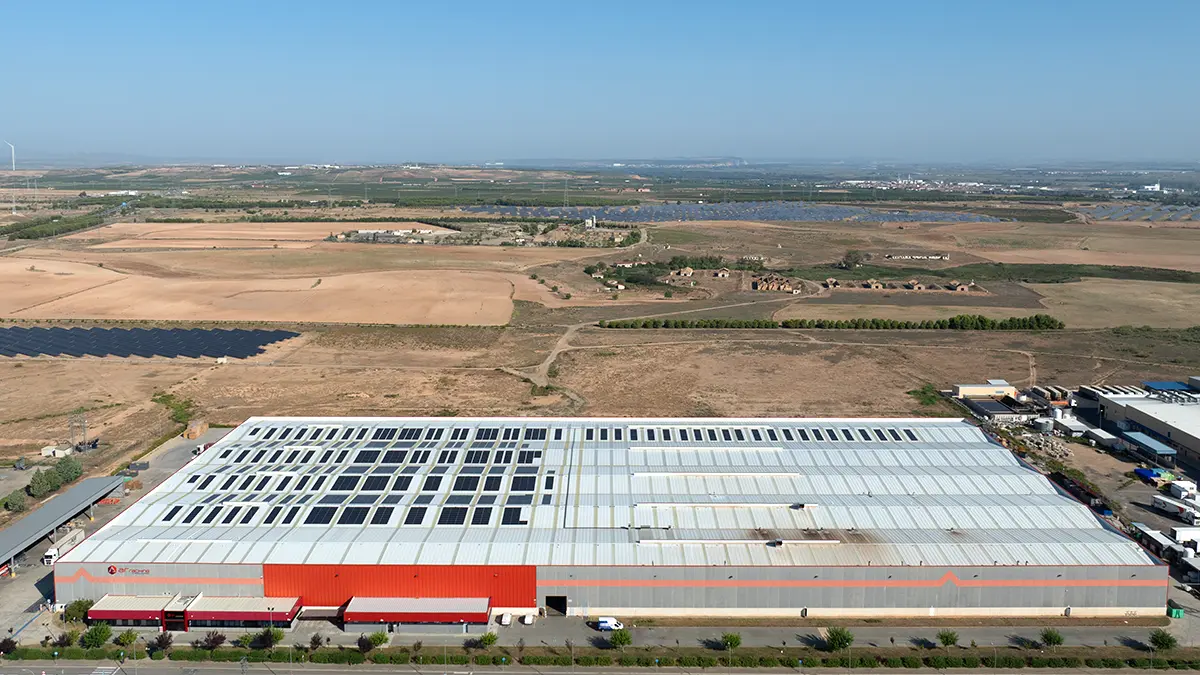
Get Structural Calculations35,000 m² Advanced Robotic Production Ecosystem
From raw structural coil decoiling to automated electrostatic powder curing, every stage is fully integrated in our digitalized fabrication plant.
100% Automated Roll-Forming Lines
Our continuous profiling mills utilize precision servo-driven multi-stage rollers to cold-form high-tensile upright profiles up to 14 meters long without structural splicing. Computerized in-line piercing stations achieve ±0.1mm tolerances across pitch perforations.
- High Cold-Work Hardening
- Splicing Elimination
- Laser Alignment
Robotic Welding & EN ISO 3834-2
Connectors and beam bodies are joined via multi-axis Panasonic robotic welding stations ensuring continuous, deep-penetration welds free of porosity or slag inclusions. Every weld specimen undergoes ultrasonic or magnetic particle non-destructive examination (NDE).
- Zero Manual Flaws
- ISO 3834-2 Qualified
- 100% Throat Penetration
Automated Pre-Treatment & Coating
Components pass through a 5-stage hot silane/nano-ceramic immersion pre-treatment bath followed by automated electrostatic deposition of thermosetting epoxy-polyester powder. Oven polymerization creates a 70–90 micron barrier that resists scratching, chips, and corrosion.
- 500h Salt Spray Rated
- Zero Heavy Metals
- Custom RAL Palettes
Key Procurement & Technological Trends in Industrial Shelving
How automation, temperature dynamics, and environmental mandates are transforming industrial storage specifications globally.
1. Autonomous AMR & AS/RS Tolerances
As warehouses deploy Autonomous Mobile Robots (AMRs) and high-speed stacker cranes, deflection tolerances tighten from ±15mm to sub-millimeter precision. Shelving systems must feature laser-calibrated run-ins, robotic docking aprons, and integrated optical sensors.
2. Cold-Chain & Cryogenic Steel Resilience
Deep-freeze facilities (-25°C to -30°C) cause standard structural carbon steel to undergo ductile-to-brittle transitions. Future procurement dictates impact-tested structural steels with verified Charpy V-notch energy absorbency at sub-zero working temperatures.
3. Circular Decarbonization & CBAM
Procurement teams now mandate verified Environmental Product Declarations (EPD) and Carbon Border Adjustment Mechanism (CBAM) accounting. Our ISO 14064 verified plants use electric arc furnace (EAF) low-carbon steel to reduce embedded CO2 by up to 45%.
4. Structural Health IoT Monitoring
Embedded wireless strain gauges and tilt-monitoring sensors within baseplates notify facility managers in real-time when uprights sustain critical fork impact or out-of-plumb deviations, preventing progressive collapse incidents before they develop.
International Accreditations & Testing Standards
Every structural element is supported by certified management systems across quality, safety, environment, and welding integrity.
ISO 9001
Global Quality Assurance
ISO 14001
Environmental Ecology
ISO 45001
Worker Safety Controls
ISO 50001
Energy Efficiency Systems
ISO 3834-2
Certified Metallic Welding
EN 1090-1
CE Marked Structural Integrity
ISO 14064
Carbon Footprint Verified
Frequently Asked Questions: Industrial Shelving Procurement
Essential technical, compliance, and logistics questions addressed for project engineers, supply chain directors, and commercial wholesalers.