Industrial Pallet Racking & Heavy-Duty Storage Configurations
Explore standard, selective, dynamic live-storage, and customized cantilever racking systems fabricated from certified structural steel, compliant with EN 15512 and RMI specifications.
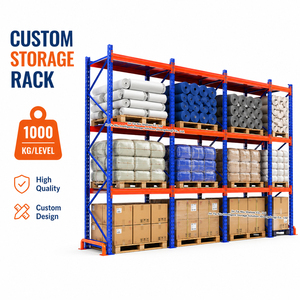
1000KG Warehouse Heavy Duty Pallet Rack Adjustable Storage Racking System Factory Direct
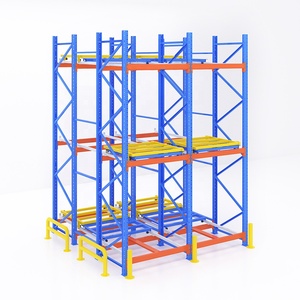
Pallet Live Rack Push Back Pallet Rack

Customized Pallet Rack for Warehouse with Rack Safety
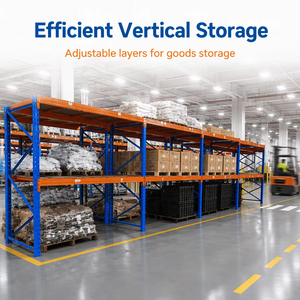
OEM ODM Adjustable Industrial Warehouse Storage Heavy Duty Selective Pallet Racking Shelving System Shelf Rack Manufacturer
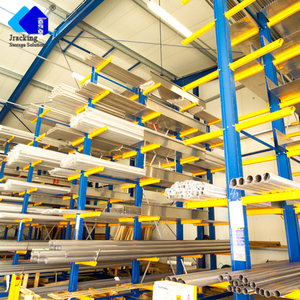
Jracking Q235B Steel Made Customized Heavy Duty Cantilever Rack Used for Storage Long Products Car Racking
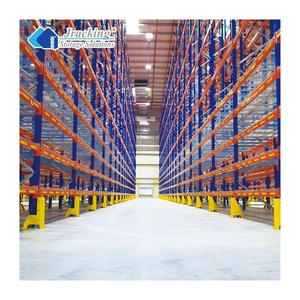
Jracking Euro Standard Steel Vertical Warehouse Storage Racks Heavy Duty Selective Pallet Racking System
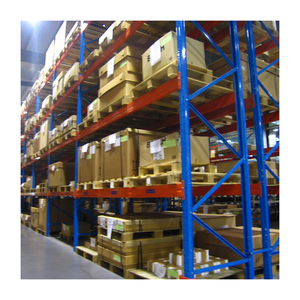
Heavy Duty Rack Steel Warehouse Rack Industrial Pallet Storage Shelf Warehouse Metal Racking System Heavy Duty Boltless Shelving
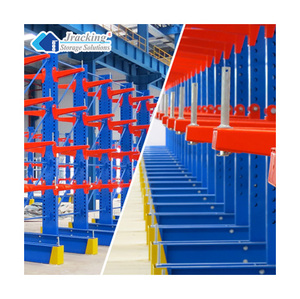
Jracking Factory Price-Wholesale Warehouses Rack Light Duty Q235B Steel Customized Cantilever Rack
Structural Design Verification: European Norms & International Standards
A rigorous engineering evaluation of structural integrity, beam deflection formulas, connection moment resistance, and seismic calculations essential for critical logistics infrastructure.
In modern high-density distribution centers and automated logistical fulfillment nodes, an industrial pallet racking structure is far more than simple static warehouse shelving—it functions as a heavy-load, non-building civil steel structure subject to continuous dynamic loading, mast deflection, forklift impacts, and seismic forces. Procurement executives and warehouse structural engineers must evaluate storage racks with the same mechanical scrutiny applied to structural building frameworks.
“Under European Standard EN 1090-1 and the Construction Products Regulation (CPR 305/2011/EU), industrial steel storage racks and particularly clad-rack / rack-supported buildings require mandatory CE marking verifying Factory Production Control (FPC) to Execution Class EXC2 or EXC3, guaranteeing material traceability from rolling mill to jobsite.”
Our industrial pallet storage racking systems are engineered around European Standards EN 15512 (Principles for structural design), EN 15620 (Tolerances, deformations and clearances for adjustable pallet racking), and EN 15629 (Specification of storage equipment). For North American projects, calculations conform simultaneously to ANSI/RMI MH16.1 (Specification for the Design, Testing and Utilization of Industrial Steel Storage Racks). Structural reliability depends on accurate determination of cold-formed thin-walled steel post-buckling behavior, torsional flexural buckling, and the rotational stiffness ($C_d$) of beam-to-column connector assemblies.
| Engineering Parameter | European Norm (EN Standards) | North American Standard (RMI/AISC) | Factory Baseline Guarantee |
|---|---|---|---|
| Base Raw Material | EN 10025 S235JR, S355JR, EN 10346 | ASTM A36, ASTM A1011 HSLAS Gr. 50 | Certified Q235B / Q355B with 3.1 Mill Certificates |
| Deflection Limitation | EN 15512: Beam deflection ≤ L/200 | ANSI MH16.1: Beam deflection ≤ L/180 | Stricter Standard: ≤ L/200 under 100% rated static load |
| Connector Safety Pin Shear | EN 15635: Upward dislodgement ≥ 5.0 kN | RMI Section 5.3: Dislodgement resistance | Mechanical spring locks rated ≥ 6.2 kN shear capacity |
| Manufacturing Tolerance | EN 15620 Class 400 (Wide aisle) & Class 300 (VNA) | AISC Code of Standard Practice | Laser-calibrated CNC rolling line: ±0.5mm profile tolerance |
| Factory Production Control | EN 1090-1 Execution Class EXC2 / EXC3 | AWS D1.1 Structural Welding Code | ISO 3834-2 certified international welding quality |
Finite Element Structural Modeling
Every bay profile undergoes advanced Finite Element Method (FEM) analysis simulating beam end connector rotational slip, semi-rigid joint behavior, lateral frame sway, and buckling coefficients before mass stamping.
Comprehensive Seismic Verification
In accordance with Eurocode 8 (EN 1998-1) and ASCE 7-22, upright frames are calculated with project-specific response spectrum analysis, ductility reduction factors, and floor anchor tensile pull-out margins.
Corrosion-Resistant Surface Chemistry
Equipped with an automated multi-stage pre-treatment wash (degreasing, phosphating, nano-ceramic passivating) followed by thermosetting electrostatic polyester powder baking at 180°C–200°C for superior impact resilience.
Pallet Racking Procurement Trends: The Move to Automation & ESG
How supply chain leaders, 3PL operations, and cold storage developers are navigating robotic interface tolerances, sustainable steel decarbonization, and modular lifetime durability.
1. Convergence of Traditional Racking with AS/RS & AMR Systems
Modern warehouse development is shifting away from purely manually picked selective rack systems toward automation-ready modular structures. Systems must be designed with millimetric geometric accuracy so that autonomous mobile robots (AMRs), automatic guided vehicles (AGVs), and automated storage and retrieval systems (AS/RS) can interface safely without collision errors or sensor misalignments.
- Millimeter-Grade Alignment: Upright straightness tolerances restricted to <1/1000 to eliminate optical navigation occlusions.
- Pallet Shuttle Integration: Deep-lane radio shuttles requiring reinforced, cold-formed galvanized rails with zero mechanical joints across critical spans.
- Floor-Level Load Distribution: Engineered oversized baseplates calculating dynamic punch shear on slabs conforming to DIN 18202 standards.
2. Cold Chain High-Density Solutions & Low-Temperature Metallurgy
Global frozen food, pharmaceutical biotics, and cold storage logistics demand maximum cubic space utilization to curb escalating energy refrigeration expenses. Because steel exhibits ductile-to-brittle transition when exposed to deep sub-zero temperatures (-24°C to -30°C), procurement specifications must mandate verified Charpy V-Notch impact test values to prevent catastrophic sudden brittle fracture.
- Sub-Zero Steel Toughness: Specialized hot-rolled and micro-alloyed structural steels maintaining high Charpy impact values at -30°C.
- Mobile Pallet Racking Dominance: Motorized base-mounted rack rows condensing storage footprint by 80% while retaining 100% individual pallet selectivity.
- Continuous Galvanized Finish: Zinc protection coatings eliminating rust initiation from continuous freeze-thaw condensation cycles.
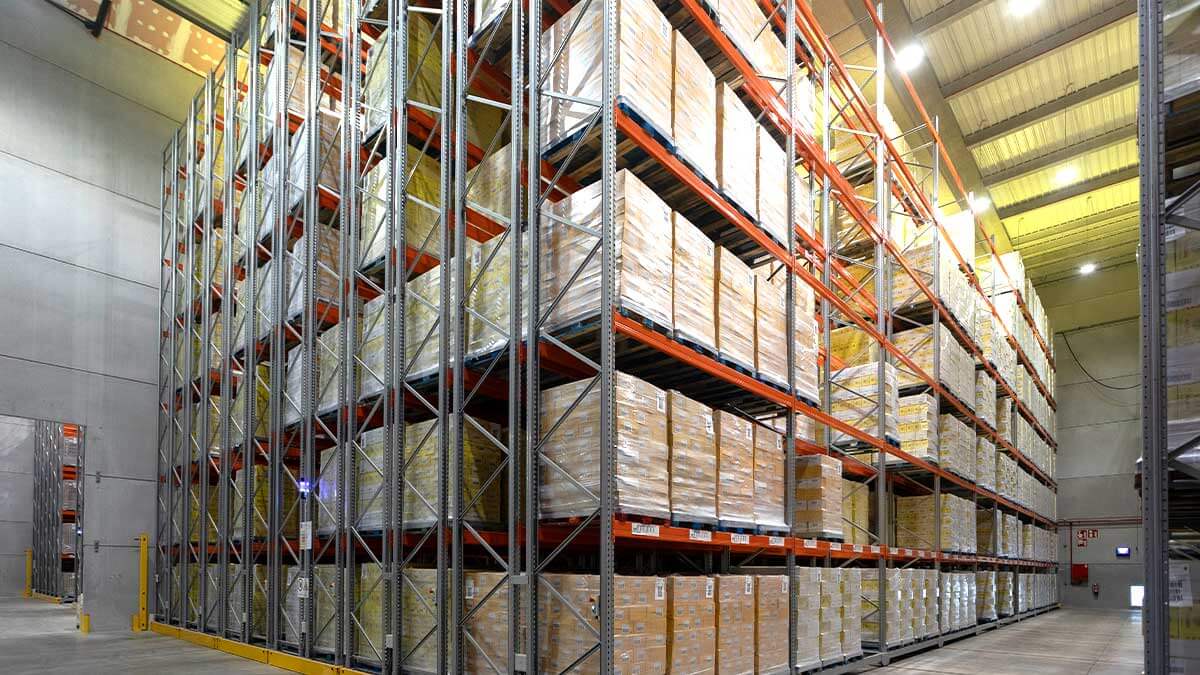
Future Technology Trends Reshaping Industrial Storage
Traceability 4.0 Laser Tracking
Every upright, diagonal brace, and beam connector is engraved with direct part marking (DPM) 2D data-matrix codes during robotic punching, enabling complete cradle-to-grave tracking from coil heat number to on-site assembly position.
Scope 1, 2 & 3 Carbon Accounting
Conforming to ISO 14064 greenhouse gas reporting standards, modern procurement demands Environmental Product Declarations (EPDs). We leverage electric arc furnace (EAF) recycled low-emission steel and certified solar factory power to slash product carbon footprints.
Rack-Supported Clad Buildings
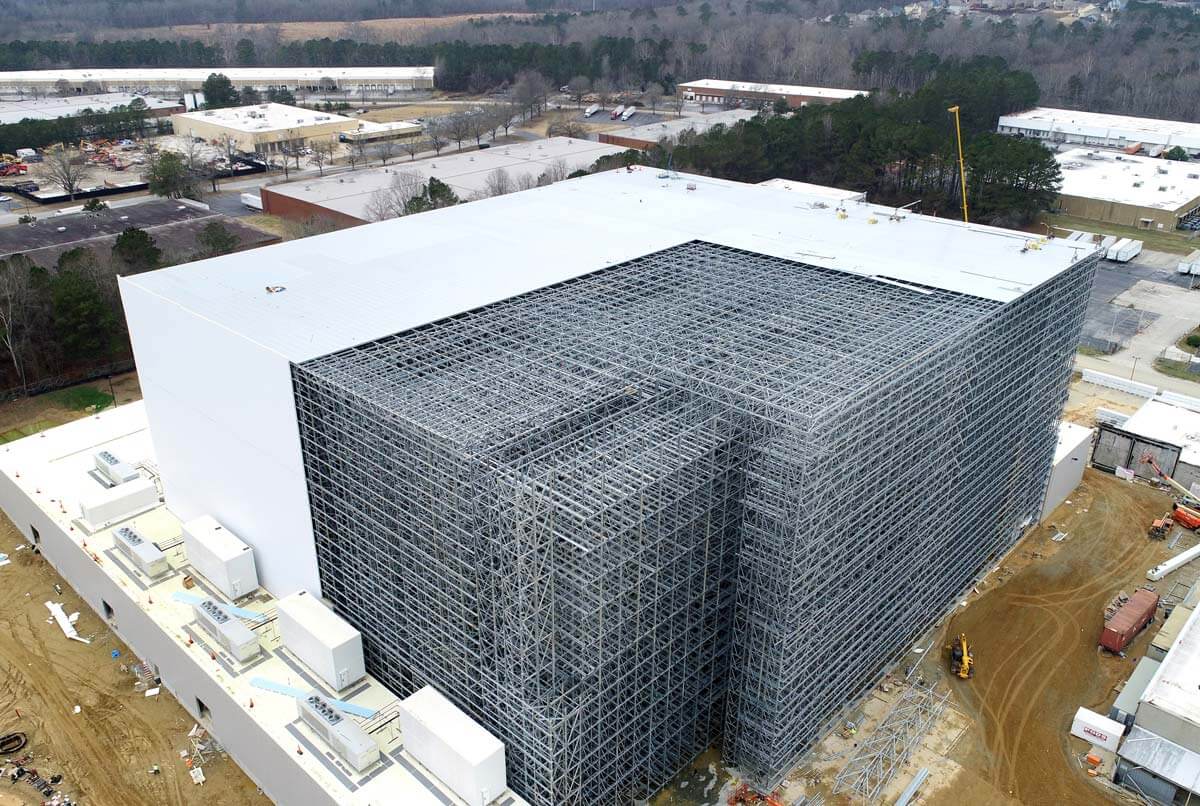
Replacing traditional brick-and-beam construction, self-supporting clad-rack buildings utilize the racking uprights as structural load-bearing roof and wall pillars, cutting civil works timelines by 40% and optimizing vertical heights up to 45 meters.
Factory Direct Advantages & Global Execution Capabilities
Direct manufacturer capabilities that eliminate intermediary markups while providing certified project engineering, rapid containerized export logistics, and full structural accountability.
35,000 m² Automated Plant
Continuous robotic profiling lines with annual processing capacity exceeding 100,000 metric tons of prime steel, guaranteeing fixed delivery timelines even on mega-scale logistics installations.
University-Partnered AR Lab
Continuous dynamic testing lab in partnership with Mondragon University and simulation modeling with the University of the Basque Country (UPV-EHU) verifying structural behavior under extreme mechanical fatigue.
Full Certification Suite
Certified ISO 9001 (Quality), ISO 14001 (Environmental), ISO 45001 (Health & Safety), ISO 50001 (Energy), ISO 3834-2 (Welding), and EN 1090-1 CE Marking for structural steelwork.
42,000+ Completed Projects
Over 90% of manufactured systems exported to 60+ countries across North America, Europe, Australia, and Latin America, backed by 14 corporate subsidiaries and dedicated technical engineers.
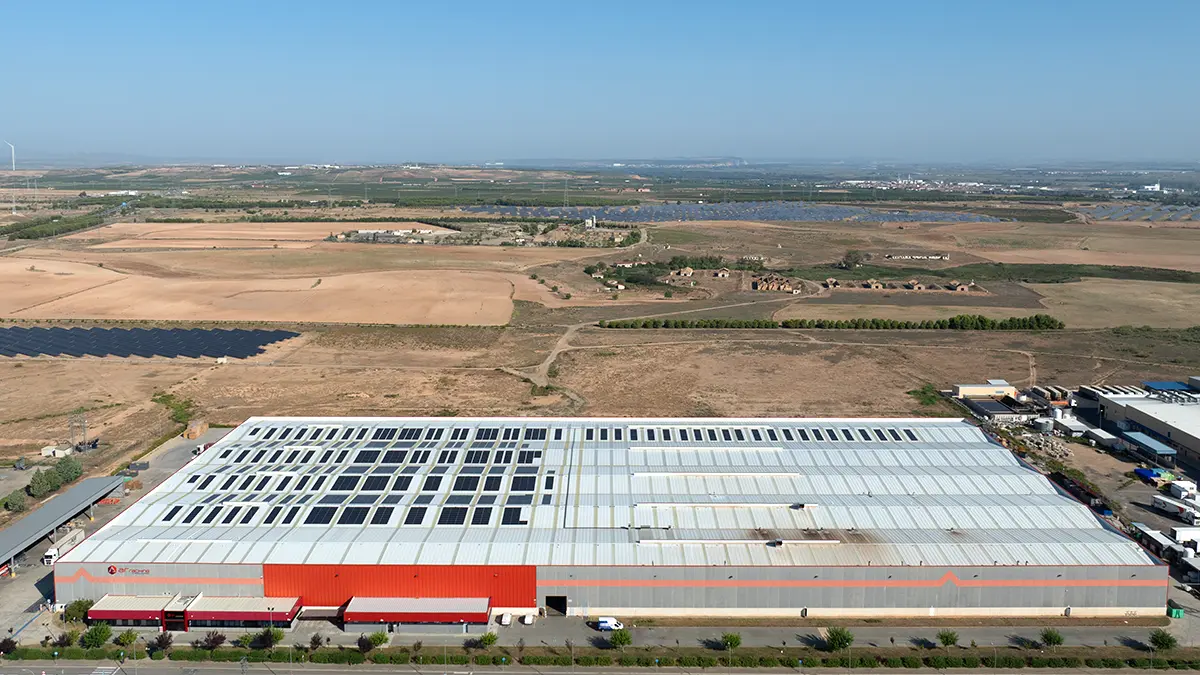
Uncompromising Quality Control at Every Weld
Every batch of raw coil steel undergoes incoming tensile, yield, and chemical composition spectrometer checks. Upright profiles are cold-formed through up to 26 successive progressive roller passes to avoid residual internal steel stress.
Automated robotic welding cells guarantee full penetration fillet welds on connector lugs, completely verified through non-destructive ultrasonic and dye-penetrant testing in accordance with ISO 3834-2 specifications. You receive traceable quality certificates with every shipping manifest.
Frequently Asked Questions: Pallet Racking Procurement
Comprehensive answers compiled by our senior structural engineers to assist buyers, facility managers, and general contractors during project planning.
What specific standards govern CE marking for industrial pallet storage racks?
Industrial pallet storage racks fall under distinct regulatory classifications depending on application. For clad-rack warehouses (rack-supported buildings where the rack frame supports the external building envelope, wind, and snow loads), CE marking under EN 1090-1 (Execution of steel structures) is legally mandatory in the European Economic Area under the Construction Products Regulation (CPR 305/2011).
For freestanding adjustable pallet racks installed inside existing buildings, structural design must strictly comply with EN 15512, installation tolerances with EN 15620, and operational maintenance with EN 15635. Our factory holds accredited EN 1090-1 Execution Class EXC2/EXC3 factory production control certifications, guaranteeing verified metallurgy, weld integrity under ISO 3834-2, and structural safety documentation.
How do you engineer racking systems to accommodate different pallet standards (GMA vs. Euro Pallet)?
North American distribution relies primarily on 48″ × 40″ (1219 × 1016 mm) GMA pallets with 40″ front-facing entry, whereas European logistics centers utilize 1200 × 800 mm Euro pallets (EPAL 1) or 1200 × 1000 mm industrial pallets (EPAL 2/3). Frame depth and beam clear spans must be calculated specifically to maintain safe overhang distances (typically 50 mm / 2 inches front and back).
For standard GMA pallets, our engineers utilize 42″ (1067 mm) deep upright frames to ensure safe base-board seating, complemented by welded fork-entry pallet support bars or heavy gauge wire mesh decking. For Euro pallets, frame depth is tailored to 1100 mm to support the 800 mm depth safely on longitudinal box beams.
What are the exact beam deflection limits under European and North American building codes?
Under EN 15512, the maximum allowable vertical beam deflection ($\delta$) under full uniformly distributed safe working load is limited to $\delta \le L/200$, where $L$ represents the clear span distance between upright columns. Under the US RMI ANSI MH16.1 standard, the maximum permitted deflection is $\delta \le L/180$.
Our baseline factory engineering standard enforces the stricter $L/200$ deflection criterion across all product series. This guarantees that beam sagging does not interfere with automated lift equipment, turret truck forks, or bottom-clearance optical height sensors during high-speed pallet retrieval.
Can your pallet racks be installed in cold storage freezers operating at -24°C to -30°C?
Yes. Sub-zero environments pose significant risks of steel embrittlement. We supply cold-chain pallet rack systems manufactured from certified killed steels with verified Charpy V-Notch impact absorption values ≥ 27 Joules at -20°C and -30°C in compliance with EN 10025-2.
For surface protection in freezer environments subject to thermal humidity cycling during door cycles, we provide hot-dip galvanized components or continuous Sendzimir pre-galvanized zinc coatings (Z275 / 20 μm) that resist corrosion and prevent coating delamination or peeling down to -30°C.
What documentation and structural calculations are supplied for municipal building permits?
For every project, our technical department issues a complete engineering submittal packet. This includes detailed general arrangement (GA) layout drawings, section elevation views, loading diagrams, baseplate concrete anchor pull-out calculations, and finite element moment connection verification reports.
Where required by North American jurisdictions (IBC / ASCE 7) or European municipalities (Eurocode 8), we provide calculations coordinated with registered Professional Engineers (PE / SE) stamped for local seismic design categories (SDC A through F) and local concrete slab specifications.
What is the standard warranty period and expected working lifespan of your racking systems?
All factory-manufactured industrial pallet storage racking systems include our comprehensive 5-Year Structural Quality Warranty covering raw material defects, profile weld failures, and coating degradation when installed and operated according to approved design loading ratings.
When maintained in accordance with EN 15635 annual inspection guidelines and protected with heavy-duty column corner guards and floor-mounted aisle protectors, our heavy-duty cold-formed structural steel racks deliver an operational service lifespan exceeding 20 to 25 years in active industrial distribution centers.
Request Your Project Engineering Review & Quotation
Connect directly with our senior warehouse design engineers. Provide your facility floor plans, clear ceiling heights, pallet dimensions, and seismic location parameters to receive free AutoCAD layout proposals, structural load calculations, and competitive FOB/CIF factory export pricing.
Fast Project Support
Engineering turnarounds in 24-48 hours. Direct factory pricing with guaranteed export container loading.
Inquire Now