0%

Choosing a Pallet Storage Racking System in 2026 is not simply a matter of finding more places for pallets. It is a decision about how stock moves, how safely equipment operates, and how well the layout can adapt when demand changes. The MHI and Deloitte 2024 Annual Industry Report found that 55% of surveyed companies were increasing investment in supply chain technology and innovation. That figure does not measure racking demand directly, but it reflects a broader push to improve warehouse performance. Storage design is part of that conversation.

The right choice starts with details on the warehouse floor. Measure pallet dimensions and loaded weights, check clear heights, and record how often each SKU moves. Then compare selective, drive-in, push-back, and other configurations against actual picking patterns and forklift access. A dense system may save floor space, yet slow access to individual pallets. Small details matter. A few inches of aisle clearance can affect turning, while beam capacity and floor conditions need qualified review. The stakes are real.

This guide explains the trade-offs behind common rack types and the questions to ask before comparing quotes. It also covers safety features, inspection planning, and room for future changes. No layout is perfect; I would be wary of any recommendation made without a site assessment and verified load data. Use the guidance as a starting point, then confirm specifications with a qualified racking professional and your equipment supplier.
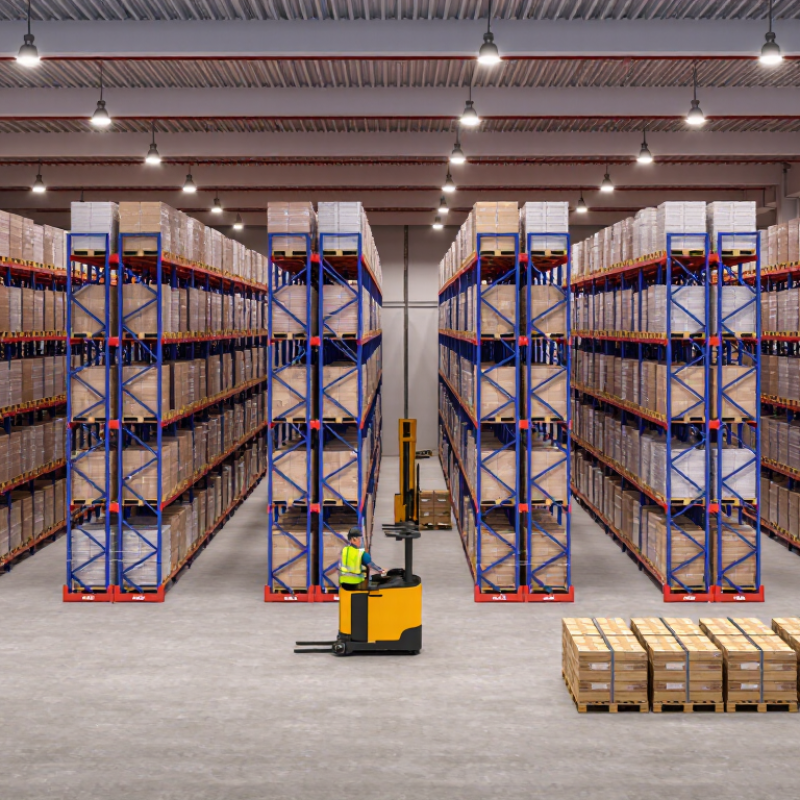
How to Choose a Pallet Storage Racking System in 2026

Define Inventory, Throughput, and Storage Requirements

Choosing pallet storage racking in 2026 starts with a clear inventory profile, not a rack catalog. Record pallet dimensions, loaded weights, SKU counts, and pallets per SKU. Separate fast movers from reserve stock; a frequently accessed pallet needs a different location from seasonal inventory. Measure the real load. Include unusual pallets and damaged packaging, not just standard units.

Throughput changes the layout. Track peak pallets received and dispatched per hour, plus replenishment moves and forklift travel. MHI’s 2024 Annual Industry Report found that 55% of surveyed organizations planned to adopt robotics and automation within five years. That trend makes accurate movement data especially useful: automation plans can affect aisle widths, rack interfaces, and access points. But forecasts are imperfect. Compare busy weeks with ordinary ones, and check whether promotions distort the average.

Then calculate usable storage, not just building capacity. Verify clear height, column positions, sprinkler clearance, floor conditions, and equipment turning space. A simple SKU-and-pallet audit can reveal whether selective access matters more than maximum density. Note the trade-off: denser layouts may reduce direct access and add handling steps. Recheck assumptions with operators who move the loads daily; a spreadsheet can miss awkward pallets, blocked aisles, or rushed shift changes. Define those constraints before requesting a rack design.

How to Choose a Pallet Storage Racking System in 2026

Define inventory, throughput, and storage requirements before selecting a rack layout.

Common nominal pallet footprints are 48 × 40 inches, 1200 × 1000 mm, and 1200 × 800 mm. The chart shows their calculated areas in square feet. Use your pallet counts and peak daily moves to balance storage density with access speed. Footprint area excludes rack structure, clearances, and aisles, so it does not by itself determine system capacity.

Compare Pallet Racking Types and Their Access Methods

In 2026, choosing pallet racking means comparing how workers reach each load, not just how many pallets fit. Selective racking offers direct access to every pallet, making it practical for varied products and frequent picking. The trade-off is wider forklift aisles and lower storage density. Measure aisle width against the actual truck turning radius; a drawing alone can miss awkward corners.

Drive-in racks let forklifts enter lanes, so fewer aisles are needed. They suit many pallets of the same product, but access is less flexible and requires careful driving. Push-back racks place pallets on nested carts: operators load and retrieve from one aisle, usually following last-in, first-out.

Pallet flow racks use gravity rollers for first-in, first-out movement, which can help with dated stock. Flow systems need compatible pallets and regular roller checks. Small defects matter.

Double-deep racks store one pallet behind another, increasing density while reducing immediate access to rear loads. That can mean specialized trucks and more planning. Match the rack to pallet sizes, inventory turnover, load weights, and picking rules. Walk the route with operators, then test a typical pick. The “best” layout may still feel cramped at shift change; that detail deserves another look.

Match Rack Capacity to Loads, Aisles, and Facility Constraints

Match the rack to the heaviest planned unit load, not the average pallet. Include the pallet, product, and container in the weight. Confirm that each beam level is rated for the load and span you intend to use. Keep load labels visible to operators. Small assumptions matter.

Aisle width should suit the actual lift truck, its turning radius, and the load depth. A drawing may show a neat, narrow aisle, but a protruding pallet can make daily travel awkward. Allow room for safe turns and placement. Check clear height against the truck mast, top beam, lights, and sprinkler heads, too.

Columns, doorways, uneven floors, and slab capacity can all change the layout. Verify these conditions on site before ordering; plans can be out of date. The first layout I sketch is rarely the one I keep. Sometimes a wider aisle or fewer levels works better, even if it reduces storage density. Leave enough clearance for the equipment and people who will use the system, and have a qualified rack professional review the final capacity and layout.

Assess Safety Standards, Automation, and 2026 Technology Needs

A 2026 pallet racking decision should begin with the building, the loads, and the people using the system. Record each pallet’s weight and dimensions, then verify rack capacity, floor loading, aisle widths, and required sprinkler clearance. Have a qualified engineer review site-specific conditions, including seismic risks where relevant. Check that beam locks are fitted and visible. Small details matter. A bent upright or a blocked flue can create risks that a capacity label alone will not reveal.

Automation should match real operating needs, not a sales forecast. Measure peak pallets per hour, order profiles, and inventory accuracy before choosing conveyors, shuttles, or automated storage. Confirm that warehouse software can exchange reliable location and stock data with equipment controls. Test awkward pallet sizes, damaged load carriers, and recovery steps after a power or network interruption. Manual access still matters. Operators need clear training, safe pedestrian routes, and a practical way to retrieve stock when equipment stops.

Technology can improve visibility, but it cannot fix poor data or weak maintenance routines. Sensors may flag impacts or unusual movement; inspections must still verify the rack’s condition. Digital models can help test layout changes, though their results depend on accurate measurements. Forecasts are rarely perfect. Leave room for future capacity, but avoid buying automation that the current operation cannot support. Compare total costs, including service, software updates, spare parts, and staff training, before committing.

Evaluate Lifecycle Costs, Suppliers, and Installation Plans

In 2026, compare pallet racking by total ownership cost, not the quoted price per bay. Include freight, floor preparation, anchors, installation, inspections, repairs, and the cost of downtime during changes. The 2024 CSCMP State of Logistics Report put U.S. business logistics costs at 8.7% of GDP in 2023. That figure is not a racking-cost estimate, but it shows why small warehouse inefficiencies matter. Ask suppliers for load calculations, component specifications, warranty terms, and references for installations with similar loads and seismic conditions. A low bid is hard to judge without these details.

Tips: Get at least three itemized quotes. Walk the site with the installer and mark columns, sprinklers, and forklift routes. Confirm who verifies anchors and rack plumbness after installation, and request the inspection schedule in writing. Keep spare beam connectors available if replacements are not locally stocked.

Plan installation around real operations. Measure clear heights and aisle widths, check slab condition, and phase work so receiving does not stop unexpectedly. Require a documented handover with load plaques, drawings, and maintenance instructions. One thing is easy to overlook: future pallet dimensions may change. I would leave some capacity for that, even if it makes the initial layout less dense. A perfect plan on paper can still fail when a forklift turns short.

FAQS

How should I calculate rack capacity?

Use the heaviest planned unit load, including the pallet, product, and container. Check each beam’s rating for its intended span. Keep capacity labels visible. Small assumptions matter.

How wide should warehouse aisles be?

Match aisle width to the lift truck’s turning radius and the load’s depth. A protruding pallet can make a narrow aisle awkward. Leave room for turns and placement.

What clear-height details should I verify?

Measure clearance around the truck mast, top beam, lights, and sprinkler heads. Confirm required sprinkler clearance before installation. Measurements can be off.

Which site conditions can change the rack layout?

Check columns, doorways, floor levelness, and slab capacity on site. Drawings may be outdated. A wider aisle or fewer levels may fit better, despite lower storage density.

Who should review a final rack design?

Ask a qualified rack professional or engineer to review capacity and site-specific conditions. Include floor loading and seismic risks where relevant. Do not rely on labels alone.

What rack details need regular inspection?

Check for bent uprights, visible beam locks, blocked flues, and impact damage. Sensors can flag unusual movement, but people must verify rack condition. Routine checks can slip.

When does warehouse automation make sense?

Measure peak pallets per hour, order profiles, and inventory accuracy first. Then assess conveyors, shuttles, or automated storage against actual needs. Forecasts can be wrong.

What should I test before adopting automated storage?

Test unusual pallet sizes, damaged load carriers, and recovery after power or network interruptions. Confirm software exchanges reliable stock and location data with equipment controls. Keep manual access and clear pedestrian routes. Training takes time.

What costs and technology limits should I consider?

Include service, software updates, spare parts, and staff training in total costs. Digital models can help compare layouts, but only with accurate measurements. Future capacity is useful; oversized automation may not be.

Conclusion

Choosing a Pallet Storage Racking System in 2026 starts with understanding what you store and how your operation moves it. Review inventory size, pallet dimensions, stock turnover, and daily throughput to determine how much storage you need and how frequently items must be accessed. Compare rack types by their access methods and storage density, then select an arrangement that supports your picking process without creating unnecessary handling steps.

Next, confirm that rack capacity suits the weight and dimensions of your loads, while aisle widths and building features allow safe, efficient movement. Consider applicable safety standards, inspection needs, and whether automation or newer warehouse technologies fit your operation. Finally, compare the full lifecycle costs—not just the initial purchase—including installation, maintenance, and future changes. A careful supplier review and a realistic installation plan can help ensure the system fits your facility, budget, and long-term storage goals.

Clara

Clara

Clara is a professional marketing specialist with a strong understanding of the company’s products, customer needs, and the practical challenges its customers face. She combines product knowledge with clear, thoughtful communication, helping readers understand how the company’s solutions work and......